

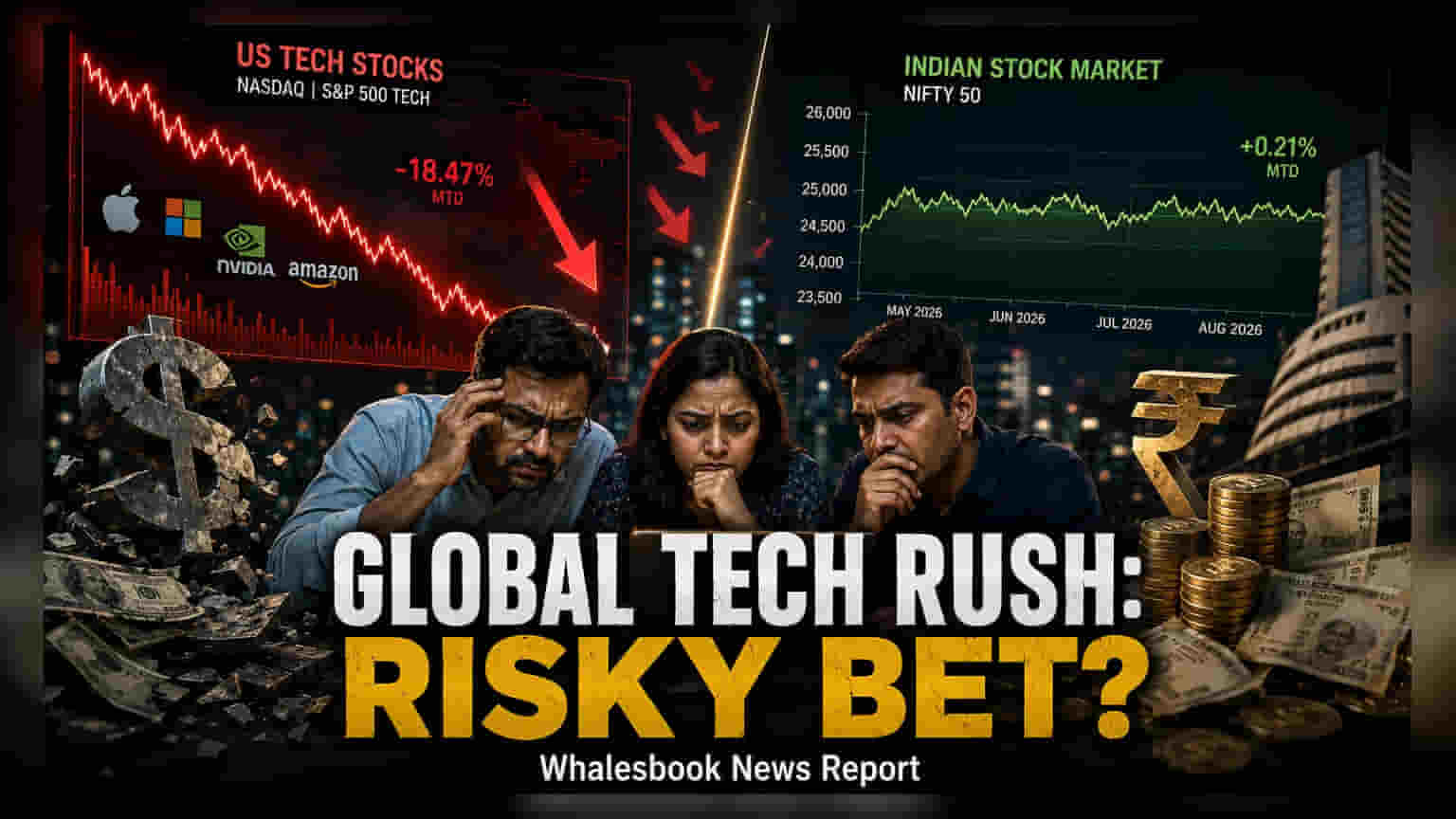
Indian investors are increasingly looking abroad to global technology stocks, pushing trading values at GIFT City up 80% quarter-on-quarter. While this diversification seeks to counter domestic market underperformance, investors face risks from RBI regulatory caps on mutual funds and a recent sell-off by global hedge funds in major tech names.
Indian investors are increasingly shifting their attention to global technology stocks as they seek alternatives to the domestic equity market. Data suggests that trading activity on the Global Access Provider (GAP) platform at GIFT City has surged, with values rising by 80% quarter-on-quarter by June 2026. This trend reflects a growing appetite among retail investors to capture the growth of international tech giants, driven by a perception that domestic blue-chip returns have been inconsistent over the past three years.
Regulatory Limits Push Investors Abroad
The primary driver for this shift is a lack of availability in local investment avenues. Many Indian mutual fund houses have been forced to suspend fresh subscriptions for their international schemes due to RBI-mandated aggregate industry limits. These limits currently cap the industry at USD 7 billion for overseas securities and USD 1 billion for ETFs. With traditional mutual fund routes congested, investors have turned to the GIFT City platform as a primary, albeit more direct, method to gain exposure to US-listed stocks and exchange-traded funds.
The Timing Risk of Global Tech
While the search for diversification is clear, the timing of this increased interest coincides with significant volatility in international markets. In July 2026, global hedge funds initiated a major unwinding of their technology positions, reducing exposure amid growing skepticism regarding the sustainability of the recent artificial intelligence boom. This selling pressure has created high volatility in semiconductor and AI-related stocks, which are often the primary targets for Indian investors looking for global exposure.
Investors who are entering these markets now may find themselves on the opposite side of institutional trades. The risk is that retail investors are paying high valuations for stocks that institutional investors are currently trimming to lock in gains or mitigate risk. Unlike the domestic market, which has recently seen some resilience in the IT sector due to a strengthening US dollar, global peers are currently navigating broader macroeconomic uncertainties.
Macro Risks and Market Sensitivity
Beyond the specific volatility of tech stocks, investors are also exposed to new layers of risk. These include currency fluctuations between the Indian Rupee and the US Dollar, which can erode returns if the rupee strengthens. Furthermore, rising geopolitical tensions, particularly in the Middle East, have increased the risk of sudden spikes in crude oil prices, which could trigger global inflationary pressures.
Looking ahead, the primary monitorables for investors will be the sustainability of AI-related earnings and potential shifts in RBI policy regarding overseas investment caps. While the MSCI August 2026 review has highlighted specific domestic opportunities—adding names like Laurus Labs and Adani Energy Solutions to its index—the current trend shows that many investors remain focused on global tech themes as a potential hedge against domestic performance. Investors may track whether global hedge fund selling stabilizes or if it signals a deeper correction in the technology sector.