 Whalesbook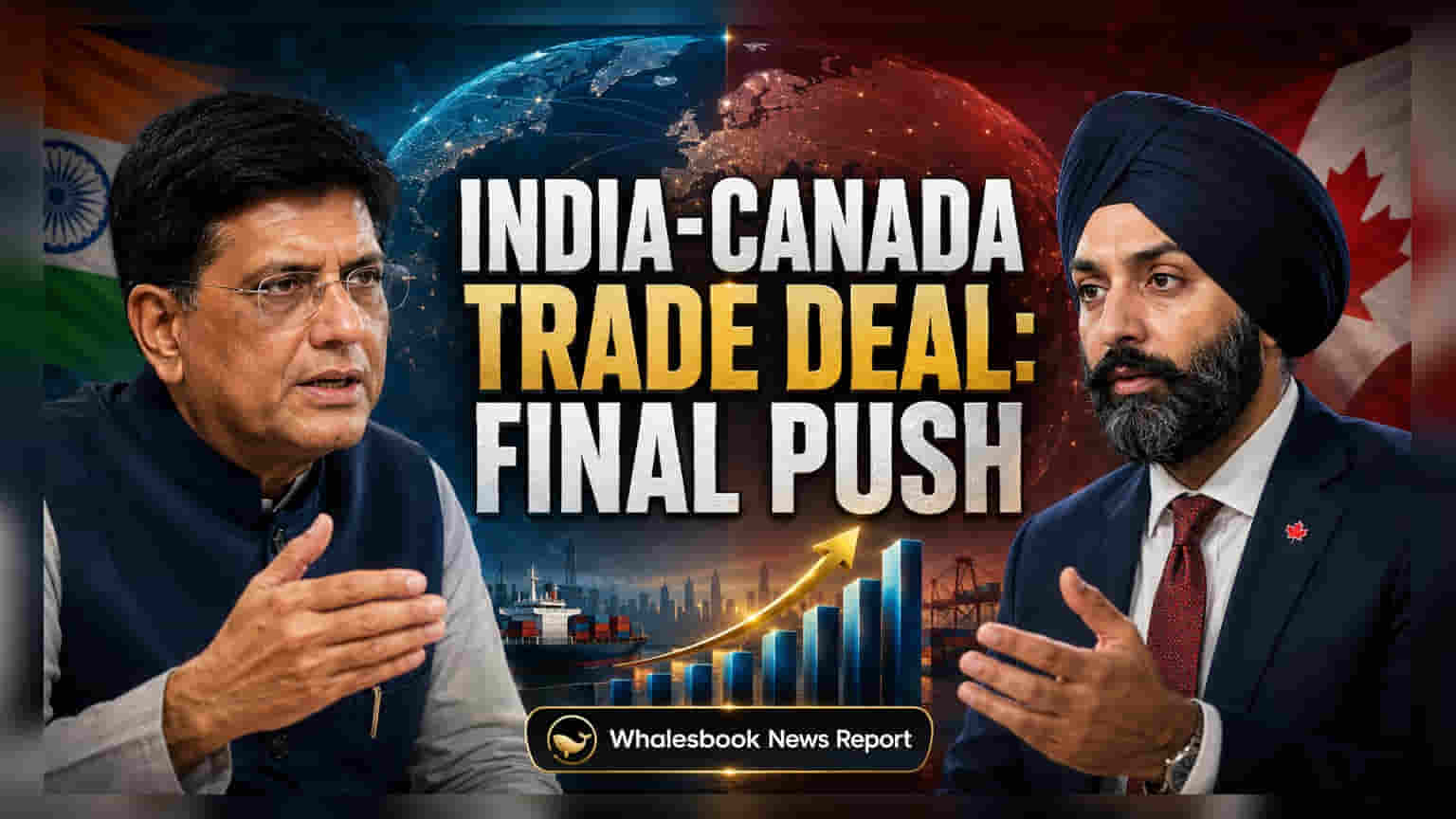


Strategic Reset
The push to finalize a Comprehensive Economic Partnership Agreement (CEPA) by the end of 2026 signals a significant shift in Canada-India relations. After a period of diplomatic tension, Prime Minister Mark Carney's administration is pursuing an "economic anchor" strategy to reduce Canada's trade reliance on the United States. The recent visit of Commerce and Industry Minister Piyush Goyal to Ottawa, accompanied by a large business delegation, indicates a move toward concrete commercial ties.
Energy and Industry Driving the Deal
Unlike previous trade discussions that stalled, the current urgency is driven by energy security needs. A recent $2.6 billion uranium supply deal with Cameco serves as an example of this partnership. Canada aims to be a key energy supplier for India's growing nuclear power sector, with potential in liquefied natural gas (LNG), critical minerals, and agriculture. For India, the CEPA offers access to capital and advanced standards needed for its manufacturing and digital infrastructure growth. Technical talks in Ottawa are focusing on specific sector outcomes, especially in clean technology and green hydrogen.
Challenges and Political Realities
Reaching the $50 billion trade target faces significant obstacles. India has historically had a trade deficit with Canada, meaning Canada must substantially increase its purchases of Indian manufactured goods like electronics and pharmaceuticals to achieve this goal, facing tough competition from Asian suppliers. The political situation in Ottawa is also a factor, with Prime Minister Carney's government facing domestic criticism on issues like housing and industrial policy. Some observers note a history of ambitious government plans that haven't always been fully realized, suggesting the broader trade pact could be affected by domestic protectionist policies and election cycles.
What to Watch Next
Discussions at the ongoing negotiations in Ottawa are focused on details like tariff reductions and services trade. If a deal is reached by the end of the year, the CEPA could stabilize trade in key sectors and reduce dependence on volatile markets. Analysts are cautiously optimistic, seeing the agreement as a way for both economies to better navigate global geopolitical uncertainties.