

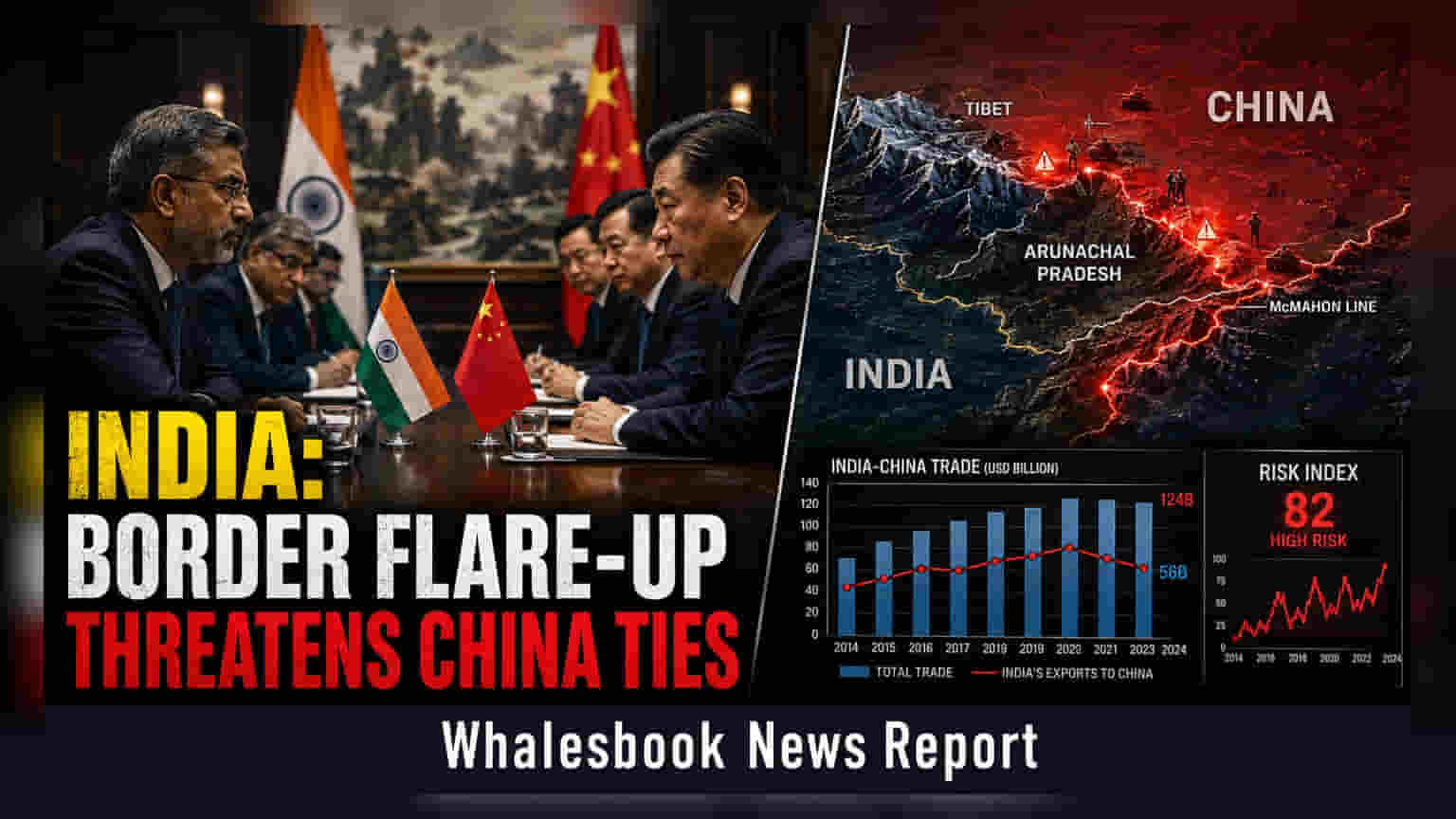
India has stated that border stability with China is a prerequisite for normal bilateral relations following reported incursions in Arunachal Pradesh. This development adds a layer of uncertainty for investors tracking trade flows, supply chain stability, and foreign investment ahead of the upcoming BRICS summit.
The Indian Ministry of External Affairs has issued a stern warning, noting that the state of affairs along the border with China will directly impact the trajectory of broader bilateral ties. The ministry’s statement follows reports of alleged Chinese troop movements at Pukar La and Ollo in the Taksing circle of Arunachal Pradesh in early August 2026. This warning reinforces the Indian government’s long-standing position that peace and tranquility along the Line of Actual Control are essential foundations for normal economic and diplomatic engagement.
This diplomatic signaling occurs against the backdrop of the 36th meeting of the Working Mechanism for Consultation and Coordination, which took place on August 6, 2026. While official channels for communication remain active, the persistence of incidents along the disputed frontier creates an environment of unpredictability for businesses and investors. Although major Indian corporations have not issued exchange filings regarding these specific geopolitical developments, the friction between the two nations is a recurring factor that influences cross-border trade, supply chain planning, and foreign direct investment.
Investors are particularly cautious regarding this geopolitical situation for several reasons. Persistent tensions often lead to stricter regulatory scrutiny for Chinese-linked investments in India and can create bottlenecks in the supply of critical raw materials or components for sectors such as electronics, pharmaceuticals, and solar energy. Given India’s ongoing push to localize manufacturing and reduce import dependency, any sudden escalation in border tensions may prompt the government to recalibrate trade policies or implement tighter import controls, which could disrupt operations for companies with high exposure to Chinese supply chains.
The timing of these tensions is critical, as India is scheduled to host the BRICS summit, with Chinese President Xi Jinping expected to attend. The geopolitical optics of this visit, and whether any progress is made on border de-escalation, will be a key monitorable for the market. While the military and diplomatic talks are intended to prevent misunderstandings, the lack of a fully demarcated border remains a structural risk that can influence sentiment toward sectors sensitive to bilateral trade relations.
Moving forward, market participants and business leaders will likely look for signs of de-escalation in the coming weeks. Continued adherence to diplomatic channels and the tone of the upcoming leadership discussions during the BRICS summit will be the primary indicators for how the bilateral relationship might evolve in the second half of the year.