 Whalesbook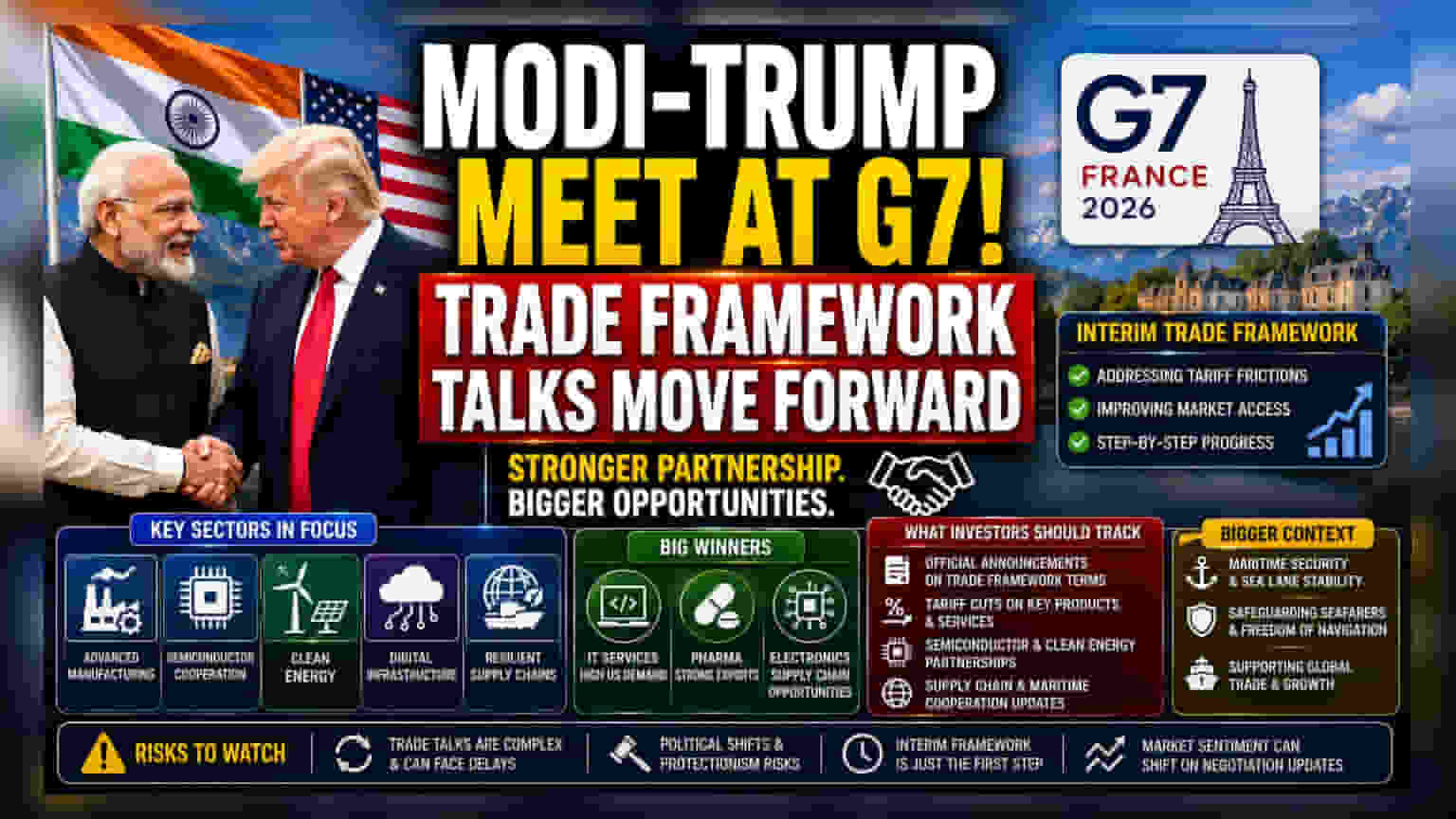


PM Narendra Modi and US President Donald Trump met at the G7 Summit to discuss an interim trade framework aimed at lowering tariffs. For Indian investors, this points to potential tailwinds for export-oriented sectors like IT, pharmaceuticals, and manufacturing. While the focus on supply chain and tech cooperation is positive, the progress of specific trade deals remains the key monitorable for market sentiment.
What Happened
Prime Minister Narendra Modi and US President Donald Trump held a meeting on the sidelines of the G7 Summit in France. This marks a notable diplomatic development, as it is the first in-person interaction between the two leaders in over 16 months. The primary focus of the discussion was advancing an interim trade framework intended to address long-standing tariff frictions and improve market access for businesses in both countries.
Why This Matters For Investors
The US remains one of India’s largest and most significant trading partners. Any reduction in trade barriers or tariff friction can be a positive for companies that export goods and services to the American market. For investors, the mention of an interim trade framework is a key development, as it suggests a step-by-step approach to economic integration rather than waiting for a comprehensive deal, which can often take years to negotiate.
Impact On Key Sectors
The discussion highlighted cooperation in several critical areas, including advanced manufacturing, semiconductors, clean energy, and digital infrastructure. This is particularly relevant for the Indian IT services sector, which relies heavily on US demand, and the pharmaceutical industry, a major exporter to the US. Furthermore, the emphasis on resilient global supply chains and semiconductor manufacturing suggests potential long-term opportunities for Indian companies looking to participate in the global electronics and high-tech supply chain as businesses look to diversify beyond traditional manufacturing hubs.
How Investors May Read This
While the meeting signal is positive, investors should maintain a balanced perspective regarding the timeline. Trade negotiations are complex, and an interim framework is merely a starting point. It does not automatically guarantee instant changes to tax structures or export policies. The market will likely look for specific follow-up announcements regarding actual tariff cuts or regulatory easing in specific sectors. Historical trends show that while trade cooperation improves sentiment, the actual financial benefit to companies depends on the final implementation of policy changes.
The Bigger Context
This engagement also touched on broader strategic issues, including maritime security and the stability of critical sea lanes. For investors, this broader cooperation is significant because a stable global trade environment is essential for the movement of goods, particularly for sectors like shipping and logistics. The focus on safeguarding seafarers and freedom of navigation aligns with India’s goal to maintain strong maritime trade routes, which are vital for both energy imports and finished goods exports.
What Could Go Wrong
Investors should remain cautious about the inherent risks in international trade policy. Trade talks are subject to sudden shifts based on domestic political agendas and protectionist measures. An 'interim' framework implies that the path to a full-fledged trade agreement is still long, and there is no guarantee that all points of friction will be resolved. Market sentiment can react to any delays or disagreements that might arise during the follow-up negotiations.
What Investors Should Track
The most important monitorable for investors will be the official announcements regarding the concrete terms of the proposed trade framework. Specifically, look for updates on which products or services will benefit from reduced tariffs. Additionally, monitor government and company-level announcements regarding partnerships in semiconductor manufacturing and clean energy, as these will indicate how quickly the discussed 'resilient supply chains' are becoming a business reality rather than just a policy goal.