 Whalesbook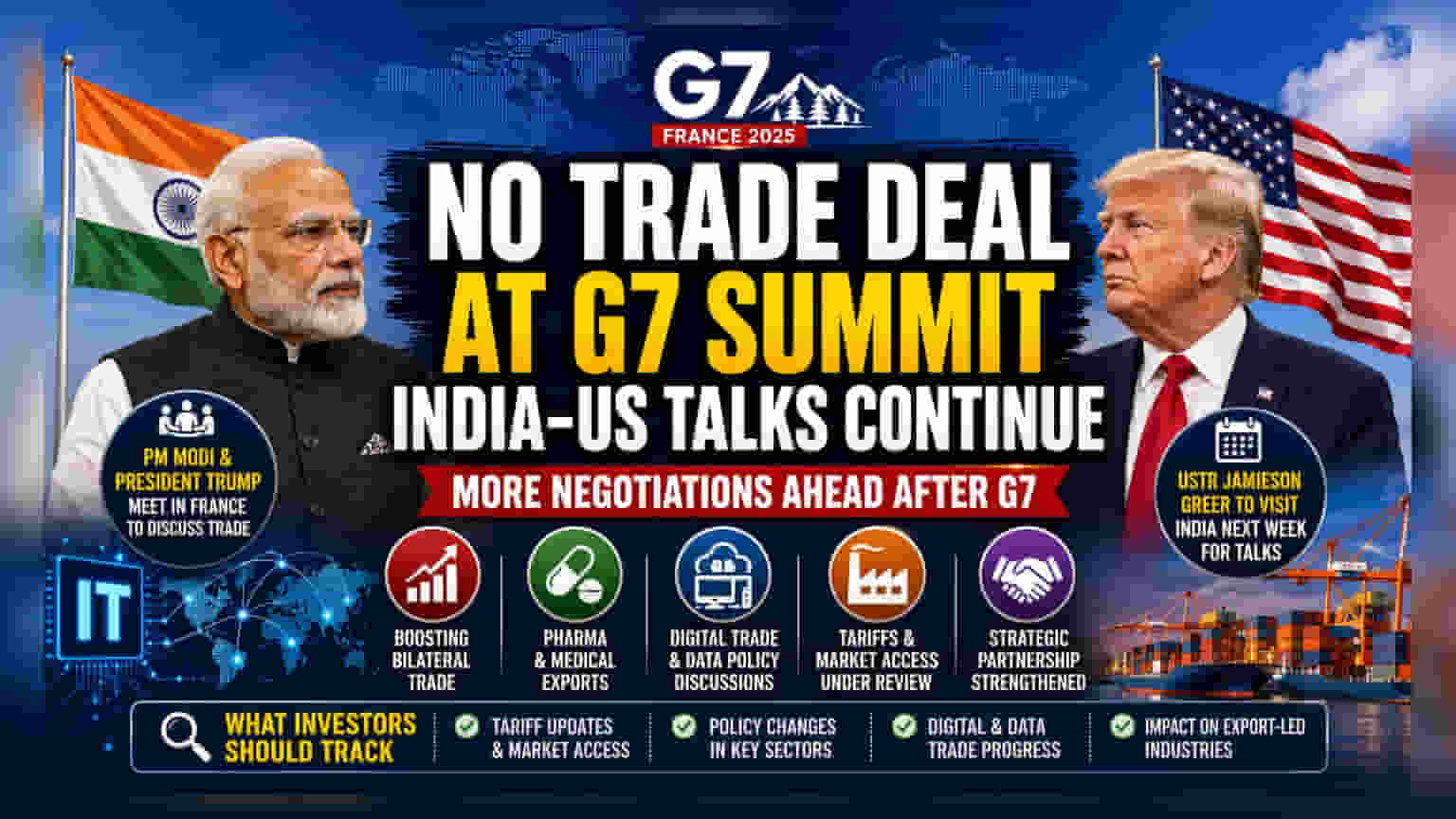


A comprehensive trade agreement between India and the US will not be finalized at the upcoming G7 summit in France. US Trade Representative Jamieson Greer is scheduled to visit India after the summit, indicating that negotiations are still in progress. For investors, this signals a focus on long-term policy discussions rather than an immediate deal, with ongoing talks centered on sectors such as technology, pharmaceuticals, and manufacturing tariffs.
What Happened
The upcoming G7 summit in France will not result in a finalized trade agreement between India and the United States. A senior US administration official confirmed that while trade will be a key discussion topic when Prime Minister Narendra Modi meets with President Donald Trump, a conclusive deal is not expected at the event. Instead, the dialogue is continuing, with US Trade Representative Jamieson Greer scheduled to travel to India in the week following the summit to further the negotiations.
Why This Matters For Investors
Trade negotiations between the world’s two largest democracies are significant for the markets because they directly impact cross-border commerce. An eventual trade deal often involves discussions on import tariffs, market access for pharmaceutical products, data localization norms, and services sector regulations. For Indian companies that rely heavily on exports to the US—particularly in the IT services, generic medicine, and manufacturing sectors—clarity on trade policy is a crucial factor for long-term planning. When officials signal that talks are ongoing, it suggests that both sides are still working through complex details, which is a standard part of bilateral economic diplomacy.
Understanding the Timeline
It is common for high-level summits like the G7 to focus on broad geopolitical alignment rather than the granular, time-consuming work of hammering out a comprehensive trade pact. While the administration in Washington has expressed a desire to secure what President Trump termed a "very good deal," the lack of an immediate signing should not be viewed as a breakdown in communication. Instead, the upcoming visit by the US Trade Representative suggests that the bureaucratic work required to align regulatory frameworks, tax structures, and market access rules is being handled through dedicated channels.
The Bigger Business Context
Economic ties between India and the US are vast, covering everything from defense and energy to technology and agriculture. Trade deals in this context are not just about lowering tariffs; they are often about setting the rules of the road for future investments. For instance, discussions regarding digital trade, intellectual property rights, and service sector visas often carry more weight for investors than immediate tariff adjustments. As negotiations proceed, market participants typically watch for signals regarding any policy shifts that might create a more favorable environment for specific industries or, conversely, introduce new regulatory hurdles.
What Investors Should Monitor
Moving forward, investors may want to pay attention to official statements following the post-G7 visit by the US Trade Representative. Key monitorables include updates on tariff structures, any changes to market access for Indian agricultural and pharmaceutical exports, and progress on digital trade policies. The focus for the market will likely remain on whether these discussions lead to tangible policy changes that improve operating conditions for businesses in both nations. Since these negotiations involve sensitive sectors, any headlines regarding potential policy compromises or renewed sticking points could lead to fluctuations in sector-specific stocks.