 Whalesbook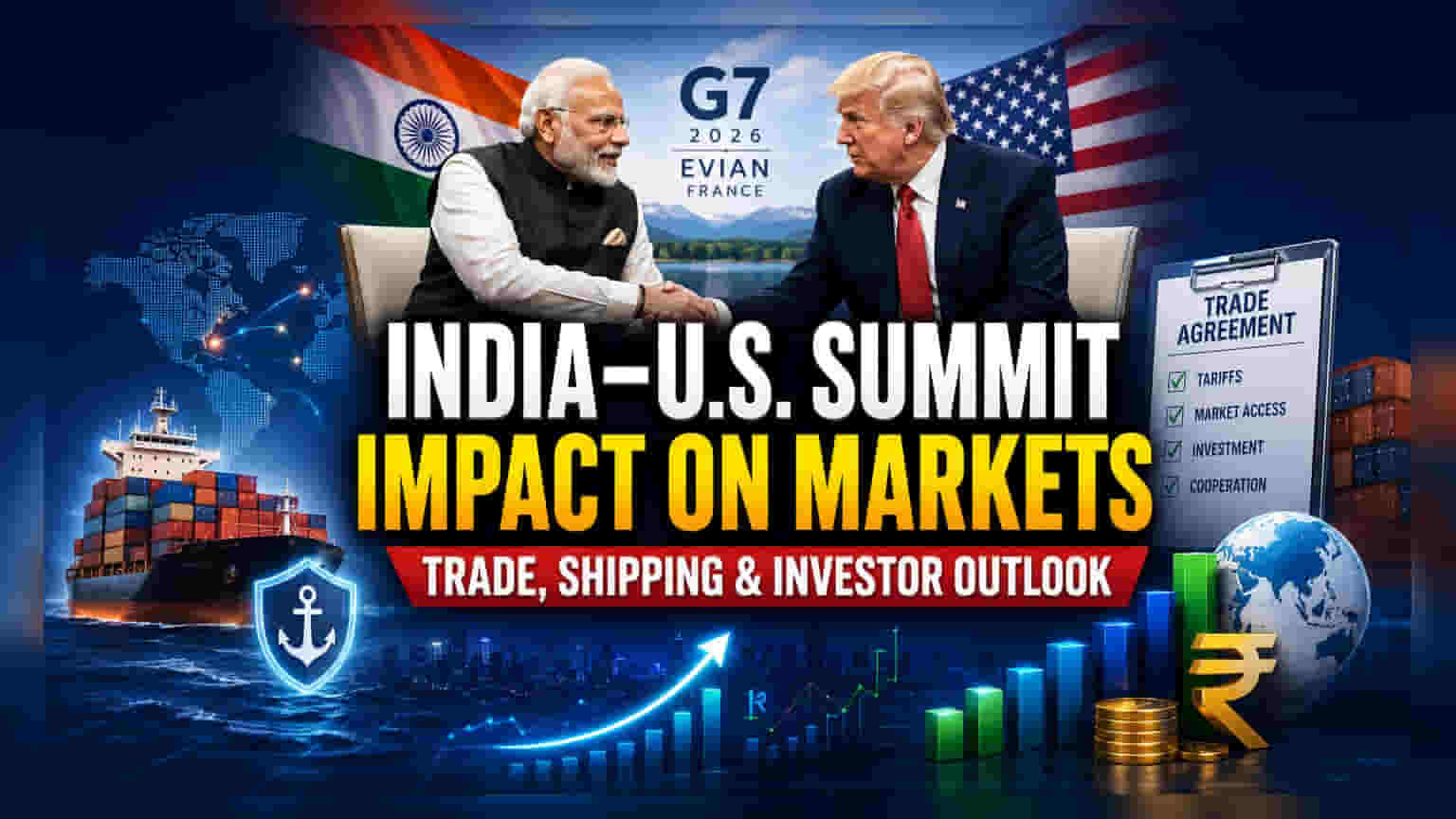
PM Modi and US President Trump’s recent meeting at the G7 summit highlights key diplomatic and trade dynamics. For Indian stock market investors, this interaction is a major signal for future trade policy, potential tariff adjustments, and global supply chain stability. We explain how such geopolitical developments can influence market sentiment, logistics costs, and foreign investment flows.
What Happened
Prime Minister Narendra Modi recently met with U.S. President Donald Trump at the G7 Summit in Evian, France. This meeting took place under sensitive circumstances following a U.S. military action that resulted in the loss of lives among Indian sailors. During the discussions, the conversation centered on the necessity of ensuring secure and free maritime traffic, as well as the broader context of the bilateral relationship between the two nations. The meeting also addressed lingering concerns regarding trade, specifically past tariff impositions.
Why This Matters For Investors
Stock markets do not exist in isolation from global politics. For investors, high-level diplomatic meetings between leaders of major economies like India and the U.S. act as a leading indicator for trade policy. When tensions rise or when there is uncertainty regarding bilateral relations, it often creates a "geopolitical risk premium" in the market. This means investors may become more cautious, leading to potential volatility in equities, particularly in sectors heavily reliant on international trade or cross-border partnerships.
Impact on Trade and Shipping
The emphasis on maritime security during the summit is particularly relevant for the shipping and logistics sector. Whenever there are concerns about the safety of sea routes, the cost of maritime insurance often rises. Furthermore, any disruption or heightened tension can cause fluctuations in freight rates, directly impacting the operational costs for Indian companies involved in export and import activities. Investors in logistics, ports, and international trade-dependent industries often monitor these situations closely, as disruptions can impact profit margins.
The Trade Policy Factor
A recurring theme in India-U.S. relations has been the negotiation around tariffs and market access. Markets prefer certainty. When diplomatic channels remain open and discussions are active, it reduces the fear of sudden, disruptive trade barriers. However, if trade disputes remain unresolved or if protectionist policies are signaled, it can create anxiety for companies with significant revenue exposure to the U.S. market. Investors generally watch for updates on trade deals or tariff rollbacks as positive catalysts for economic growth.
How Investors May Read This
For the broader Indian stock market, these diplomatic developments serve as a reminder of the global interconnectedness of the Indian economy. While domestic growth drivers are crucial, external factors like U.S. trade policy and global maritime safety can influence sentiment. A stable relationship with a major partner like the U.S. is generally seen as supportive of long-term economic stability. Conversely, if tensions escalate, it may affect foreign institutional investor (FII) sentiment, as global investors often shift funds to safer assets during times of international uncertainty.
What Investors Should Track
Investors may want to monitor a few key areas following these summit updates. First, keep an eye on official announcements regarding trade policy, as any tariff-related news will directly impact export-oriented sectors like IT, pharmaceuticals, and textiles. Second, watch for any updates on maritime security cooperation, which may affect the insurance and operational costs for shipping companies. Finally, observe trends in foreign institutional investment flows, as shifts in global diplomatic comfort levels often correlate with shifts in capital allocation by international investors.

