 Whalesbook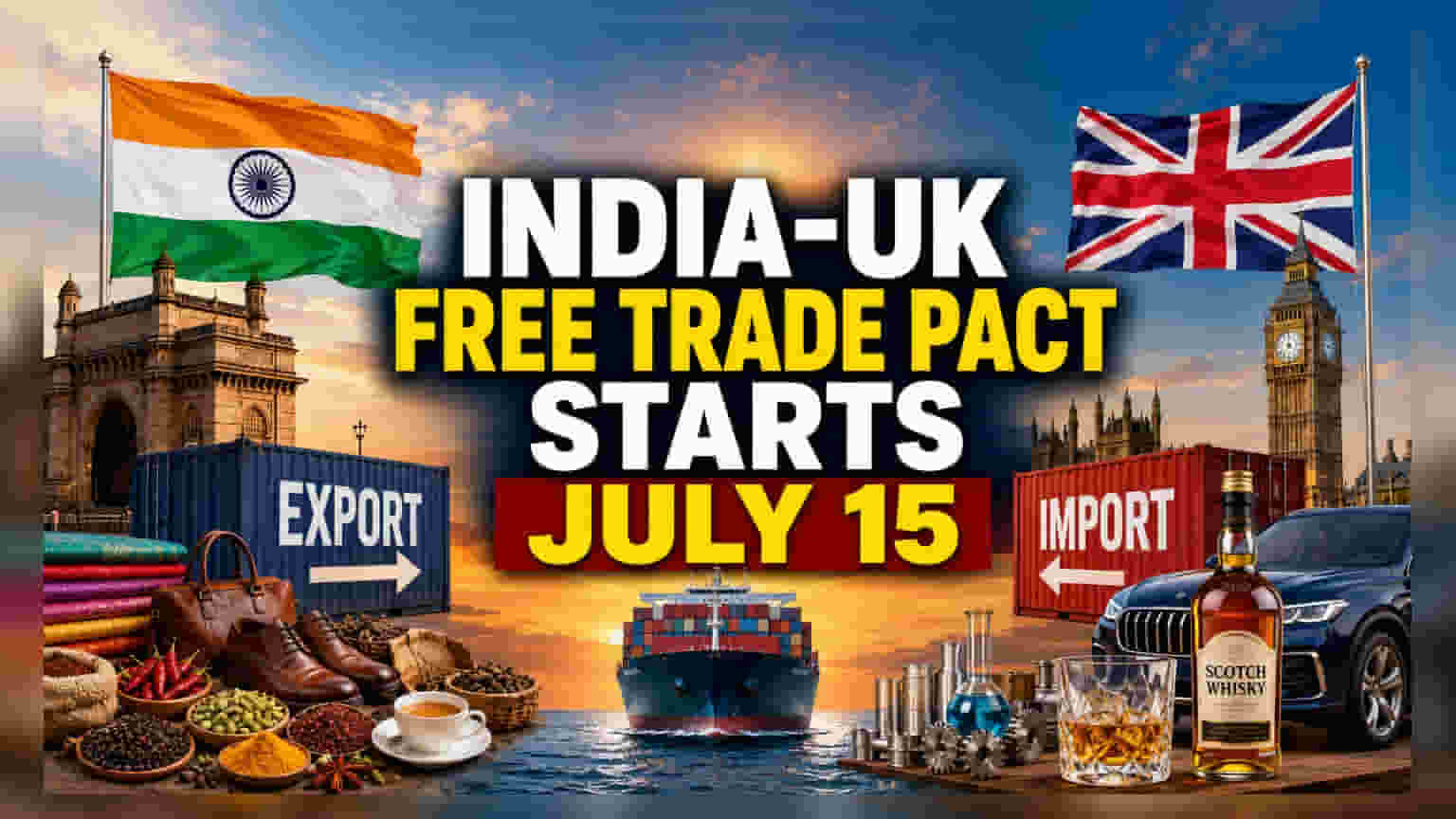


India and the UK will implement their landmark free trade agreement on July 15. The deal removes duties on major Indian exports like textiles, leather, and tea, while lowering taxes on UK imports. This creates opportunities for export-oriented sectors but also introduces new competition for domestic industries like automobiles and premium spirits.
What Happened
India and the United Kingdom have officially announced that their free trade agreement will come into force on July 15. This comprehensive pact, signed last year, is designed to significantly lower trade barriers. The agreement will remove or reduce import taxes on a wide range of goods moving between the two nations, with a stated long-term goal of doubling bilateral trade to $112 billion by 2030.
The Export Opportunity
For Indian companies, the most immediate impact is the removal of duty on several labor-intensive exports. Tariffs on textiles and apparel, which previously reached up to 12 percent, will be reduced to zero. Similarly, leather products—a significant sector for Indian exports—will see import duties of up to 16 percent eliminated. Other sectors set to benefit from duty-free access include marine products, chemicals, base metals, and agricultural goods like tea, coffee, and spices. These changes are expected to make Indian products more price-competitive in the UK market, potentially helping exporters gain market share.
The Import Competition
Investors should also consider the other side of the trade deal. India will reduce average tariffs on UK products from 15 percent to 3 percent. This shift introduces competitive pressure in specific sectors. For example, tariffs on imported Scotch whisky will be cut from 150 percent to 75 percent immediately, with further reductions planned over a decade. This move may impact the domestic market share of Indian spirits companies. Additionally, tariffs on automobiles will gradually decline from 110 percent to 10 percent under a quota system, which could change the competitive landscape for domestic vehicle manufacturers.
The IT and Services Angle
Beyond trade in goods, the agreement includes a social security arrangement known as the UK-India Double Contributions Convention Agreement. This allows British nationals working in India to continue building their UK State Pension entitlement without paying into the Indian social security system concurrently, provided they are on existing visa routes. For the Indian IT and professional services sector, this is a positive development as it simplifies the compliance burden and costs associated with the movement of highly skilled talent between the two countries.
What Investors Should Track
Moving forward, investors may want to monitor how these changes affect profit margins and market positioning across affected industries. For export-heavy companies in textiles and leather, the key monitorable will be the growth in volume and the ability to capture the projected market share in the UK. Conversely, for sectors facing increased import competition, such as premium spirits and automobiles, the focus will be on management's ability to defend market share and maintain margins in the face of cheaper imports. While the agreement is broad, the actual benefit will depend on how quickly companies can adapt their supply chains and pricing strategies to the new tariff environment.