

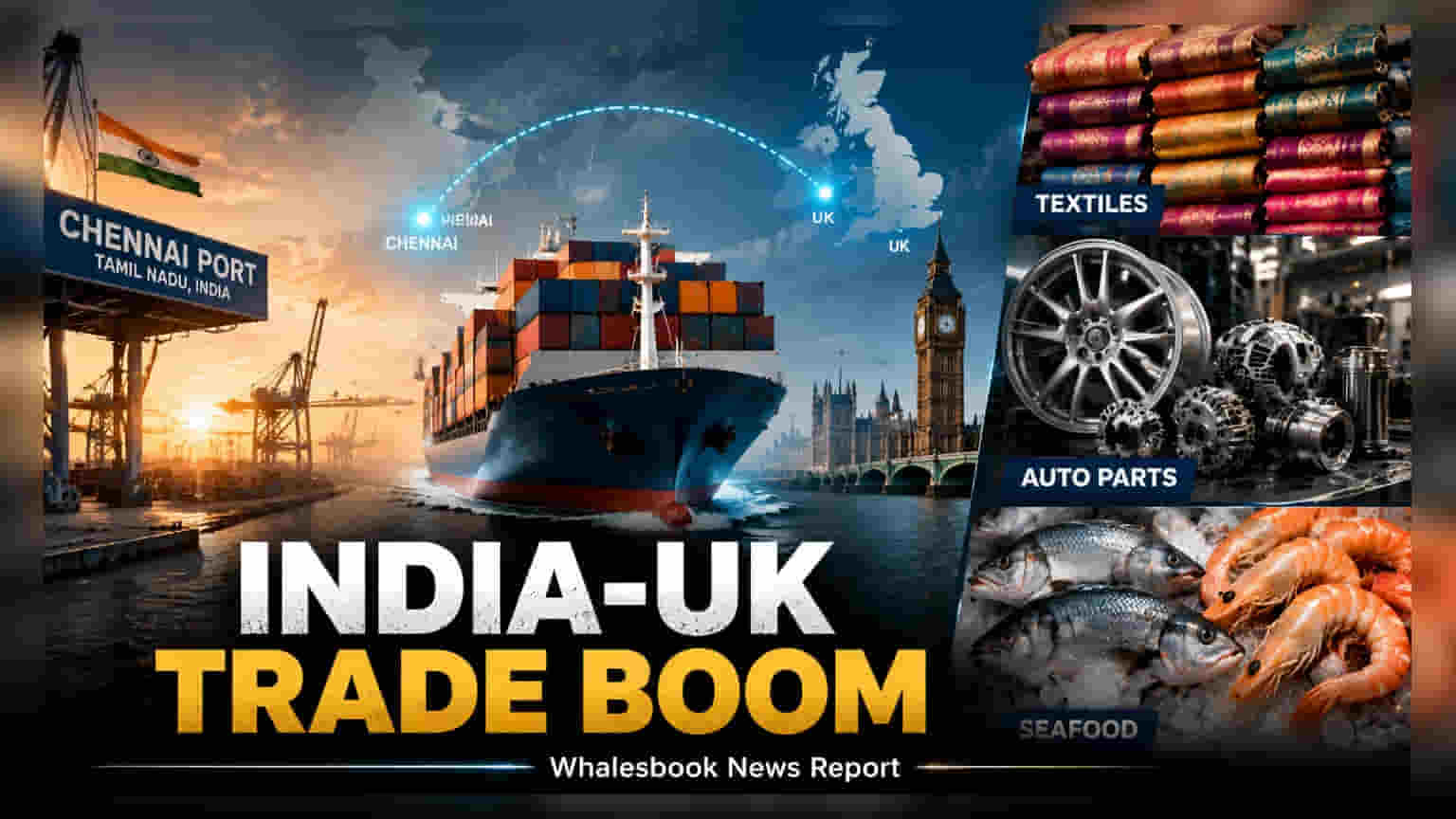
The newly effective India-UK trade agreement grants zero-duty status to key Tamil Nadu exports, including textiles and auto parts. This pact aims to streamline market access for state manufacturers, helping them compete more effectively against global rivals. The first commercial shipments worth over $446,000 have already been dispatched from Chennai.
The India-UK Comprehensive Economic and Trade Agreement (CETA) officially commenced on Tuesday, marking a major shift for export-oriented industries in Tamil Nadu. The deal, which is the UK's most significant trade agreement since leaving the European Union, is designed to reduce trade barriers and lower tariffs across several key manufacturing sectors. For Indian businesses, particularly those in Tamil Nadu, this provides a more predictable and cost-effective route to reach British consumers.
Competitive Edge for Local Industries
The agreement is particularly impactful for the textile and garment manufacturing hubs in Tiruppur and Coimbatore. With immediate zero-duty access to the UK market, these manufacturers can now compete on more equal footing with exporters from nations like Bangladesh and Pakistan, who have historically benefited from lower tariff structures. This change could help local players improve their profit margins or gain market share by offering more competitive pricing.
In addition to textiles, the engineering and auto component sectors in Chennai and Sriperumbudur are set to see improved export conditions. Simplified rules of origin—the criteria used to determine where a product was made—will make it easier for smaller businesses and MSMEs to integrate into international supply chains. Similarly, the removal of tariffs on electronics components and telecommunications equipment is expected to support manufacturing clusters near Chennai and Kancheepuram.
Impact on Marine and Leather Exports
Tamil Nadu’s coastal economy, especially in districts like Thoothukudi, stands to benefit from the elimination of duties on marine products such as tuna and shrimp. The leather and footwear industry is also a primary beneficiary, with finished goods destined for British retail brands now entering the UK without tariff burdens. These sectors have historically faced pressure from fluctuating global demand and regional competition, making duty-free access a meaningful factor for volume growth.
To mark the start of the agreement, the first set of commercial consignments, including auto components, gold jewellery, and leather footwear, were sent to the UK from Chennai on Tuesday. The total value of these initial shipments was reported at approximately US$446,046.
What Investors Should Track
While the duty-free status provides a clear supporting factor, the actual benefit for listed companies in these sectors will depend on several variables. Investors may monitor how quickly these companies can scale their production to meet potential demand in the UK. Furthermore, profitability will be influenced by how successfully firms manage their raw material costs and whether they can effectively pass on the benefits of lower tariffs. Monitoring management commentary in upcoming quarterly results will be important to understand if these export-oriented firms see a material change in order inflows or margins over the coming months.