 Whalesbook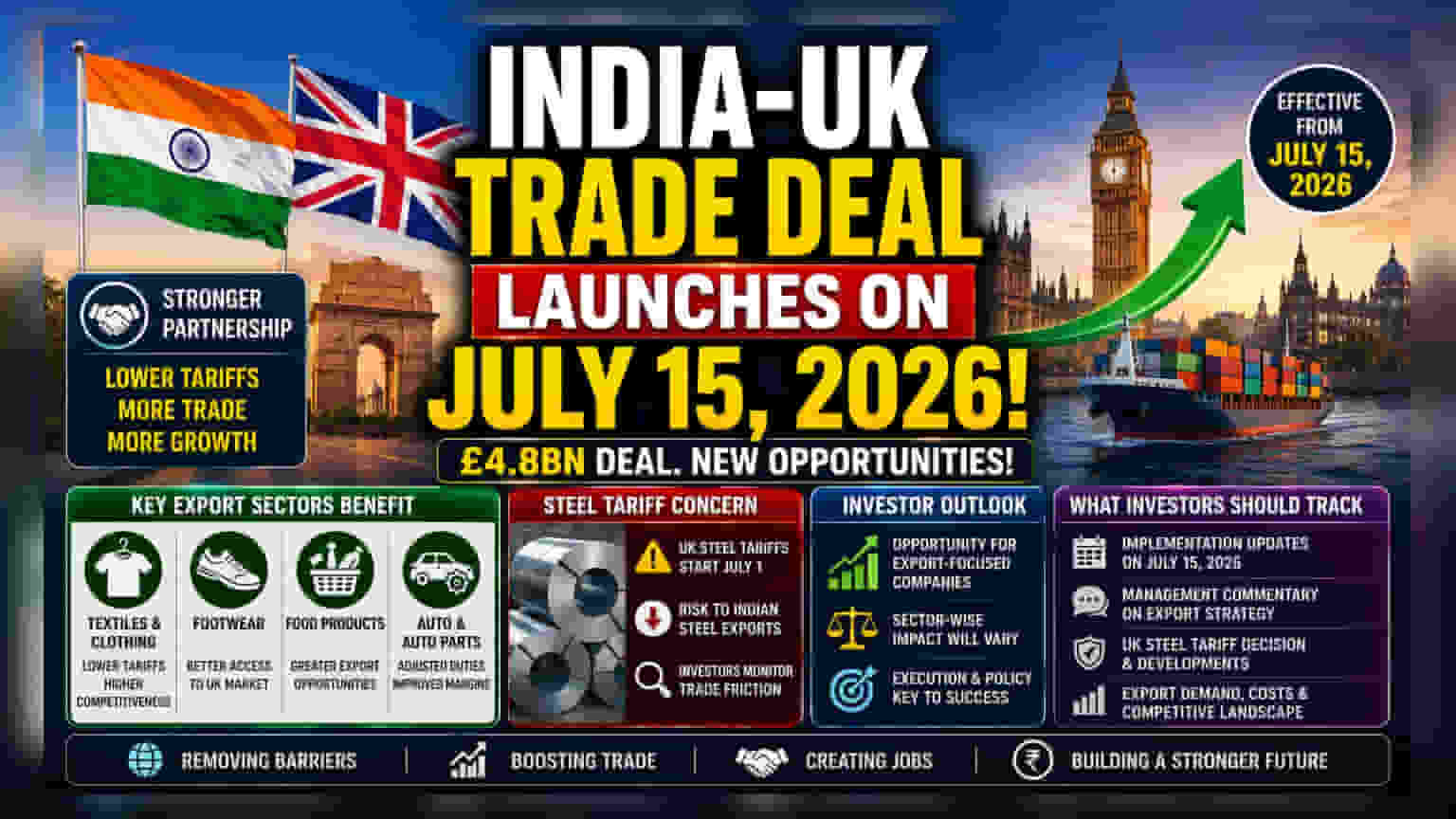


India and the UK will implement their trade agreement on July 15, valued at £4.8 billion. While the deal reduces tariffs for Indian textiles, footwear, and auto parts, it faces tension over upcoming UK steel tariffs. Investors in the auto, textile, and metal sectors may track how this agreement reshapes export opportunities and manages trade friction.
What Happened
The governments of India and the United Kingdom have confirmed that their comprehensive trade agreement will officially begin on July 15, 2026. This announcement follows high-level discussions between Prime Minister Keir Starmer and Prime Minister Narendra Modi. The agreement, valued at approximately £4.8 billion, aims to reduce trade barriers between the two nations. As part of this deal, both countries have agreed to lower tariffs on specific goods to encourage bilateral trade and improve market access for exporters.
Impact On Key Export Sectors
For Indian investors, the deal primarily affects sectors with significant export exposure to the UK market. The agreement includes a reduction in tariffs on several key categories, including textiles, clothing, footwear, and food products. These changes are designed to make Indian-made goods more competitively priced in the UK. Furthermore, the automotive sector is expected to see a shift in trade dynamics, with adjustments to duty rates on automotive parts. Investors may look at how these reduced costs impact the profit margins and volume growth for Indian companies that rely on exports to the British market.
The Steel Tariff Friction
While the trade agreement is a positive step, it is not without complexity. The implementation comes against the backdrop of a dispute regarding the UK's planned steel tariffs, which were scheduled to start on July 1. Indian stakeholders have expressed concern that these tariffs could undermine the benefits of the new trade agreement. For the Indian steel and metal sector, the UK is a key destination for exports. If the UK imposes these duties, it could create pressure on the export volumes and profitability of Indian steel manufacturers. Investors in the metal space may monitor whether this tension persists or if further diplomatic talks resolve the friction.
How Investors May Read This
This agreement introduces both opportunities and potential challenges for different sectors. On one hand, companies in the textile and auto-component industries may benefit from improved pricing power in the UK. On the other hand, the steel sector faces uncertainty due to the upcoming tariff policies. Market participants often track such trade deals to understand which companies can successfully leverage the new export environment. The impact will largely depend on how quickly companies can adapt their supply chains and how effectively the government manages the trade disagreements.
What Investors Should Track
Moving forward, the primary monitorable will be the actual implementation on the ground. Investors may look for management commentary in upcoming quarterly results regarding the company's export strategy to the UK. Additionally, it will be important to observe whether the UK proceeds with the planned steel tariffs or if they are softened as part of broader trade talks. Changes in raw material costs, export demand, and the competitive landscape in the UK market will be critical indicators for companies exposed to these sectors.