

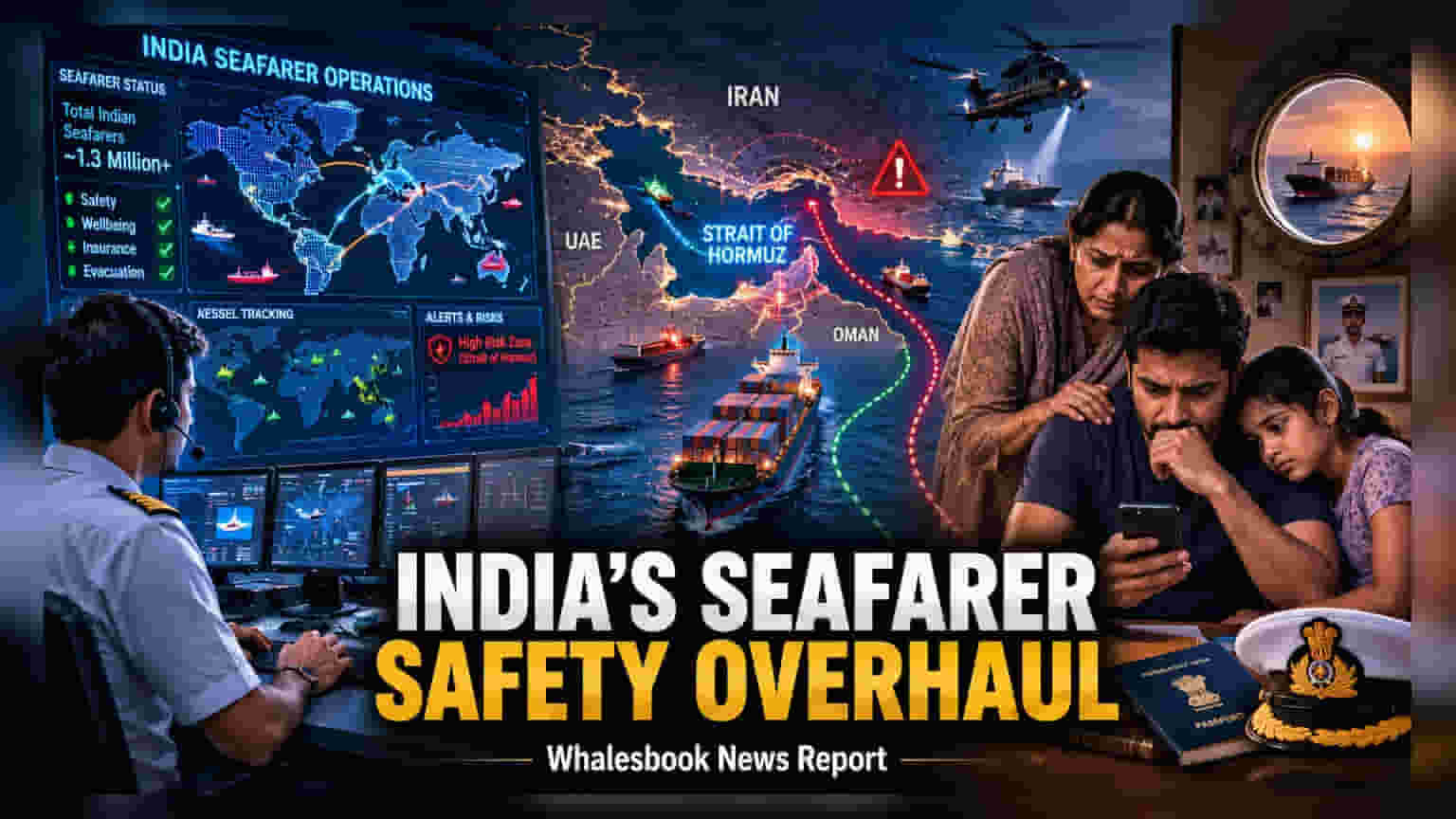
India has launched a real-time tracking system for all Indian seafarers in the Strait of Hormuz following recent maritime attacks. The government’s move aims to protect Indian crew members and streamline support for families, affecting how shipping companies manage transit through the volatile region.
The Ministry of Ports, Shipping and Waterways has introduced a new safety framework for Indian nationals working on merchant vessels navigating the Persian Gulf, the Strait of Hormuz, and the Gulf of Oman. This decision follows a series of recent attacks on commercial tankers that resulted in the death of a ninth Indian sailor, prompting an urgent review of maritime security protocols.
New Real-Time Tracking and Operational Oversight
A core part of this initiative is the development of a digital dashboard designed to monitor Indian crew members in real-time. Unlike previous systems that primarily focused on vessels flagged under India, this new approach tracks Indian seafarers across all merchant vessels, regardless of their country of registration. The system will integrate live location data, vessel ownership details, cargo information, and specific threat level assessments. For shipping companies and manning agencies, this mandate requires closer coordination with the Directorate General of Shipping to ensure that all crew manifests are updated and compliant with these new security standards.
Impact on Shipping and Manning Operations
Shipping companies operating routes through these high-risk areas will now face stricter compliance requirements. Union Minister Sarbananda Sonowal has directed shipowners and recruitment agencies to submit detailed compliance reports confirming that adequate safety measures are in place before vessels enter conflict-prone waters. This could lead to increased operational planning times, as vessels may be required to conduct more rigorous threat assessments and coordinate directly with Indian maritime authorities before proceeding. While this enhances worker safety, it also places the onus on shipping operators to ensure their vessels meet these heightened security criteria to maintain their ability to employ Indian crew members.
Support for Families and Diplomatic Response
The initiative also establishes a structured support system for the families of seafarers. Dedicated liaison officers are being appointed to serve as the primary point of contact for families during emergencies, ensuring they receive timely updates on medical status, financial entitlements, and repatriation procedures. Diplomatically, India continues to characterize these attacks as violations of the international right to innocent passage. By centralizing the government's response through an inter-ministerial task force involving the Indian Navy and the Ministry of External Affairs, India is attempting to create a unified contingency mechanism for its maritime workforce.
Investors and stakeholders in the logistics and shipping sector should monitor whether these compliance requirements lead to higher insurance premiums or logistical delays for tankers operating in the region. The effectiveness of this system in reducing the risks to Indian personnel will be a key factor for the shipping industry in the coming months.