 Whalesbook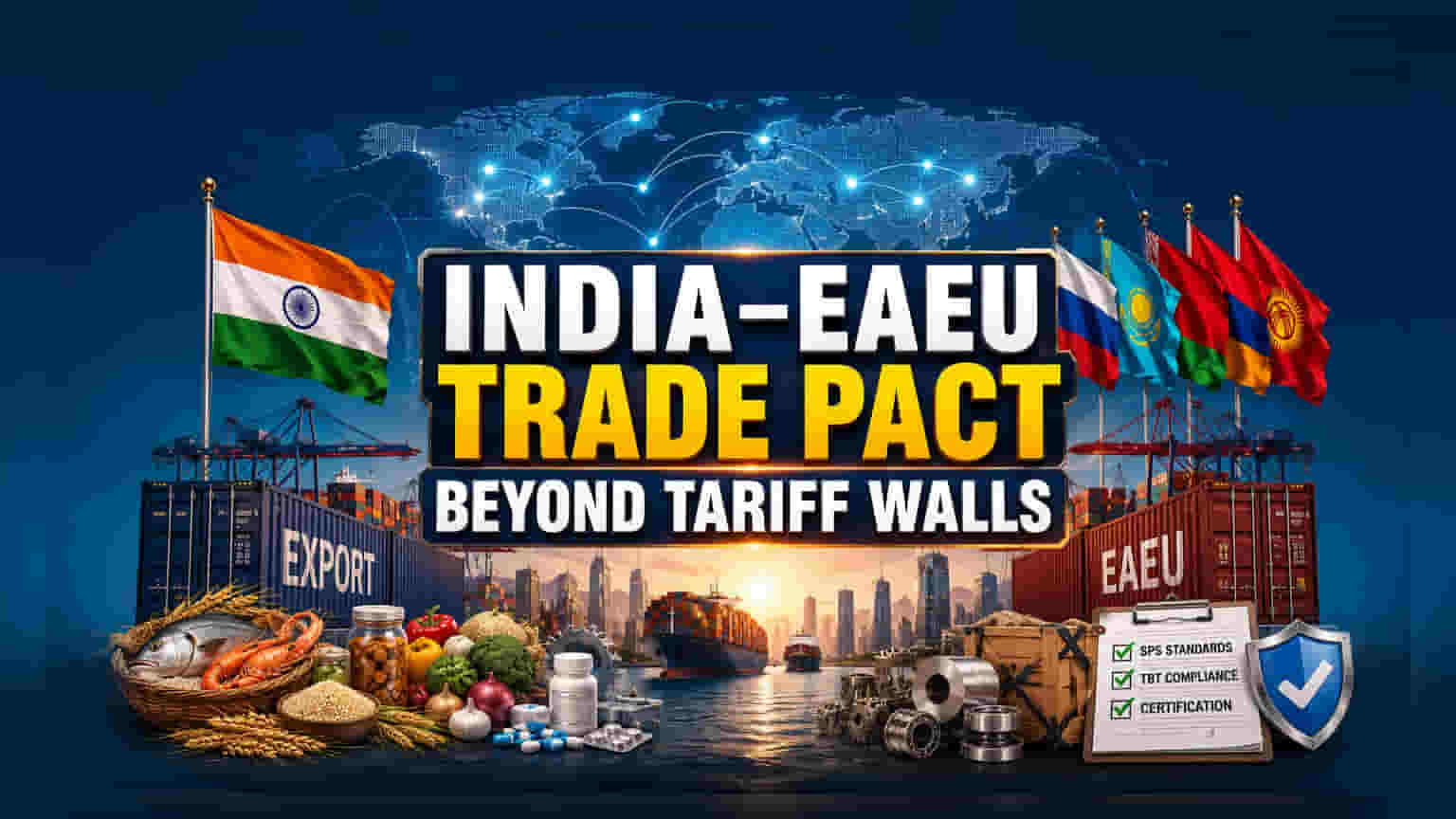


Beyond Tariff Walls
While traditional trade diplomacy often focuses on lowering duties, current negotiations between India and the five-nation Eurasian Economic Union (EAEU) are zeroing in on the more stubborn obstacle of non-tariff measures. Exporters of marine goods, processed foods, and agricultural commodities have long faced a labyrinth of Sanitary and Phytosanitary (SPS) and Technical Barriers to Trade (TBT) requirements. These standards, ranging from rigid antibiotic residue limits in seafood to onerous testing protocols for agricultural produce, frequently function as de facto market entry barriers. By seeking regulatory alignment and simplified certification procedures in the upcoming Moscow talks, India aims to unlock export potential that has remained dormant due to these invisible costs.
The Strategic Trade Pivot
The push for an EAEU pact is part of a broader shift in India's external trade policy. As geopolitical tensions lead to heightened tariff scrutiny in Western corridors—most notably the aggressive tariff cycle experienced in 2025 and early 2026—New Delhi is aggressively pursuing diversification. Russia acts as the anchor for the EAEU bloc, accounting for the lion's share of bilateral trade, which reached approximately $68.7 billion in the 2024-25 fiscal year. However, this figure is heavily skewed by India's massive energy imports. To correct this significant trade imbalance, the FTA negotiations specifically target the expansion of non-oil exports, aiming to fill supply gaps in the Russian market for pharmaceuticals, engineering goods, and consumer products that have emerged due to sanctions-related shifts in regional supply chains.
The Forensic Bear Case: Structural Risks
Despite the optimism surrounding a potential interim deal, systemic risks persist for Indian exporters. The primary concern is the divergence between regulatory frameworks. Unlike the recently concluded India-European Union FTA, which involves deeper integration and stronger dispute resolution mechanisms, the EAEU framework lacks a services chapter, limiting the agreement's scope to physical goods. Furthermore, institutional capacity remains a bottleneck. Indian exporters have previously encountered challenges with inconsistent enforcement of standards, where even certified units face sudden, opaque inspection notices. Without a robust, institutionalized mechanism to ensure transparency and prevent arbitrary regulatory shifts, the reduction of formal barriers may simply be replaced by new, unpredictable administrative hurdles. Furthermore, the reliance on specialized payment mechanisms—designed to circumvent banking sanctions—introduces currency conversion risks that could compress profit margins for smaller exporters, regardless of any gains achieved through tariff or standards liberalization.