

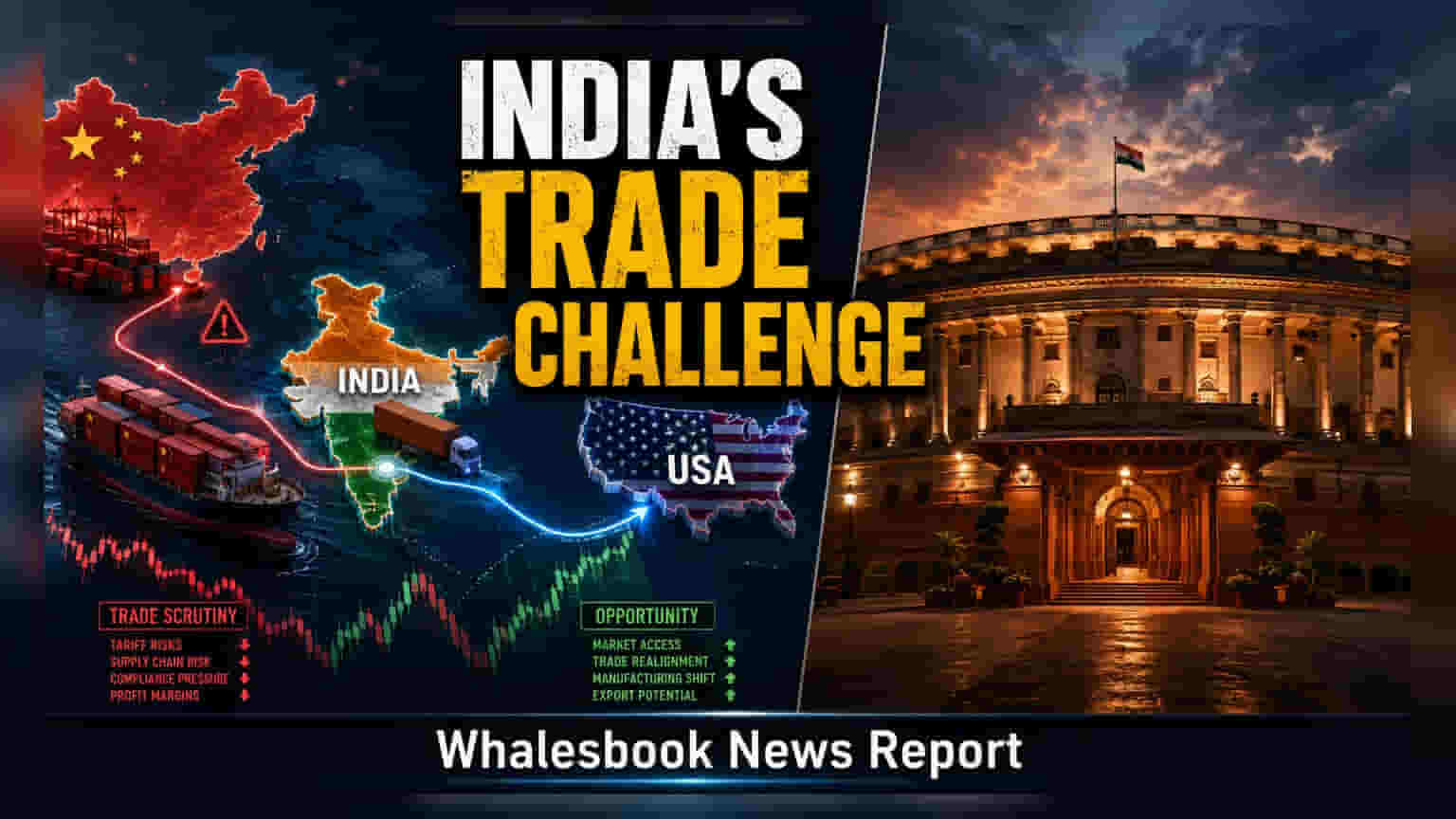
India is reviewing a U.S. report that classifies it as a high-risk transit point for Chinese goods, a move that could influence future trade compliance. Separately, the government has sent the Foreign Contribution (Regulation) Amendment Bill to a parliamentary committee. Investors should track if these developments lead to stricter export scrutiny or changes in how non-profit organizations manage foreign funding.
The Ministry of External Affairs (MEA) announced on Friday that it is conducting a detailed study of a recent report from Washington that flags India as a high-risk country for the transshipment of Chinese goods. The U.S. report, titled "The Great Transshipment Scam," places India in "Tier 1" of nations where Chinese exporters are allegedly routing products to bypass American tariffs. This classification puts India alongside other major economies like Canada, the EU, Japan, and South Korea, which are described as industrial bases where such trade risks might exist.
For investors and companies involved in international trade, this is a significant development. The U.S. Commerce Department has estimated that approximately $67 billion in goods were transshipped through India, Mexico, and Vietnam in 2025. While the report does not provide evidence of deliberate fraud by Indian entities, the label could lead to increased scrutiny from U.S. customs authorities. If the U.S. demands stricter proof regarding the origin of goods, it could lead to higher compliance costs or documentation requirements for Indian exporters in the coming quarters.
In a separate development, the MEA clarified that the decision to send the Foreign Contribution (Regulation) Amendment Bill, 2026, to a Joint Parliamentary Committee (JPC) was purely an internal legislative choice. The government firmly rejected claims that external pressure from Washington influenced this referral. The bill, which is currently under review by a 31-member committee in the Lok Sabha, aims to establish a "Designated Authority" to manage foreign contributions and assets of organizations whose licenses have been canceled or suspended.
This bill has drawn attention from social and educational sectors that rely on international grants. The primary concern among critics and some opposition parties is the potential for government-appointed authorities to assume control over the assets of these organizations. For the market, this represents a shift toward more centralized regulation regarding how foreign money enters and is managed within the country.
Investors and stakeholders should monitor two key updates. First, the outcome of the MEA’s study on the U.S. trade report, as any policy response could impact trade relations and export procedures. Second, the recommendations that emerge from the JPC review of the FCRA bill, which will clarify the final rules for asset management for organizations receiving foreign contributions.