

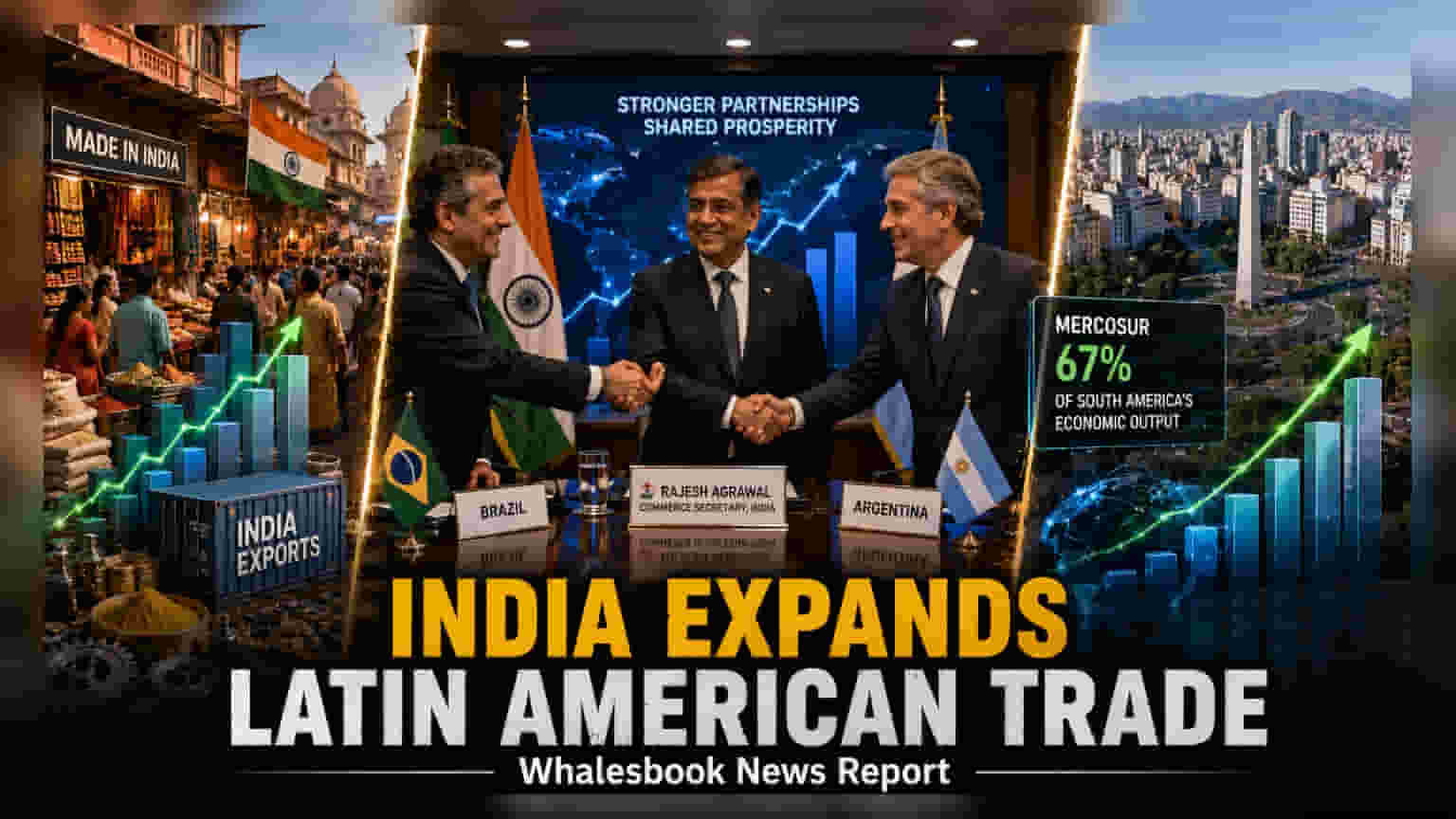
Commerce Secretary Rajesh Agrawal is visiting Latin America from August 24-28 to push for a wider trade agreement with the MERCOSUR bloc. The visit aims to reduce India's reliance on current markets and open new opportunities for exports. Investors are watching for progress on tariff reductions and potential resolutions to ongoing trade disputes at the WTO.
Commerce Secretary Rajesh Agrawal begins a multi-day visit to Latin America on August 24, 2026, aimed at strengthening trade ties and expanding the Preferential Trade Agreement (PTA) with the MERCOSUR trade bloc. This diplomatic push seeks to diversify India’s trade partners and reduce the country’s economic dependence on major existing markets.
The core focus of the visit involves Joint Trade Committee meetings with officials from Brazil and Argentina. India is pushing to expand the existing PTA, which currently covers around 450 tariff lines—categories of goods that receive lower or zero import taxes. Successfully expanding these terms could make it easier and cheaper for Indian companies to export goods like pharmaceuticals, chemicals, and manufactured items to these South American economies.
The MERCOSUR bloc, which includes Brazil, Argentina, Paraguay, Uruguay, and Bolivia, represents over 67% of South America’s total economic output. By seeking closer ties, New Delhi is looking to tap into a region that is also actively looking to broaden its own trade relationships, partly to reduce reliance on economic heavyweights like China and the United States.
While the goal is to open new channels, the visit also highlights significant hurdles in India-Latin America trade relations. A major point of friction remains the long-standing dispute at the World Trade Organization regarding India’s domestic support for sugarcane farmers. Brazil has challenged India’s export subsidies on sugar, claiming they violate international trade norms. India continues to defend these policies as necessary for domestic food security and rural livelihoods. How India navigates this issue while simultaneously pushing for a broader trade deal will be a key development to watch.
For Indian industries, a stronger trade framework could offer new avenues. Sectors such as pharmaceuticals, agricultural chemicals, and automotive components may see improved access if tariff barriers are lowered. Furthermore, the discussions are expected to touch upon cooperation in critical minerals, particularly with Chile, as India seeks to secure supply chains for energy transition technologies.
The immediate monitorable for market participants is the outcome of the trade committee meetings scheduled through August 28. Progress in these talks, particularly regarding the scope of tariff lines and any formal framework for the PTA upgrade, will signal the pace of trade integration. Investors may also track official statements regarding the WTO sugar dispute, as these outcomes often influence the broader sentiment on bilateral trade relations. It is important to note that MERCOSUR trade deals often require consensus among all member nations, which can lead to longer negotiation timelines compared to bilateral agreements with single countries.