

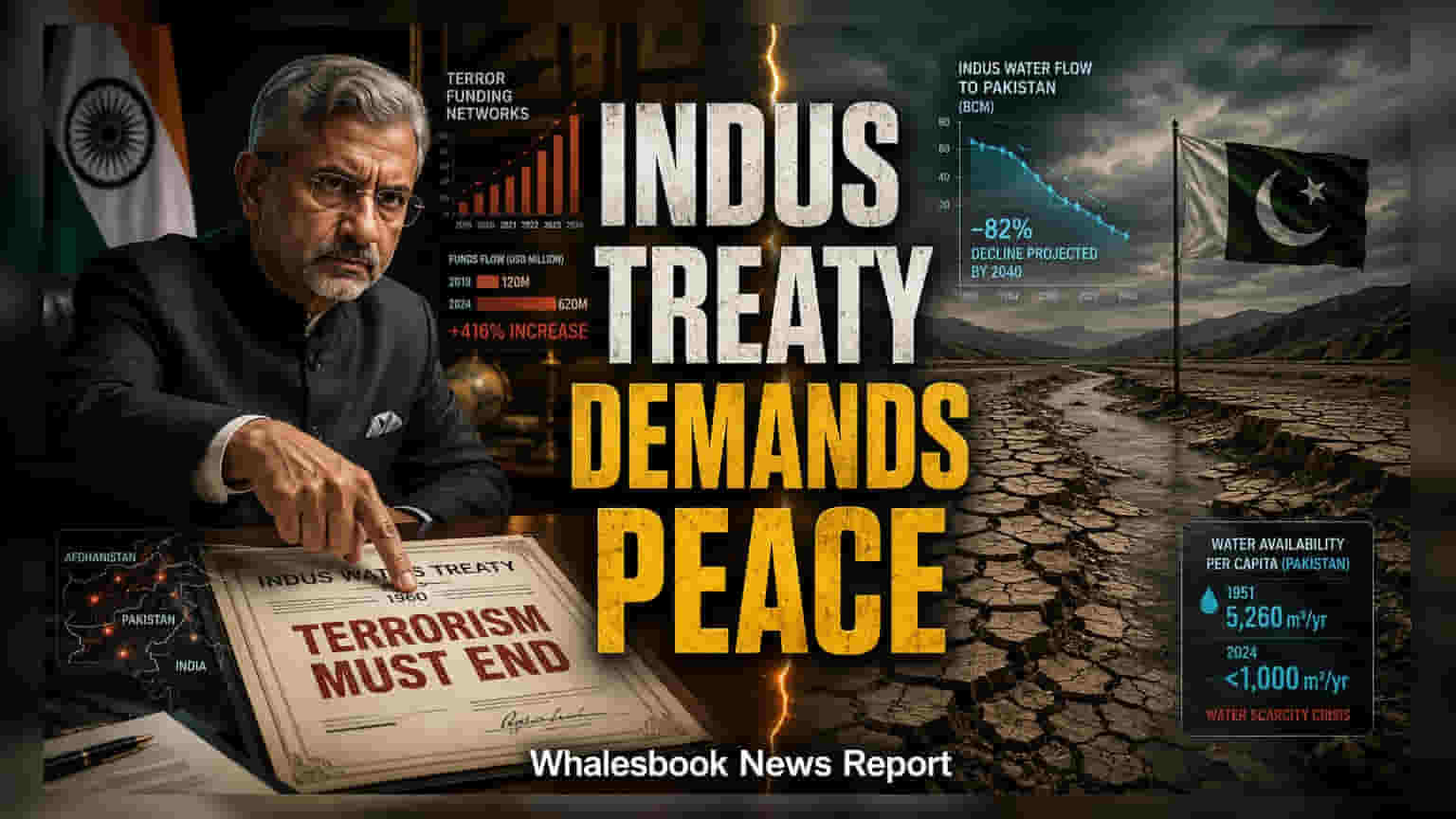
India has stated that the 65-year-old Indus Waters Treaty cannot continue in its current form. New Delhi maintains that any future water-sharing arrangement depends on Pakistan permanently ending cross-border terrorism. This policy shift reflects India’s focus on linking regional cooperation to national security interests.
Detailed Coverage
India has officially signaled a fundamental shift in its approach toward the 1960 Indus Waters Treaty, declaring that the agreement is no longer viable in its present form. Government sources indicated that the future of this water-sharing pact is directly tied to Pakistan’s ability to demonstrate a permanent end to cross-border terrorism. While India has not formally moved to withdraw from the treaty, it has emphasized that the current framework does not adequately address modern security and development requirements.
Treaty Renegotiation and Strategic Security
The Indus Waters Treaty, which has governed water rights between the two nations for over six decades, has effectively been in abeyance since India initiated a review following security incidents last year. Officials have stated that any potential reactivation of water-sharing provisions would require a comprehensive renegotiation. This stance is part of a broader strategy to ensure that international agreements do not operate in a vacuum, especially when national security is impacted by persistent geopolitical friction.
Infrastructure and Water Management Context
While concerns regarding water scarcity have been voiced by Pakistani leadership, internal reports and sector analysis point to significant infrastructure challenges within Pakistan as a primary driver of its water-related difficulties. Analysts have noted that Pakistan’s lack of adequate storage capacity and internal provincial disputes contribute to substantial water loss. India maintains that it continues to exercise its sovereign rights under the treaty, including the construction of run-of-river hydroelectric projects on the western rivers, which are permitted under the original 1960 agreement.
Historical Disputes Over Project Execution
The treaty has long faced challenges due to differing interpretations of dispute resolution mechanisms. India has frequently criticized the dual-track approach adopted by Pakistan, which involves pursuing parallel proceedings through neutral experts and arbitration courts. This practice has been described by Indian officials as an obstructionist tactic designed to delay legitimate hydroelectric development projects. As the diplomatic landscape evolves, the primary monitorable for this issue will be whether there are any concrete changes in cross-border security conditions or if formal legal proceedings toward a treaty modification are initiated by either party. The status of major infrastructure projects in the Indus basin, which rely on regulatory certainty for their execution, remains a point of observation for stakeholders interested in regional stability.