

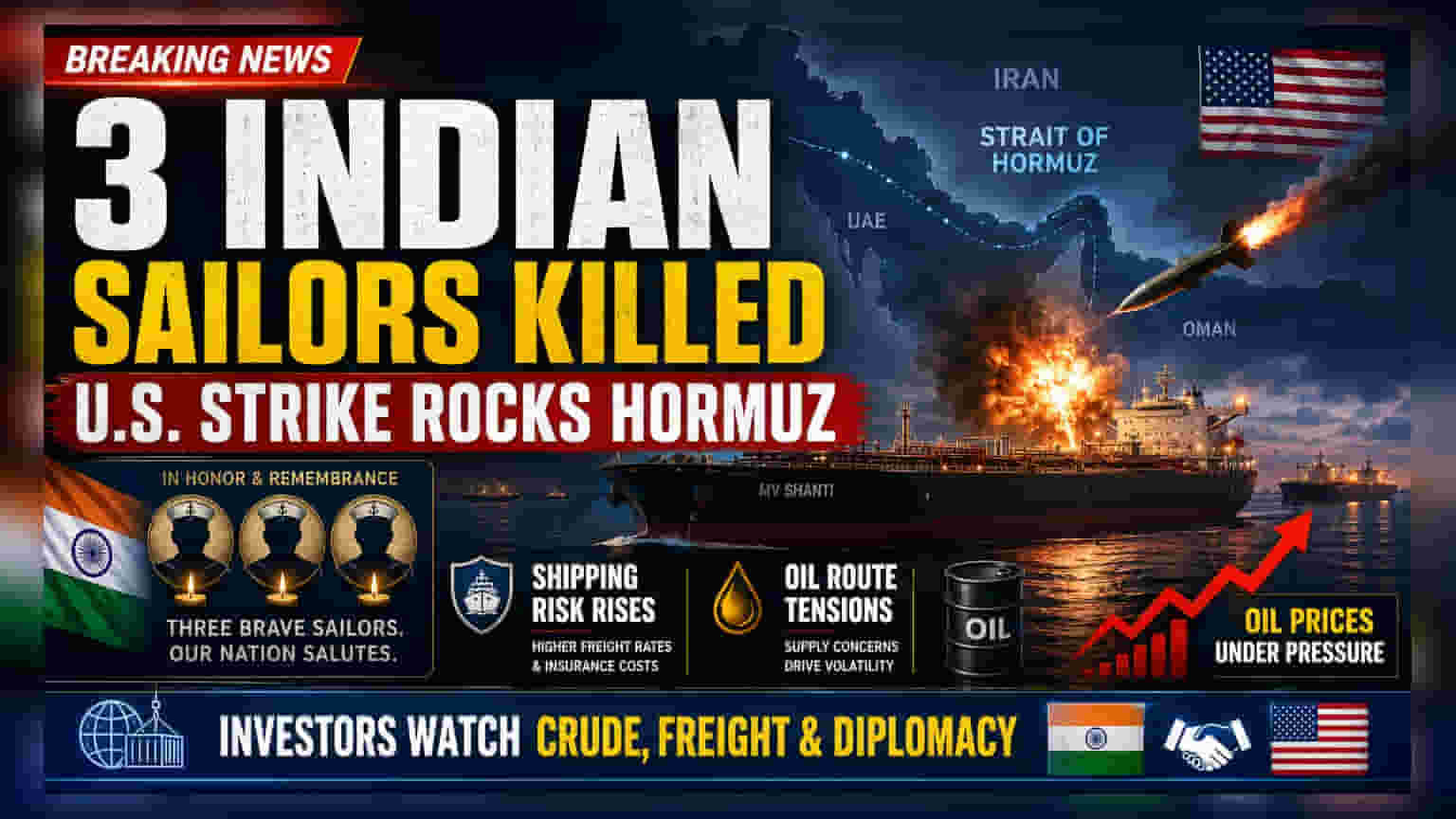
Three Indian sailors were killed in a U.S. missile strike in the Strait of Hormuz, prompting a diplomatic protest. The incident has raised concerns regarding shipping security and trade logistics in the region. Investors are monitoring the situation for potential impacts on energy supply chains, insurance premiums, and bilateral relations between New Delhi and Washington.
What Happened
A U.S. missile strike in the Strait of Hormuz has resulted in the death of three Indian sailors. The incident occurred in a critical shipping lane, leading to an immediate diplomatic response from New Delhi. The Indian Ministry of External Affairs has acknowledged the event and confirmed that the government is engaging with U.S. authorities to address the matter. The strike has highlighted the risks to commercial vessels operating in the region, particularly amid ongoing tensions regarding the enforcement of Western sanctions against Iran.
Impact on Shipping and Energy Logistics
The Strait of Hormuz is one of the world's most important oil chokepoints. Any instability in this region typically causes concern among global energy markets due to the potential for supply chain disruptions. For Indian investors, this incident introduces uncertainty regarding shipping costs and insurance premiums for vessels traversing the area. Increased security risks often lead to higher freight rates and shipping insurance, which can impact the profitability of logistics and shipping companies. Additionally, any sustained tension could affect the flow of energy imports, as India remains a significant importer of oil and gas from the broader region.
Strategic and Diplomatic Context
The incident has brought focus to India's foreign policy and its navigation of international sanctions. Following the strike, reports emerged that the Indian government sought clarification regarding the U.S. military action. The government has summoned U.S. officials to convey its concerns. Analysts are observing how this event influences India’s approach to strategic independence. While India has historically maintained a policy of engagement with various global powers, this event has triggered internal debates regarding the nation’s alignment on policy matters, such as the enforcement of Western sanctions against Iran and Venezuela.
What Investors Should Track
Investors may monitor several factors as the situation develops. First, the movement of global crude oil prices remains a key variable, as instability in the Strait of Hormuz often leads to price volatility. Second, developments in diplomatic relations between India and the U.S. regarding the safety of commercial transit are crucial. Third, market participants may track any official updates on shipping insurance rates or freight costs for companies with exposure to Middle Eastern trade routes. Finally, any potential adjustments in India's energy import strategy or trade relations with the region will be important indicators of how the government plans to manage these geopolitical risks.