

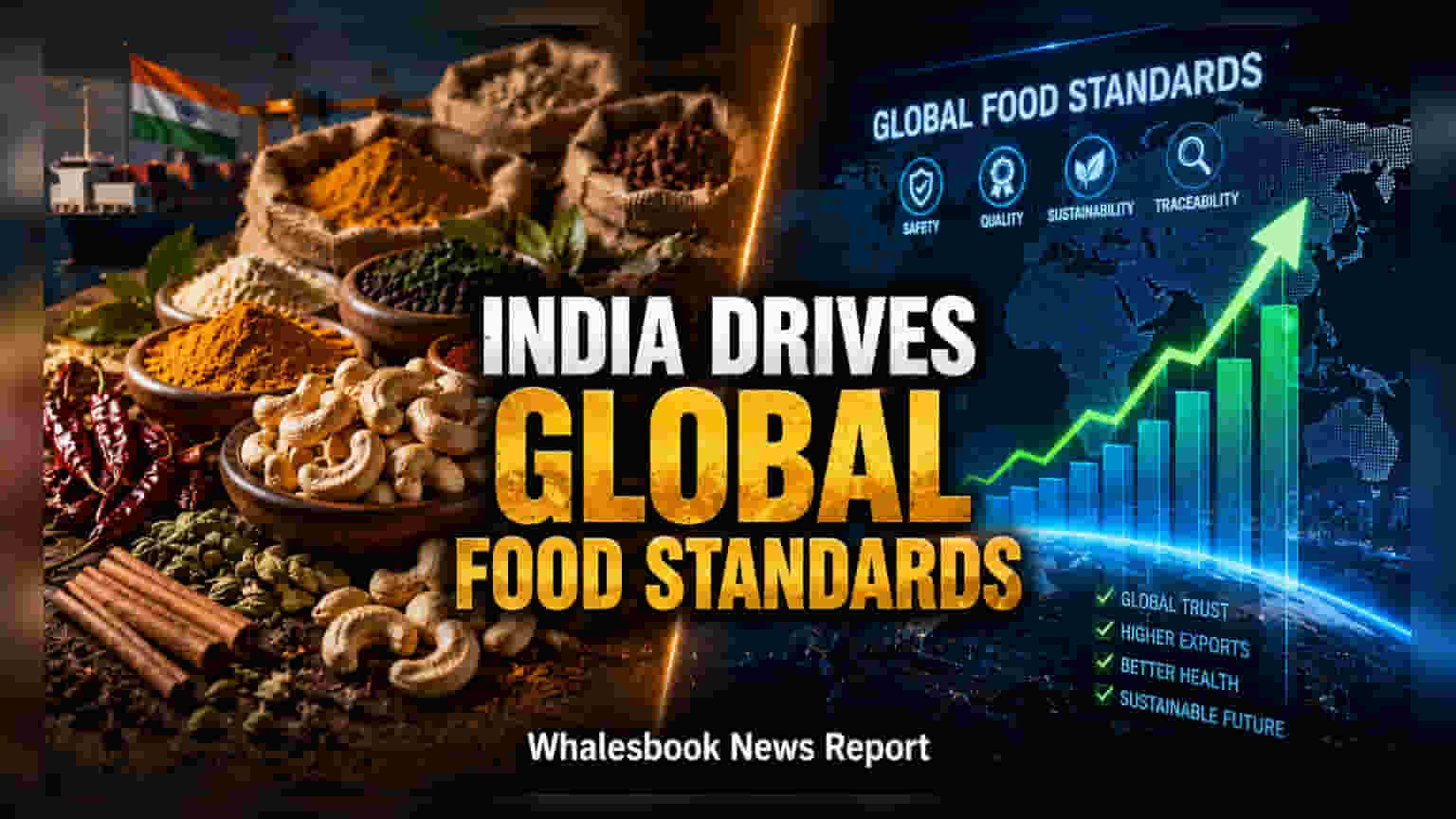
India successfully pushed for seven new international food safety standards at the 49th Codex Alimentarius Commission. The approval of a global standard for cashew kernels is expected to reduce trade barriers for Indian exporters. These measures aim to harmonize quality requirements for spices and enhance global market access for Indian food products.
India’s influence in the global food industry grew significantly last week as the country led the adoption of seven international food standards at the 49th Codex Alimentarius Commission (CAC49) in Geneva. These standards, developed under international collaboration, are designed to create a more predictable environment for global trade while ensuring higher food safety levels.
Impact on Spices and High-Value Exports
The commission adopted new Codex standards for dried coriander seeds and fresh curry leaves, both of which are major export items for India. By harmonizing quality requirements, these standards help Indian exporters avoid technical hurdles in foreign markets. Furthermore, India co-chaired the development of standards for vanilla and large cardamom. For food companies, these unified rules mean lower compliance costs when selling across different countries, as products will meet a single, internationally accepted quality benchmark.
New Standard for Cashew Kernels
A major highlight of the event was the approval of India's proposal to develop a new global standard for cashew kernels. The proposal, spearheaded by the Food Safety and Standards Authority of India (FSSAI), received widespread support from other member nations. For the Indian cashew industry, which is a significant global producer and exporter, this standardization is expected to streamline trade. By reducing non-tariff barriers, the industry may see more transparent pricing and improved market access, which are critical for maintaining competitiveness against other producing nations.
Operational and Safety Guidelines
Beyond product-specific standards, India also contributed to guidelines aimed at operational efficiency and consumer safety. This includes the adoption of annexes for the safe use and reuse of water in food processing. As food manufacturers increasingly face pressure to adopt sustainable practices, these guidelines provide a framework for managing water use without compromising safety. Additionally, the commission approved updated guidelines to control foodborne illnesses like Salmonella and Campylobacter in chicken meat. The meeting also addressed labeling amendments for prepackaged foods, which will provide clearer information for consumers globally.
Future Monitoring for Food Businesses
India’s election as co-chair of the Electronic Working Group for New Food Sources and Production Systems places the country at the center of future regulatory discussions. This working group will focus on identifying gaps in current risk analysis frameworks, particularly for emerging food technologies. For investors and businesses in the food and beverage sector, the key monitorable will be how these new standards are implemented domestically and how they impact the cost of exports. Companies that quickly align their processing and quality control systems with these new international benchmarks may find it easier to expand their footprint in premium global markets.