

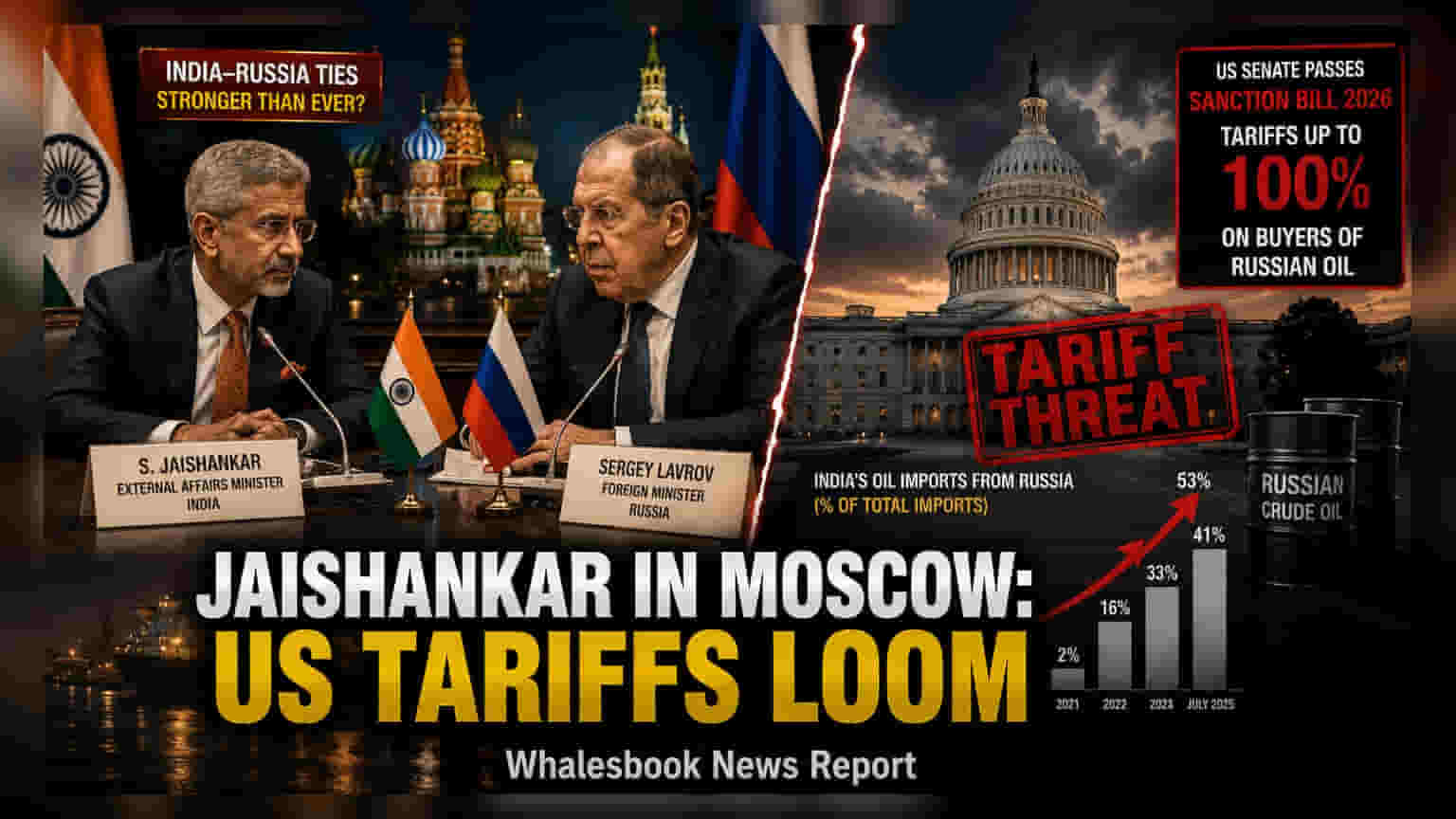
External Affairs Minister S. Jaishankar is visiting Moscow for key trade talks as the US Senate considers a bill to impose up to 100% tariffs on nations purchasing Russian energy. With India relying on Russia for over half of its crude oil imports, investors are monitoring the potential impact on domestic energy costs, refining margins, and trade relations with Washington.
External Affairs Minister S. Jaishankar is in Moscow for a two-day visit beginning August 23, 2026, to co-chair the 27th session of the India-Russia Inter-Governmental Commission on Trade, Economic, Scientific, Technological, and Cultural Cooperation. While these meetings are standard for strengthening bilateral ties, the timing has drawn significant attention due to rising geopolitical tension regarding India's energy imports.
The visit coincides with the US Senate’s recent passage of the 'Lindsey O. Graham Sanctioning Russia and Iran Act of 2026.' This legislation, if signed into law, would authorize the US President to impose tariffs of up to 100% on countries that continue to import significant volumes of Russian oil, gas, or uranium. For India, this creates a complex environment, as the nation has significantly increased its intake of discounted Russian crude, which accounted for more than 50% of total oil imports in July.
Impact on Energy and Trade
For investors, the primary concern lies in how this tension affects India’s energy import costs and broader trade relations. Indian Oil Marketing Companies (OMCs) have benefited from lower crude prices, which have supported their refining margins and helped manage domestic fuel inflation. Any restriction or sanction-related hurdle could force these companies to source crude from more expensive markets, potentially hurting profitability.
Furthermore, the US remains a critical trade partner for India's pharmaceutical and manufacturing sectors. The potential for secondary tariffs creates uncertainty for export-oriented companies that rely on a stable trade environment between New Delhi and Washington. While government sources have indicated that bilateral talks with US officials have been reassuring, the legislative progress of the US bill remains a key area of uncertainty.
What Investors Should Monitor
Investors are keeping a close watch on several factors following this diplomatic visit. First, the official statements from the Ministry of External Affairs regarding energy cooperation will be crucial. Any indication that India is seeking to diversify its oil supply or negotiate specific exemptions from the US would be significant.
Second, the focus will remain on the progress of the US legislation. As it currently stands, the bill still requires passage by the US House of Representatives and administrative approval before it can become law. Finally, the market will monitor global crude oil price movements and the gross refining margins of state-run and private refiners, as these will directly reflect any shifts in energy procurement costs. The stability of the current account deficit and the rupee will also remain essential, as rising oil import costs can pressure both indicators.