

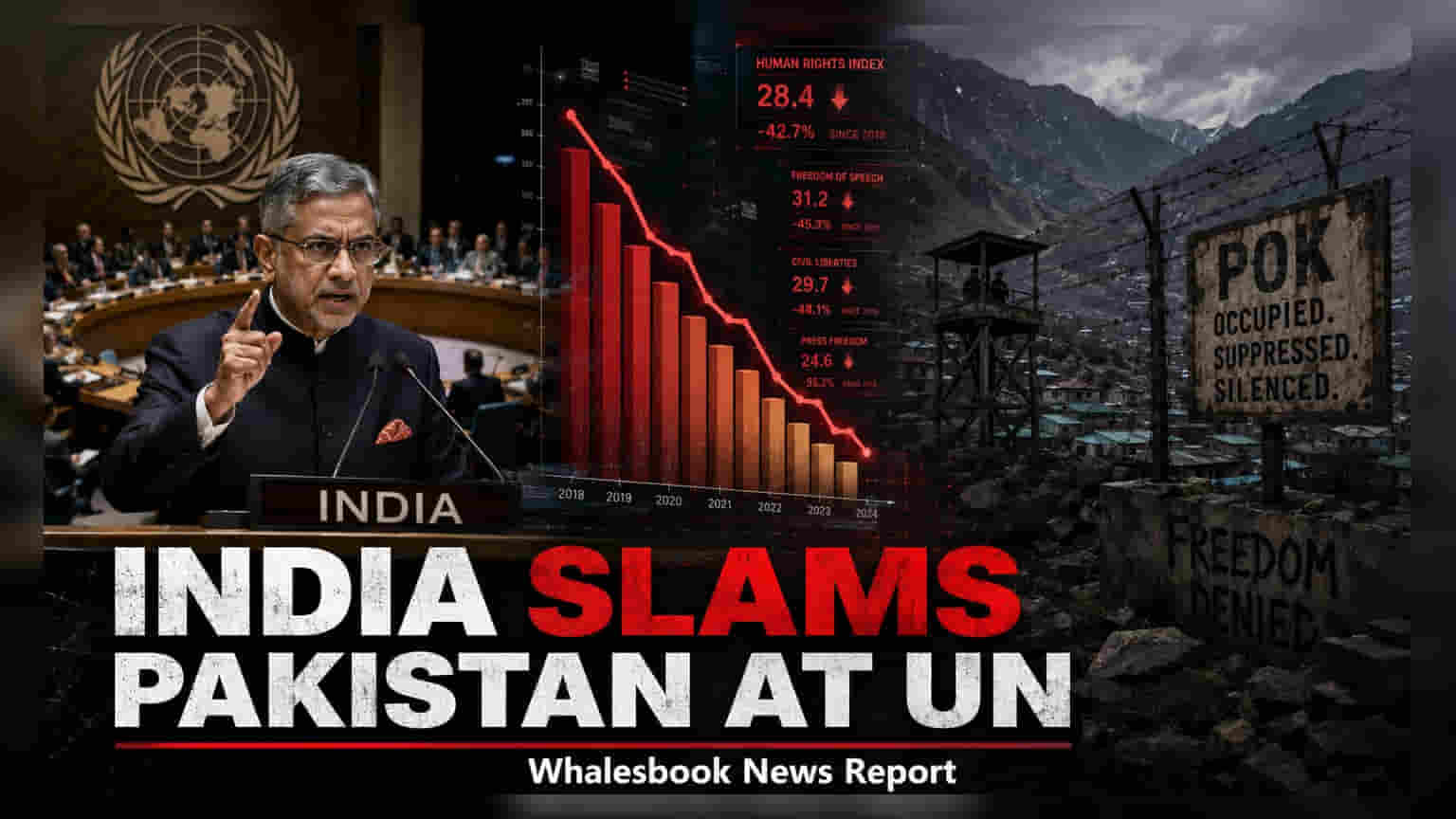
India strongly condemned human rights abuses in Pakistan-Occupied Kashmir during a UN Security Council session. Ambassador Harish Parvathaneni urged Pakistan to address its internal governance and democratic failures instead of raising baseless narratives about Jammu and Kashmir.
Detailed Coverage
India took a firm stand at the United Nations Security Council today, forcefully rejecting Pakistan's attempts to internationalize the issue of Jammu and Kashmir. India's Permanent Representative to the UN, Harish Parvathaneni, used the platform to call out Pakistan for systemic human rights violations in Pakistan-Occupied Kashmir (POK), describing the situation as a long-standing policy of oppression.
Confronting Diplomatic Tactics
Ambassador Parvathaneni characterized Pakistan's recurring focus on Kashmir at global forums as a deliberate diversionary tactic. By constantly raising the issue, Pakistan seeks to shift the spotlight away from its own significant internal political and economic instability. India maintained its clear stance that Jammu and Kashmir is an inseparable part of its territory, emphasizing that the only remaining issue regarding the region is Pakistan's continued illegal occupation.
Focus on Domestic Governance Failures
Beyond the regional dispute, the Indian envoy brought attention to the deteriorating state of democracy within Pakistan. He specifically highlighted several concerning developments, including the imprisonment of former political leadership, the exclusion of major opposition parties from the electoral process, and the influence of the military on constitutional processes. Parvathaneni argued that these actions signify a collapse of democratic institutions, urging the Pakistani establishment to focus on addressing its internal challenges rather than propagating fabricated narratives on an international stage.
Perspectives on Global Security Frameworks
During the session, India also contributed to a broader discussion on the effectiveness of the UN Security Council. The Indian delegation advocated for a rigorous review of existing council mandates to ensure they remain relevant to modern geopolitical realities and are managed efficiently in light of current financial constraints. Furthermore, India proposed a stronger role for regional organizations in managing and resolving conflicts, suggesting that such local bodies may be better equipped to handle specific disputes compared to overarching global mandates.
Moving forward, international observers and diplomats will be tracking how the UN Security Council responds to India's push for mandate reforms. Additionally, the focus remains on whether Pakistan will shift its diplomatic strategy in response to India's public challenge regarding its domestic governance and human rights record.