 Whalesbook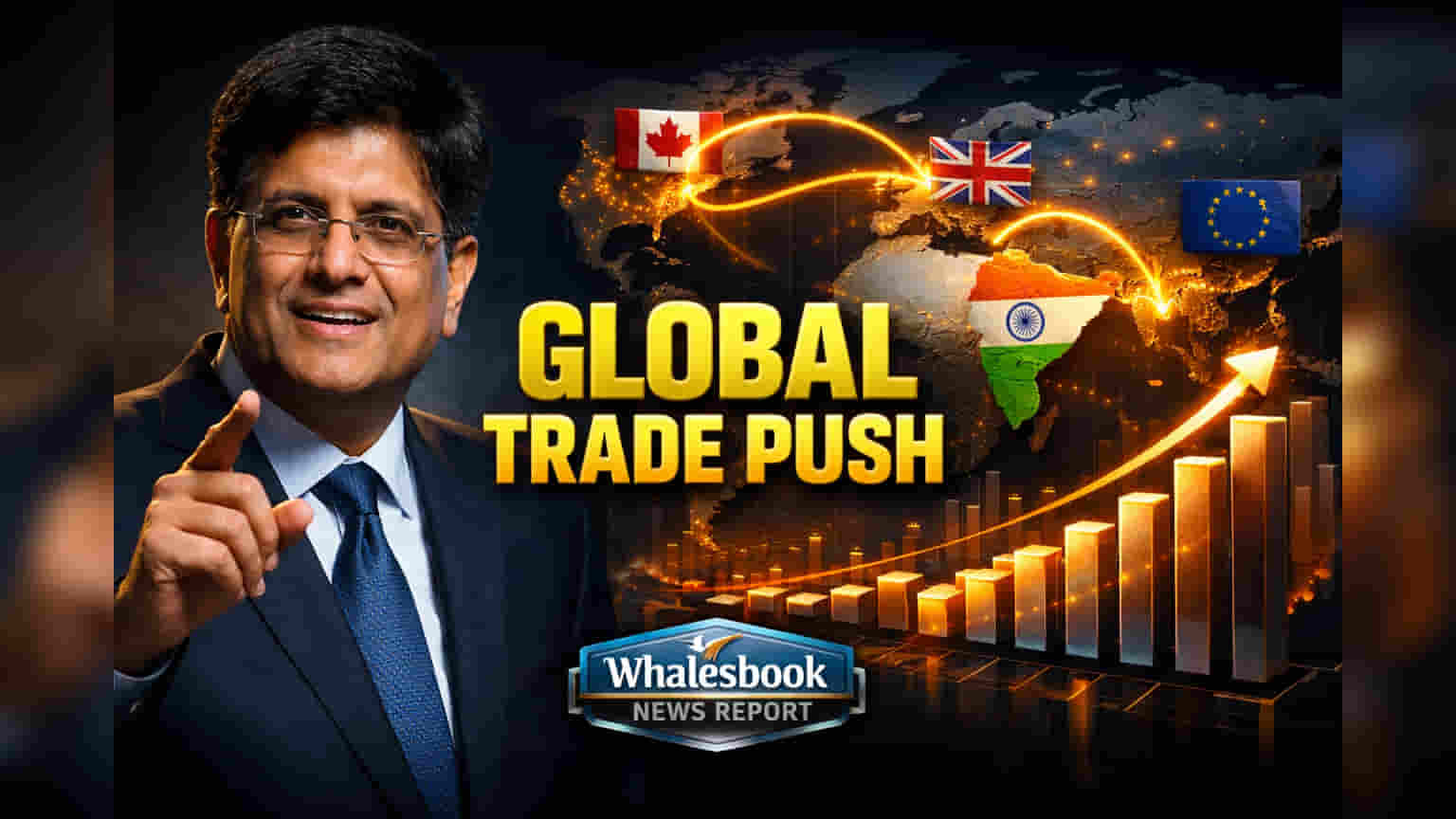
India Pushes Ahead on Mega FTAs with Canada, UK, EU
India is significantly expanding its global trade reach, with Free Trade Agreement (FTA) talks advancing quickly with major partners. Led by Commerce and Industry Minister Piyush Goyal, this strategy aims to build deeper economic ties and open up new markets. It signals a proactive shift toward global economic integration, moving away from previous protectionist stances.
India-Canada Trade Deal Gains Speed
Talks for the India-Canada Comprehensive Economic Partnership Agreement (CEPA) are moving quickly. The framework was signed March 2, 2026, setting a path to conclude a balanced deal this year. Minister Piyush Goyal's visit to Canada in May 2026, with a business delegation, aims to speed up these talks. Cooperation includes clean energy, critical minerals, aerospace, and defense, reflecting shared goals. The two countries aim to double bilateral trade to $50 billion by 2030. This helps Canada pivot to the Indo-Pacific and India secure energy and tech partners.
India-UK Trade Pact Nears Launch
The India-UK Comprehensive Economic and Trade Agreement (CETA), signed July 24, 2025, is set to launch soon. The UK Parliament approved it in under a year, a fast track for such agreements. CETA is expected to be implemented by early May 2026. The deal aims to double bilateral trade to $112 billion by 2030, giving Indian exports 99% duty-free access to the UK. This is a key benefit for labor-intensive industries and growth sectors like engineering and auto components.
India-EU Free Trade Agreement Moves to Final Stages
After concluding the India-EU Free Trade Agreement (FTA) on January 27, 2026, final reviews are now happening. The full text was released in late February 2026, with implementation planned for early 2027. This major deal creates one of the largest free trade zones globally, covering nearly two billion consumers. It will deepen India's links with European markets, help align regulations, and boost supply chain roles. The EU expects this could double its goods exports to India by 2032, saving European companies about €4 billion yearly in duties. Ratification is targeted for November 2026.
Focus on Key Sectors and Global Trade Environment
These trade deals align with India's focus on high-growth areas. Talks with Canada include clean energy, critical minerals, aerospace, and defense. Demand for minerals like lithium and cobalt is set to rise due to the energy transition. India also aims for 60% of its power capacity to be non-fossil fuel by 2035. Globally, trade growth is slowing in 2026 due to geopolitical issues and reduced tech investment. However, FTAs like India's show a trend towards more integrated global trade, despite policy uncertainty and protectionism. New Zealand also recently signed an FTA with India.
Challenges Ahead: Trade Gaps and Implementation Risks
Despite opportunities, risks exist. India's past FTAs have sometimes led to wider trade deficits, with imports growing faster than exports. Implementing these new deals will be complex, involving strict rules of origin and potential non-tariff barriers. EU approval processes can also be lengthy. The global trade climate is volatile, with Middle East tensions affecting energy prices and supply chains. Specific issues, like the EU's past actions against Indian optical fibre cables, show ongoing trade friction. New US tariffs add more global uncertainty. While FTAs aim to boost exports, some sectors, like agriculture, may face increased competition.
Future View: Economic Integration and Global Standing
These FTAs show India is strategically adjusting its economic partnerships. The fast pace suggests a push for deeper integration into global supply chains and future growth. Success depends on smooth implementation, managing trade, and navigating global politics. Analysts are cautiously optimistic, expecting these deals to boost India's global economic role, if domestic reforms match and world trade stays stable.