 Whalesbook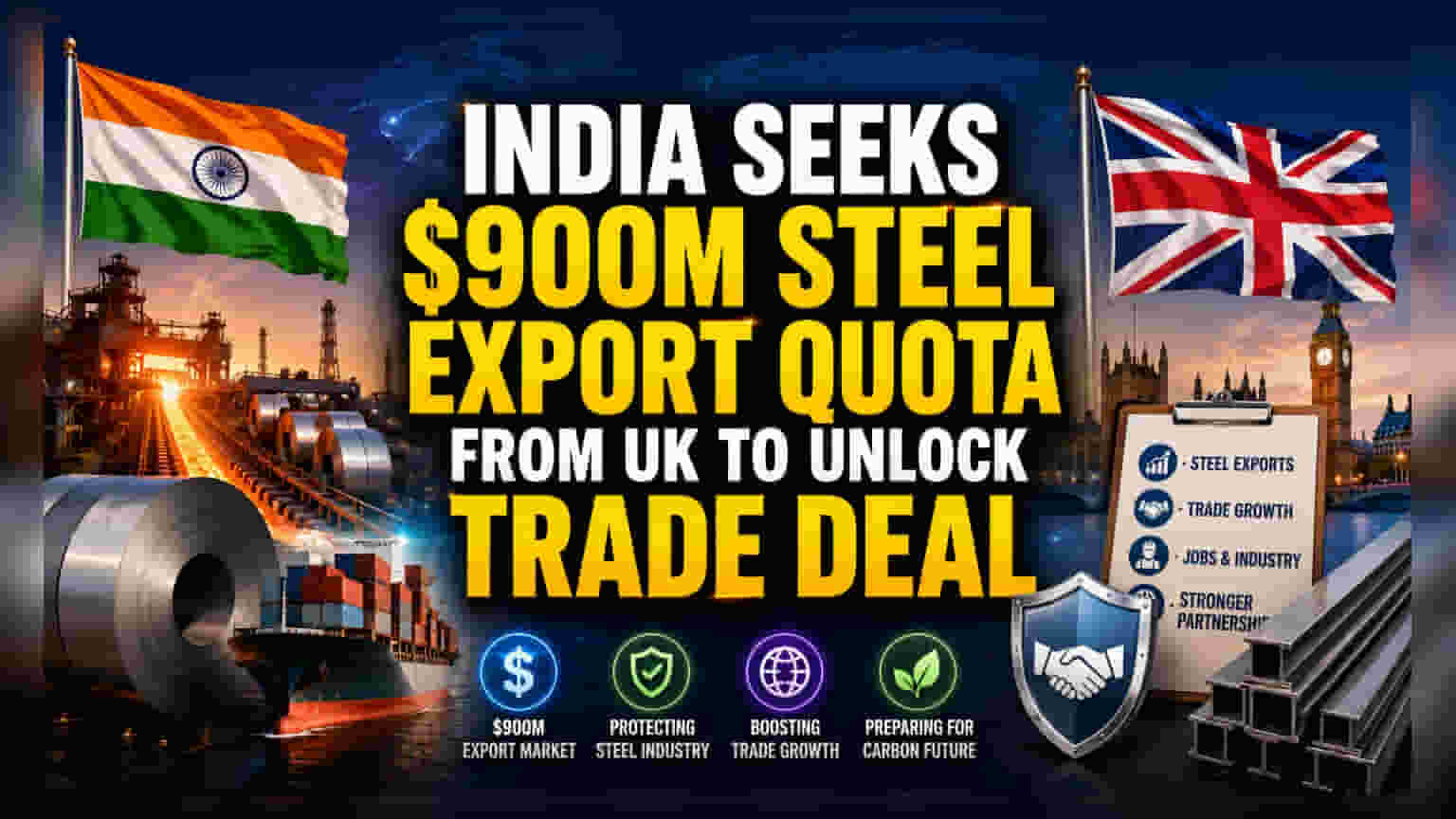


India is demanding a $900 million annual steel export quota from the UK to finalize their bilateral trade agreement. The move aims to protect Indian steel exporters from new UK tariffs, with potential retaliatory measures on goods like Scotch whisky if terms aren't met. This standoff highlights the complex regulatory environment and export risks facing steel manufacturers.
What Happened
India has officially requested a steel export quota worth approximately $900 million from the United Kingdom to resolve a deadlock in the bilateral free trade agreement. Although the trade pact was signed in July 2025, implementation has been stalled due to a dispute over steel. The UK recently proposed new quotas that would significantly restrict Indian steel exports compared to current levels. India is pushing for a quota based on the three-year average of its exports to the UK to ensure continuity for its steel producers.
Why This Matters For Investors
For Indian steel companies, the UK represents a vital export market, with total iron and steel exports reaching $893.4 million in the 2025-26 fiscal year. This volume is a significant portion of India's $13.4 billion in total merchandise exports to the UK. The UK’s decision to lower tariff-free quotas and double tariffs on excess imports—from 25% to 50%—creates a direct threat to the profitability and volume of these exports. If the dispute remains unresolved, it could force Indian manufacturers to either absorb higher tariff costs, thereby hurting margins, or redirect their supply to other markets, which may not offer the same pricing power.
The Retaliation Bargaining Chip
Trade negotiations often involve reciprocal leverage. Government officials have indicated that India might consider imposing restrictions on UK imports, specifically citing Scotch whisky, if the steel dispute is not settled in a manner that protects Indian interests. This strategy reflects the complexity of the trade deal, where multiple sectors are being weighed against one another to achieve a balanced outcome. Investors should understand that any such retaliatory measures would not just impact the steel sector but could lead to broader friction between the two economies, potentially delaying the full benefits of the free trade agreement for other industries.
The Future Challenge: Carbon Taxes
Beyond the current quota dispute, a more structural hurdle is looming for industrial exporters. The UK has scheduled the implementation of its Carbon Border Adjustment Mechanism (CBAM) for January 1, 2027. This policy will impose a carbon price on emissions-intensive industrial goods, such as iron and steel, to prevent carbon leakage—where production shifts to countries with laxer environmental regulations. Even if the current steel quota issue is resolved, Indian companies will need to invest in cleaner production technologies to remain competitive in the UK market under the new carbon tax framework. The cost of compliance with these future environmental standards will be an important factor for long-term profit margins.
What Investors Should Monitor
Investors looking at the steel sector should track several key updates. First, the official resolution of the steel quota dispute will be the primary indicator of the health of the broader India-UK trade pact. Second, any comments from management regarding the company’s exposure to the UK market and their strategy to handle potential tariff increases will be crucial. Finally, it is important to observe how steel producers are preparing for the upcoming carbon regulations in export markets. The ability of companies to manage these trade barriers and environmental compliance costs will determine their competitive advantage in international markets over the coming years.