

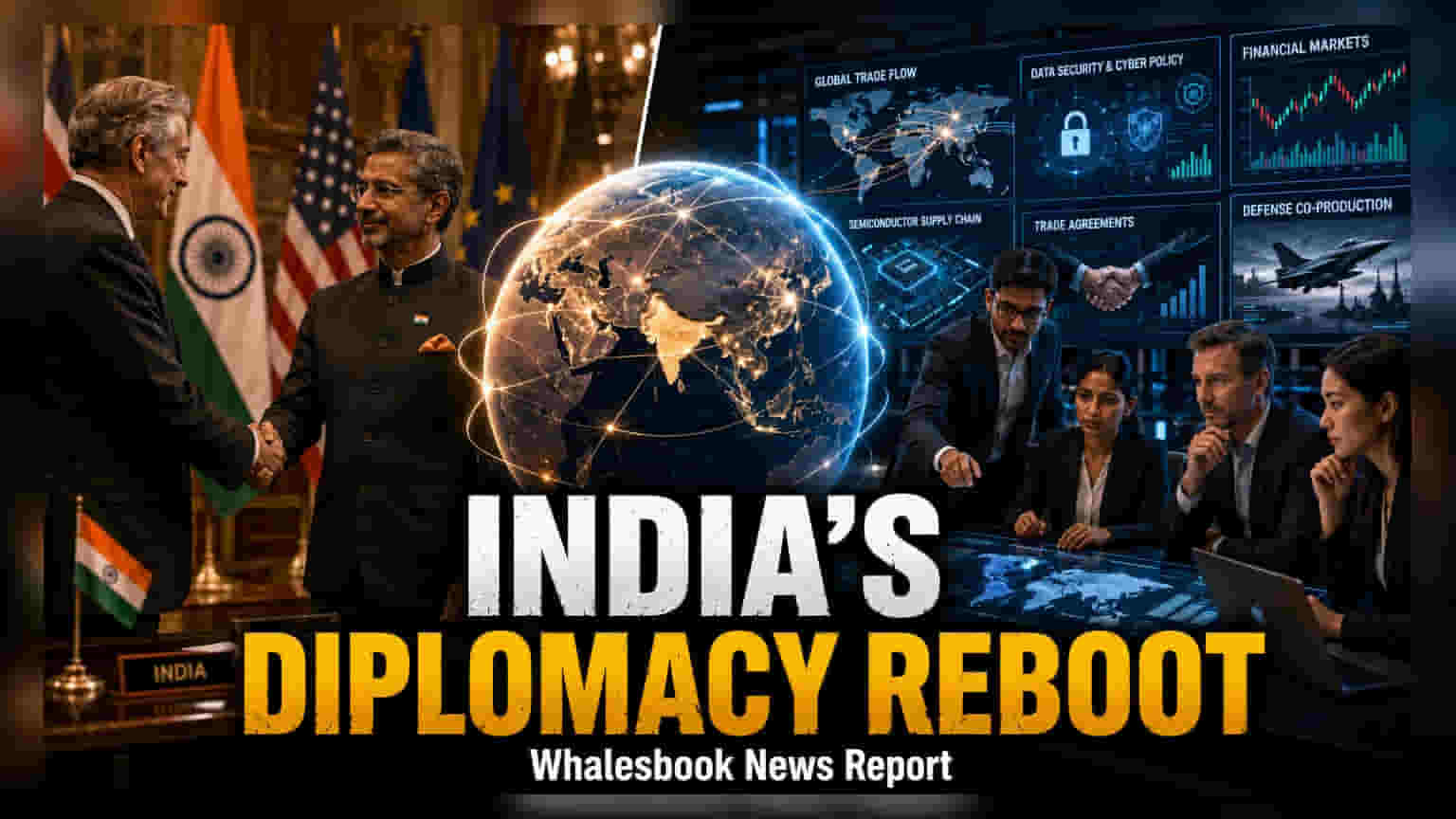
India is considering a strategic shift to include industry and technology experts within its diplomatic missions to tackle complex global trade and security challenges. This overhaul aims to enhance India's global influence, potentially improving outcomes in trade agreements, investment inflows, and international technology partnerships that are vital for the domestic economy.
The global diplomatic landscape is changing rapidly, shifting from traditional political negotiations to complex discussions involving semiconductor supply chains, data security, and trade standards. To stay competitive, India is exploring a strategic overhaul of its diplomatic missions, moving to integrate deep domain expertise alongside the established Indian Foreign Service (IFS) framework. This move is designed to ensure that India’s overseas representation is equipped with the specialized knowledge required to navigate modern international engagements.
Impact on Trade and Economic Interests
For the Indian economy, the implications of this shift are material. Trade negotiations, defense co-production, and cross-border technology transfers now require diplomats who understand the technical, financial, and legal nuances of these sectors. By deploying experts such as trade economists, semiconductor specialists, and fintech legal advisors, India aims to better protect its business interests abroad. This enhanced diplomatic toolkit is intended to facilitate better trade agreements, help secure supply chains, and foster international partnerships that can ultimately benefit Indian companies expanding into global markets.
Balancing Traditional Diplomacy with Specialized Talent
While the IFS provides essential institutional memory and long-standing political relationships, the proposal suggests that a hybrid model is necessary for the future. Integrating outside talent does not necessarily replace career diplomats but rather augments their capabilities. Historically, India has occasionally leveraged eminent personalities for specific diplomatic roles, and the current discussion focuses on formalizing this process. The goal is to deploy teams that combine the political mandate of career officers with the technical prowess of domain experts, ensuring deep coverage in mission-critical areas like investment banking, cyber policy, and industry standards.
Challenges and Strategic Execution
The transition toward a more specialized diplomatic architecture is not without potential friction. A key risk to monitor is the organizational challenge of integrating non-career experts into the existing bureaucratic hierarchy. Effectively blending personnel from private, technical, and public sectors requires clear coordination to avoid internal misalignment. Furthermore, the success of this strategy will be measured by its ability to deliver tangible economic and strategic gains, often described as the Return on Diplomacy (RoD). As policy discussions evolve, stakeholders will look for how these specialized teams are deployed to address specific regional trade issues and global geopolitical pressures, which remain critical for maintaining a stable environment for domestic and international investment.