

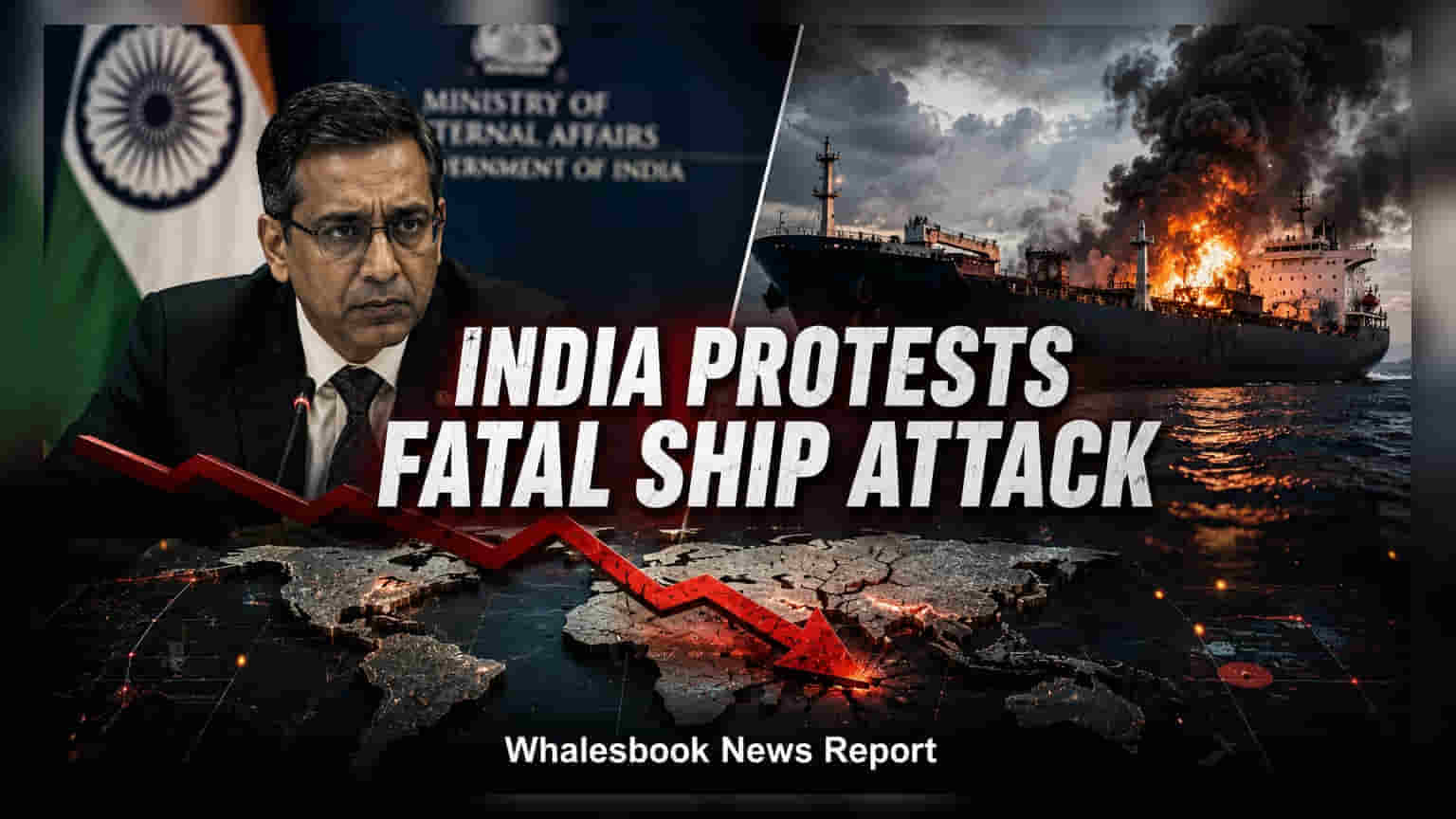
India has summoned the Russian envoy following the deaths of four Indian nationals on the merchant vessel MV Golden Leo. The ship was hit by missiles off the coast of Ukraine on July 19 while transporting grain. The government has condemned the attack on civilian shipping, as families and maritime stakeholders monitor the impact on safety for Indian seafarers in the region.
Detailed Coverage
The Ministry of External Affairs in New Delhi summoned the Russian Charge d'Affaires, Vladimir Ladanov, on Tuesday to lodge a formal protest regarding a deadly attack on the merchant vessel MV Golden Leo. The incident, which occurred off the coast of Ukraine on July 19, resulted in the deaths of four Indian crew members. The vessel, which was flying the flag of Guinea-Bissau and carrying a cargo of grain, was reportedly targeted shortly after departing from the port of Odesa.
According to official communications, the attack involved three cruise missiles that struck the ship, causing a major fire on board. Out of the 17 crew members on the vessel, five were Indian nationals. Beyond the four fatalities, the government confirmed that one additional Indian crew member remains hospitalized in critical condition. The incident has raised significant concerns regarding the safety of commercial shipping lanes in the conflict zone and the risks faced by international crew members operating in these waters.
Impact on Maritime Safety and Commerce
India’s strong condemnation of the incident underscores the country’s position against the targeting of civilian commercial ships and crew. The government has highlighted that such actions threaten the freedom of navigation and global trade, particularly for essential commodities like grain. This event adds to the ongoing risks for maritime operations in the Black Sea region, where tensions remain high due to the persistent conflict between Russia and Ukraine.
The Indian mission in Ukraine is currently coordinating efforts to provide assistance to the affected individuals and their families. For the shipping industry, this incident may lead to increased insurance premiums, tighter safety protocols, and potential changes in crew recruitment or route planning for vessels traversing this area. Investors and stakeholders in the maritime logistics and shipping sector may closely monitor how regional authorities and international maritime bodies respond to this escalation, as further disruptions to trade routes could impact supply chain stability for agricultural products in the region.