

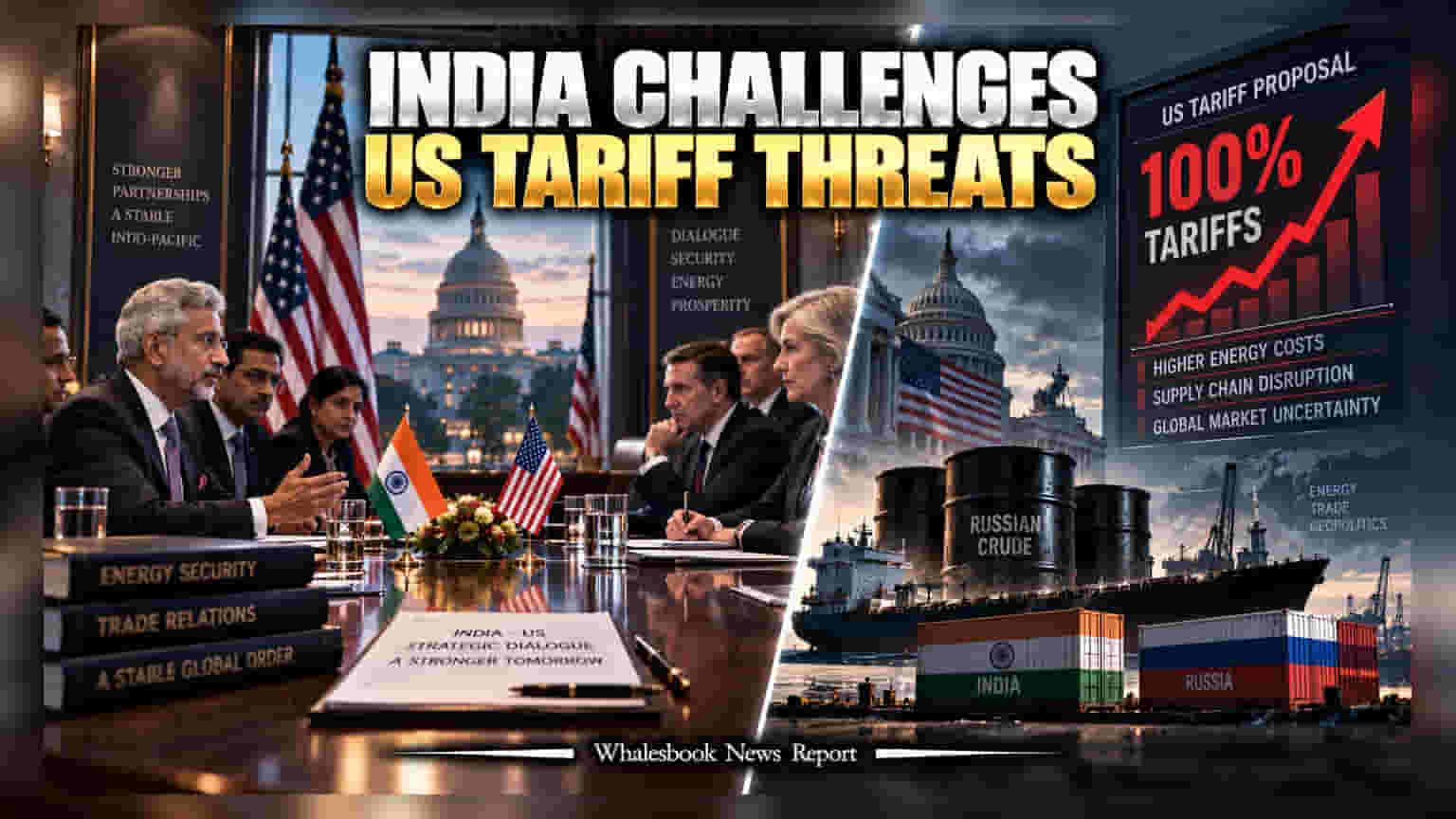
India is actively lobbying US Democratic lawmakers to address concerns over the 'Sanctioning Russia Act,' which could impose 100% tariffs on its Russian oil imports. With the bill currently stalled in the House, the effort highlights India's critical need to protect its energy security and prevent potential inflationary pressure on the domestic economy.
The Indian government has launched a high-level diplomatic push in Washington, seeking to clarify its position on energy procurement as the US considers the 'Sanctioning Russia Act.' Indian Ambassador to the US, Vinay Mohan Kwatra, has held discussions with senior Democratic representatives, including Brad Sherman and Katherine Clark, to emphasize that India's purchase of Russian crude is a vital necessity for its national energy security. This move comes at a sensitive time, as the proposed legislation, which passed the US Senate in August with an 86-11 vote, threatens to authorize the US President to impose tariffs as high as 100 percent on the world’s largest importers of Russian energy.
Potential Economic and Energy Implications
For Indian investors and the broader economy, the primary risk lies in the potential for a sharp rise in energy procurement costs. In the last financial year, Russia accounted for approximately 30.3 percent of India's crude oil imports, totaling nearly $40.8 billion. If such high-level tariffs were enacted, they would force a rapid and likely expensive shift in energy sourcing. This could lead to increased energy costs for Indian companies, potentially affecting profit margins across manufacturing and transport sectors, and could contribute to domestic inflationary pressure. The market remains sensitive to these geopolitical developments, as fluctuations in oil prices directly impact India's current account deficit and currency stability.
Legislative Status and Future Outlook
While the bill has gained traction in the Senate, it currently faces significant headwinds in the House of Representatives. House Speaker Mike Johnson has indicated that a floor vote is unlikely before the November 3, 2026, midterm elections. This delay provides a window of opportunity for diplomatic efforts, as both parties in the US remain cautious about the economic consequences of broad, new trade barriers. Concerns have been raised by some US lawmakers regarding the risk of higher energy prices at home if such tariffs were applied globally.
External Affairs Minister S. Jaishankar has maintained a firm stance, publicly stating during recent diplomatic missions that India's energy policy will remain guided by the needs of its 1.4 billion citizens rather than external tariff threats. He has advocated for resolving the conflict in Ukraine through diplomatic channels, framing it as a preferred path over the implementation of trade restrictions that could disrupt global energy markets.
Investors should monitor the progression of this bill in the US House of Representatives following the midterm elections. The next critical update will be whether the legislation remains stalled or if it gains renewed momentum, as any move toward enacting such tariffs would signal a major shift in the global energy trade environment, requiring companies to potentially reassess their cost structures and long-term supply chain strategies.