 Whalesbook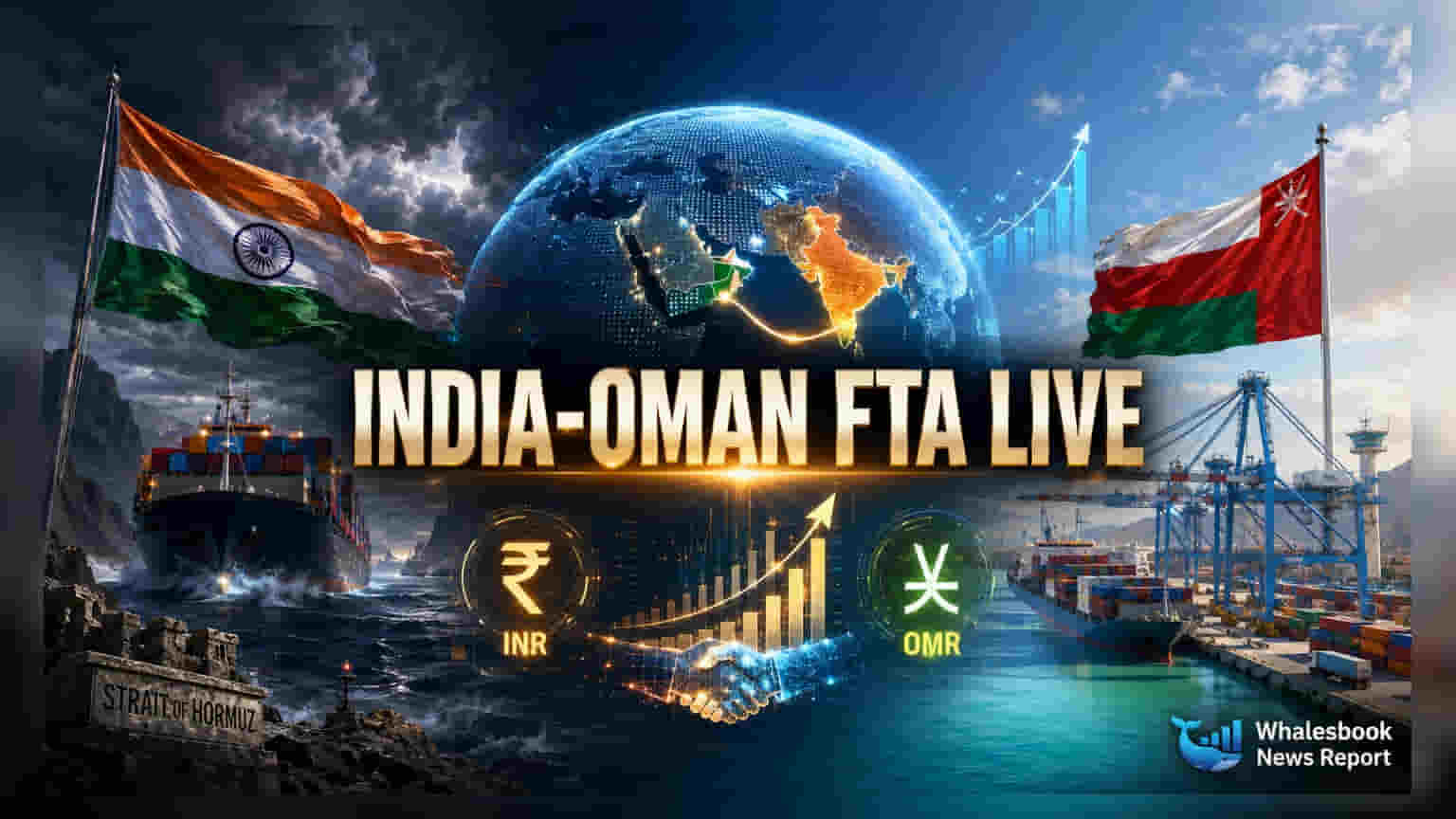


Beyond the Strait of Hormuz
The activation of the Comprehensive Economic Partnership Agreement (CEPA) between New Delhi and Muscat marks a calculated pivot in India’s energy security strategy. While tariff reductions are the headline feature, the structural utility of this deal lies in its logistical bypass. By leveraging Omani infrastructure—specifically the deep-water capabilities at the Port of Duqm—India effectively insulates a portion of its crude and urea supply chains from the geopolitical choke point of the Strait of Hormuz. This shift is particularly timely as regional volatility has forced a contraction in broader Gulf trade volumes over the last year.
The Shift in Trade Dynamics
Regional trade data reveals a stark bifurcation. While India’s historical trade flows with primary Gulf partners have cooled amidst escalating security concerns, the bilateral relationship with Oman has decoupled from this downward trend. The surge in imports from Oman, which eclipsed $1.4 billion in recent fiscal reporting, indicates that energy procurement is already shifting toward the Arabian Sea coast. This agreement formalizes that transition, moving beyond mere supply agreements to a framework of institutionalized economic integration. The zero-duty regime covering 98% of Omani tariff lines is not merely a tariff reduction exercise; it is an incentive structure designed to divert capital and logistics away from high-risk shipping corridors.
Structural Risks and Margin Realities
Investors must distinguish between the long-term strategic benefits and the immediate commercial limitations. While the deal favors industrial feedstocks like methanol and ammonia, the domestic market in Oman remains modest in size. Consequently, the export upside for Indian manufacturers is not defined by consumer volume but by logistical stability. Furthermore, the reliance on petroleum-heavy exports leaves both parties exposed to the same global price shocks that have plagued the energy sector since mid-2025. Critics argue that while the pact mitigates the 'Hormuz Risk,' it does little to diversify India’s underlying energy dependency, merely changing the entry point of the pipeline.
The Competitive Outlook
Compared to previous trade pacts in the region, this agreement appears more defensive than expansionary. Whereas earlier agreements sought to unlock new consumer markets, the India-Oman CEPA functions as a high-stakes insurance policy for industrial input costs. Industry analysts suggest that firms with exposure to Omani refining and port-linked logistics are best positioned to capture the arbitrage created by these lowered duties. However, the efficacy of this arrangement remains tethered to the sustainability of the port infrastructure at Duqm, which continues to compete for throughput against established, yet increasingly restricted, hubs across the Gulf.