 Whalesbook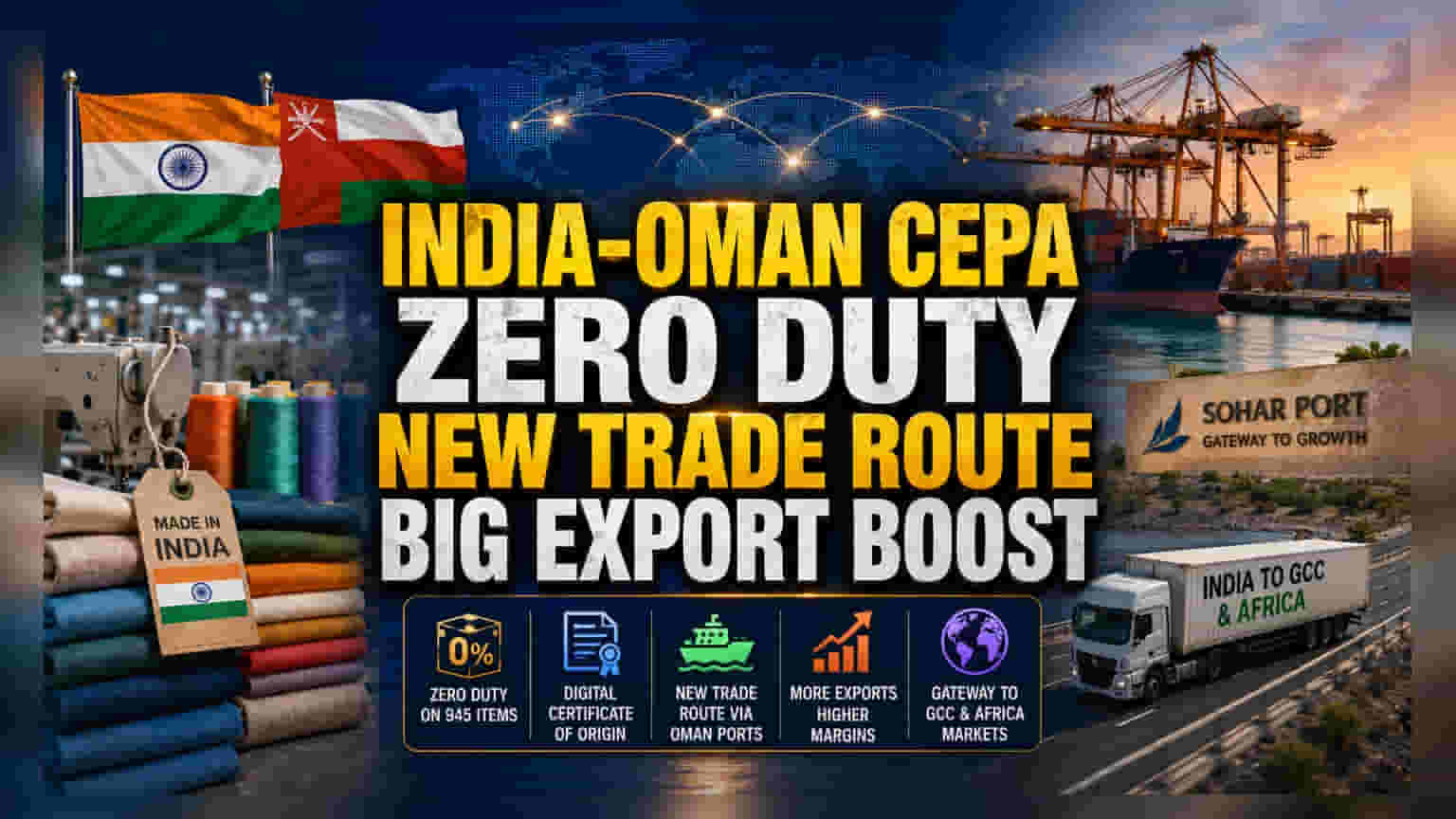


The Valuation Gap
The entry into force of the India-Oman Comprehensive Economic Partnership Agreement (CEPA) on June 1, 2026, represents a calculated move to secure price competitiveness in a vital Gulf market. While the headline news focuses on the elimination of the 5% Most Favored Nation (MFN) duty across 945 textile and apparel lines, the real story lies in the structural reconfiguration of Indian export routes. By leveraging Oman’s port infrastructure, specifically Sohar and Salalah, Indian manufacturers are positioning themselves to mitigate risks associated with the Strait of Hormuz—a traditional chokepoint that has historically disrupted supply chain reliability. This shift is not merely about tariffs; it is a defensive and offensive play to integrate more deeply into the Gulf Cooperation Council (GCC) and East African supply chains.
Strategic Deep Dive
India’s textile exports to Oman stood at approximately $95.1 million in the last fiscal year, representing only a fraction of the $598 million total import volume the nation absorbs annually. With India currently holding an 11% market share as the third-largest supplier, the removal of duties creates an immediate margin expansion opportunity for exporters. Unlike previous trade deals that focused on broad-spectrum tariff reductions, this agreement includes a modern, fully digitalized Certificate of Origin (CoO) framework. This digital integration reduces transaction costs and administrative friction, a critical requirement for MSME-led clusters in hubs such as Tiruppur, Surat, and Ludhiana to remain competitive against low-cost rivals from East Asia.
The Forensic Bear Case
Despite the optimistic tone from official government statements, structural risks persist. The primary threat to this trade initiative is the demographic constraint of Oman’s relatively limited consumer base. While zero-duty rules drastically improve price parity, they do not guarantee immediate volume growth if Indian products fail to meet the intensifying demand for sustainable and high-specification technical textiles in the Omani hospitality and healthcare sectors. Furthermore, there is the persistent risk of third-country goods being mislabeled to exploit these new duty-free windows, which places the burden of rigorous rules-of-origin enforcement on Indian customs and exporters. If India cannot maintain strict compliance, the agreement could face regulatory friction, ultimately neutralizing the anticipated trade gains.
The Future Outlook
Market participants should watch for how quickly major export-oriented textile players scale their operations in the region. The long-term success of this deal will not be measured by the initial tariff relief, but by the utilization of Oman as a re-export hub. Brokerage consensus suggests that if Indian firms successfully establish logistics presence in Oman’s free zones, they could significantly reduce transit times to wider GCC and African markets, effectively transforming a bilateral trade pact into a regional growth engine.