 Whalesbook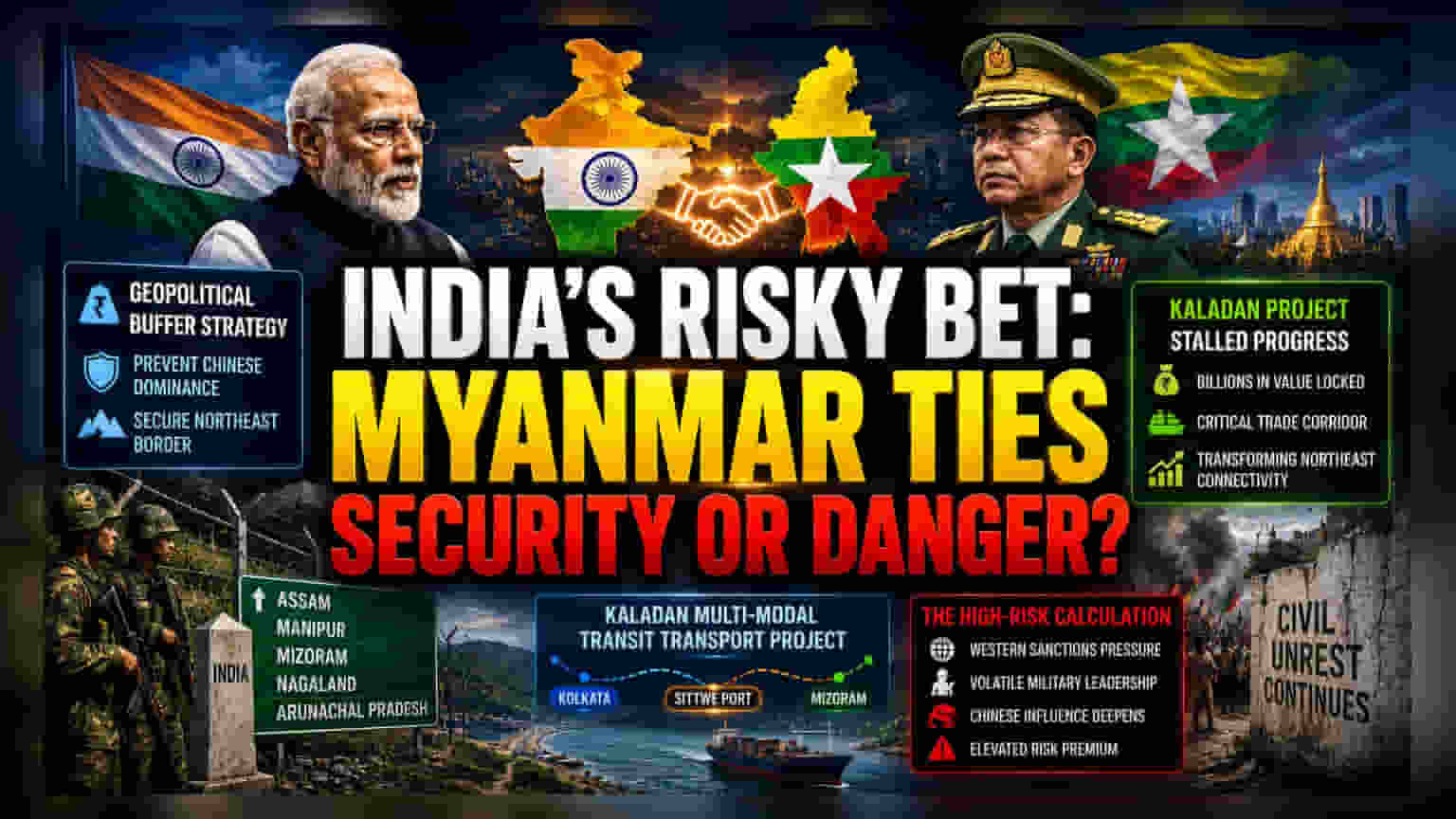


The Geopolitical Buffer Strategy
New Delhi’s decision to engage directly with Min Aung Hlaing reflects a calculation rooted in cold regional power dynamics rather than ideological alignment. By maintaining a functional dialogue, India aims to prevent a total diplomatic vacuum that would allow Beijing to consolidate its already significant influence in Naypyidaw. The move is less about endorsing the current administrative structure in Myanmar and more about securing a buffer zone that is critical to the security of India's porous northeastern border, which remains susceptible to insurgency and cross-border instability.
Economic Stagnation and the Kaladan Factor
Financial and logistical progress on the Kaladan Multi-Modal Transit Transport Project has remained largely paralyzed by the protracted civil conflict. Investors and state planners have watched as billions in potential economic value remain locked behind bureaucratic and security-related delays. The viability of this corridor is essential for transforming the Northeast from a landlocked geography into a maritime-linked trade hub. Beyond the Kaladan project, the broader infrastructure development plans rely on a level of cooperation from local military authorities that is only achievable through active, albeit controversial, bilateral communication channels.
The Security-Stability Tradeoff
Analysts note that while this engagement provides a functional path toward securing critical infrastructure, it carries substantial reputational and operational risks. By maintaining ties with the junta, India risks friction with Western partners who have pushed for strict sanctions and total isolation of the military regime. Furthermore, the reliance on a volatile military leadership to protect trade routes introduces a 'tail risk' scenario where sudden shifts in junta policy could derail years of incremental progress. The success of this policy hinges on whether New Delhi can effectively extract tangible security concessions in exchange for diplomatic legitimacy, a task complicated by the deepening reliance of the Myanmar military on Chinese military hardware and economic support. Market observers remain cautious, noting that until the underlying civil unrest is addressed, the risk premium on projects involving cross-border trade with Myanmar will remain elevated regardless of diplomatic gestures.