

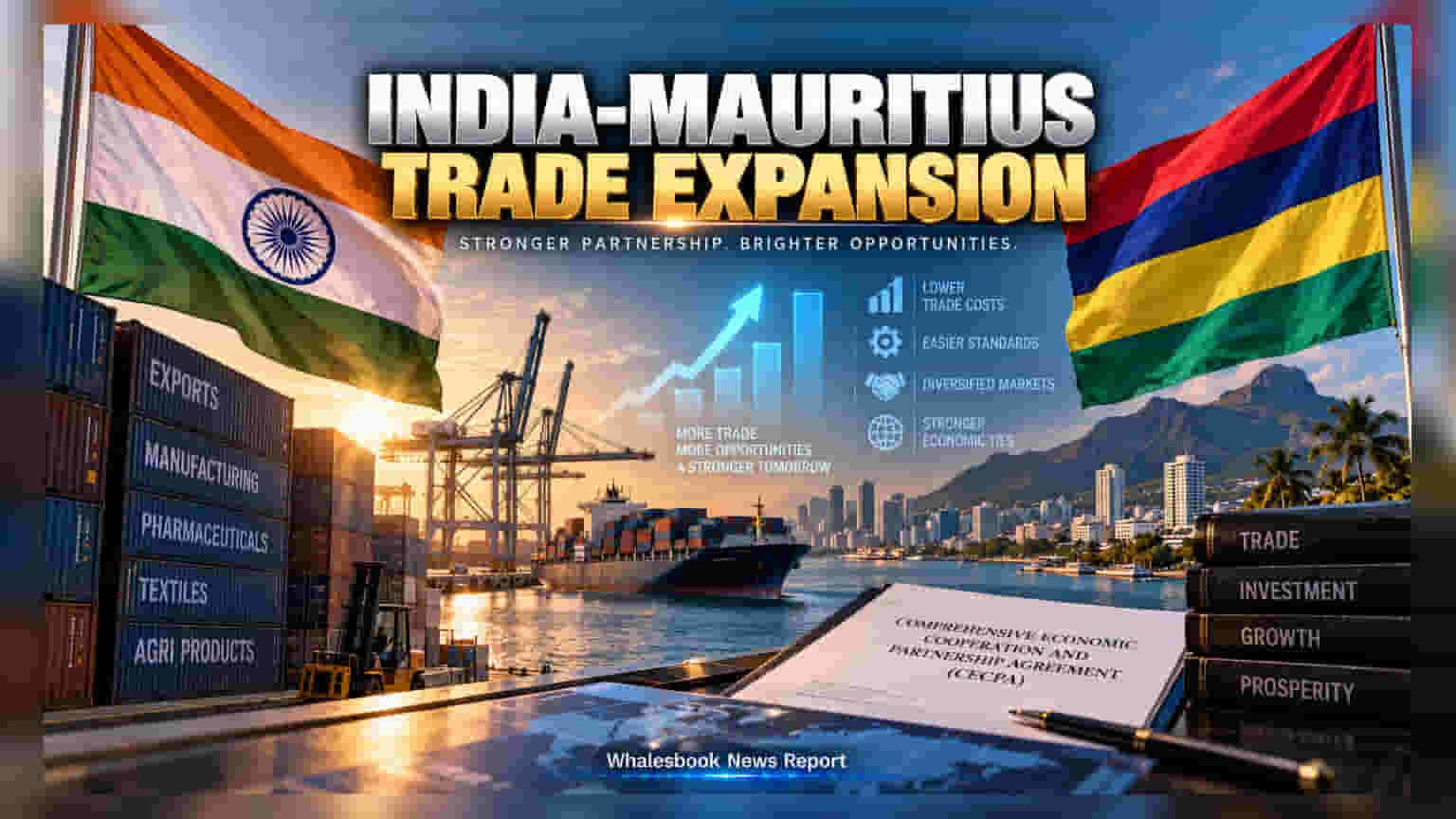
Indian and Mauritian officials are meeting on October 7 to scale up their trade agreement. The focus is on boosting exports by removing trade barriers, harmonizing technical standards, and easing cross-border payments for businesses.
Representatives from India and Mauritius are scheduled to meet on October 7 for the second session of the High Powered Joint Trade Committee. The core purpose of this gathering is to expand the Comprehensive Economic Cooperation and Partnership Agreement (CECPA), a trade framework that has been in operation since April 2021. For investors and businesses, the move signals a potential effort to reduce friction for companies exporting goods to the island nation.
The current agreement covers 310 Indian and 615 Mauritian product lines. While this has provided a foundation, both nations are looking to widen the scope to include additional sectors. This expansion is designed to help Indian exporters reach new markets more efficiently by lowering trade costs and simplifying the process of moving goods across borders.
Addressing Trade Barriers and Technical Standards
A major focus of the upcoming discussions will be the removal of non-tariff barriers. These are effectively bureaucratic or technical hurdles—such as strict sanitation rules or complex testing requirements—that can make it difficult for Indian goods to enter the Mauritian market. To address this, officials are working on an updated agreement between the Bureau of Indian Standards and its Mauritian counterpart. By aligning these technical standards, the two countries aim to make it easier for exporters in sectors like pharmaceuticals, textiles, and processed foods to ship their products without facing unnecessary delays.
The committee will also review the progress of local currency settlement mechanisms. These systems allow businesses to trade using their own currencies rather than relying on third-party currencies like the US dollar. For companies involved in bilateral trade, this can help reduce the costs associated with currency conversion and manage the risks that come with fluctuating exchange rates.
Export Context and Trade Performance
Trade data suggests a steady but moderate increase in bilateral activity. Indian exports to Mauritius rose from $442 million in the 2021 financial year to $473.64 million by the 2026 financial year. While the total dollar value remains relatively modest in the broader context of India's total exports, the government has noted that the number of distinct tariff lines—essentially the variety of products—used by Indian exporters has grown from 3,593 to 4,345 over the same period. This indicates that Indian businesses are gradually diversifying their product offerings in the region.
Investor Monitorables
For investors, trade agreements like the CECPA are typically long-term structural drivers rather than triggers for immediate, short-term stock movements. The real-world benefit depends on the successful implementation of the proposed changes. If the committee succeeds in streamlining standards and opening up specific high-value product lines, companies in sectors such as agriculture, chemicals, and consumer goods may see better export access.
The next step for investors to track will be the official outcome of the summit, specifically regarding which new product categories are included in the expanded list and whether the technical standards are successfully harmonized. Any delays in resolving the non-tariff barriers could mean that the projected benefits may take longer to reach the bottom line for affected export-oriented firms.