

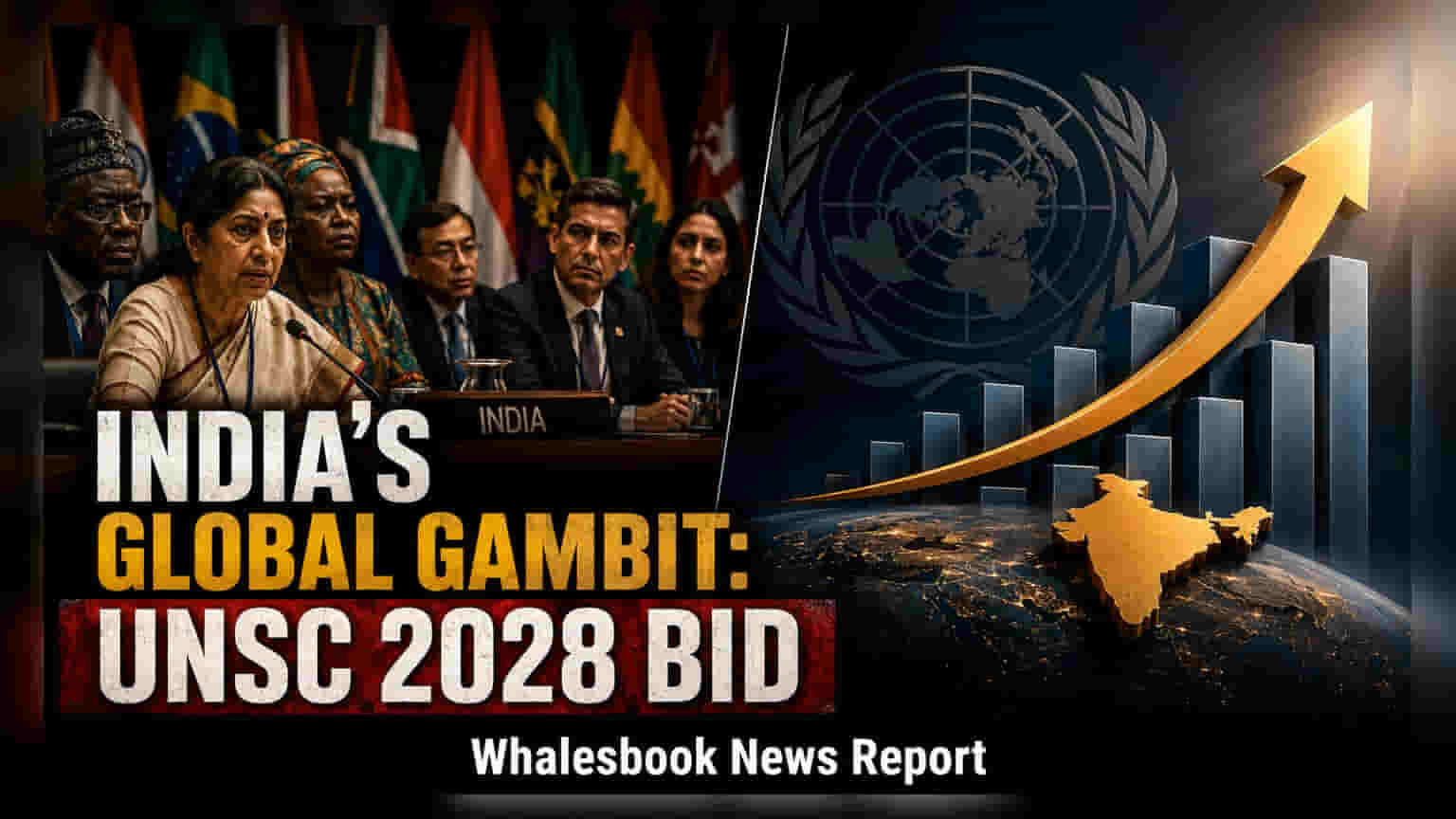
India has officially announced its candidacy for a non-permanent seat on the UN Security Council for the 2028-29 term. External Affairs Minister S. Jaishankar emphasized the need for better representation of the Global South in international policy. India will compete against Tajikistan for the Asia-Pacific group seat in elections scheduled for June 2027.
External Affairs Minister S. Jaishankar has formally launched India's campaign for a non-permanent seat on the United Nations Security Council (UNSC) for the 2028-29 term. The announcement, made at the UN headquarters, highlights India's objective to advocate for a more equitable global order that reflects the priorities of the Global South.
Campaign Strategy and Focus
India’s platform, titled 'Shanti: Securing Holistic Advancement through Norms, Trust, Integrity,' emphasizes the need for modernizing multilateral institutions. The government intends to focus on several core areas, including the development of effective peacekeeping strategies, the management of emerging technologies to prevent misuse, and the protection of global maritime routes. A key pillar of this platform is the commitment to dismantling international terrorism networks by targeting their financial channels.
Geopolitical Context and UNSC Reform
The upcoming election, scheduled for June 2027, will see India compete with Tajikistan for the Asia-Pacific region’s non-permanent seat. This campaign takes place against a backdrop of ongoing international conflicts and calls for structural reform within the United Nations. India has previously served on the Council as a non-permanent member, with its most recent term concluding in 2022.
India has been a vocal proponent of comprehensive UNSC reform for several years. Prime Minister Narendra Modi has repeatedly stated that the current council structure, which was established in 1945, fails to account for current global geopolitical realities. New Delhi’s position is that reform must involve more than just adding non-permanent seats; it has argued that the current decision-making authority held by the five permanent members requires a more inclusive approach that reflects the 21st-century landscape.
Investor and Economic Relevance
While this is a diplomatic and geopolitical development, it carries indirect significance for India’s economic standing. A stronger voice at the UN Security Council is often viewed as a mechanism to enhance India's global influence, which can support international trade relations, policy alignment on climate action, and participation in global supply chain security. Investors often track these developments as they impact long-term sovereign risk assessments and the country’s ability to influence international regulatory standards regarding technology and sustainable energy. The next major monitorable event for this campaign will be the election process scheduled for next year.