

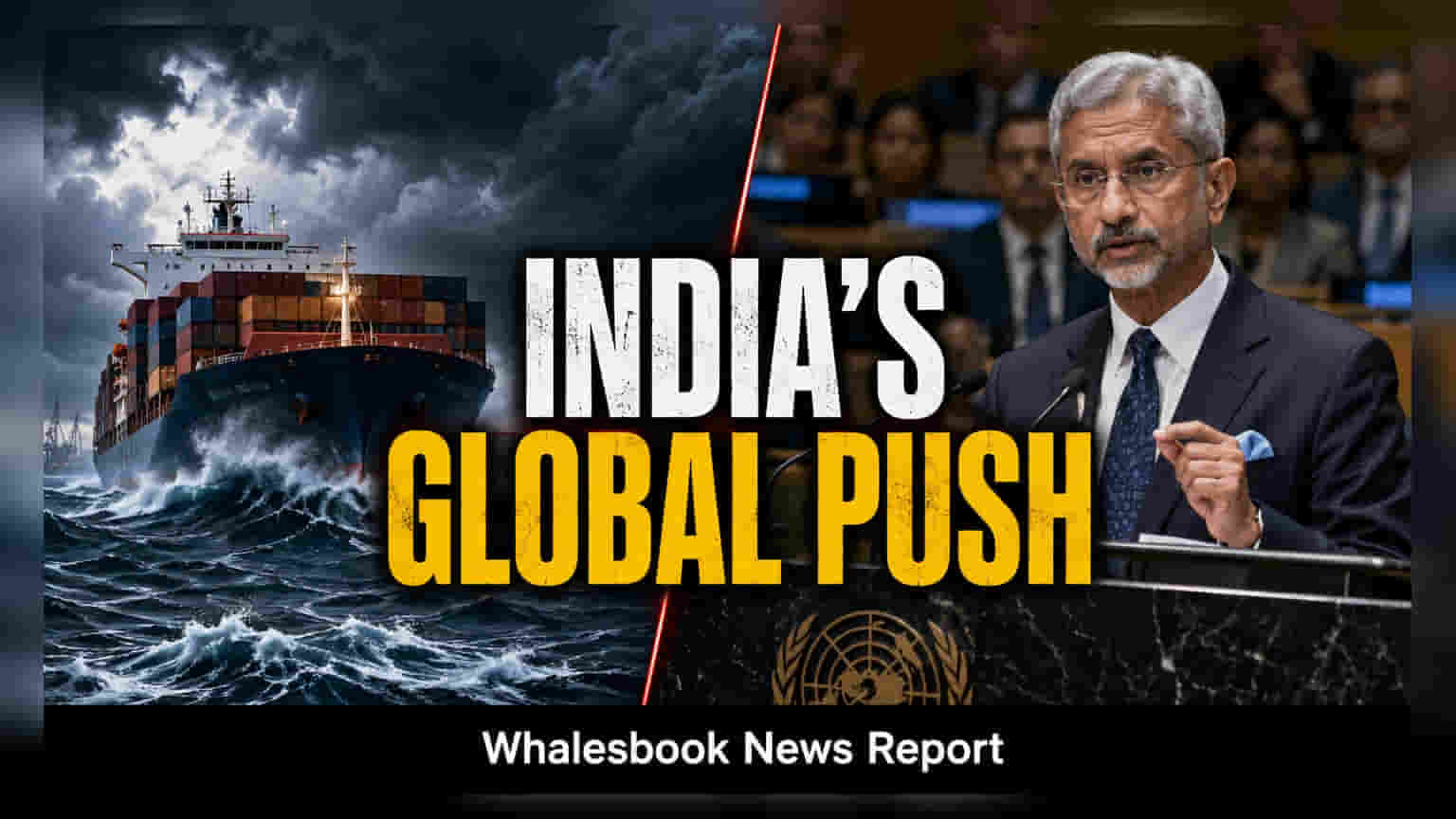
India has officially begun its campaign for a non-permanent seat on the UN Security Council for the 2028-29 term. The agenda prioritizes maritime security, global supply chain stability, and intensified efforts to cut off terror financing. This international push seeks to strengthen India's role in global governance and trade route protection.
India has formally entered the race for a non-permanent seat on the United Nations Security Council (UNSC) for the 2028-2029 term. External Affairs Minister S Jaishankar unveiled the campaign, titled 'SHANTI'—an acronym for Securing Holistic Advancement through Norms, Trust and Integrity—to define New Delhi's vision for global cooperation.
Maritime Security and Trade Stability
At the core of India’s campaign is the promotion of a free and open maritime order. As global trade relies heavily on sea routes, India is emphasizing adherence to international laws, specifically the UN Convention on the Law of the Sea. This focus is particularly relevant for Indian markets and the broader economy, as disruptions in major shipping lanes—such as the Strait of Hormuz or the Red Sea—directly impact energy import costs and logistics expenses for Indian companies.
India has long positioned itself as a provider of maritime security in the Indo-Pacific, Arabian Sea, and Gulf of Aden, participating in anti-piracy and counter-trafficking missions. By advocating for these priorities at the UN level, India aims to stabilize the international waters that are essential for the smooth flow of imports and exports.
Targeting Terror Finance
Beyond maritime security, India is pushing for more aggressive international action to restrict the financial lifelines of terrorist organizations. The government’s proposal centers on choking the flow of funds to these groups, moving beyond basic diplomatic statements to advocate for evidence-based listing of terror entities. For investors and policymakers, this stance reflects India's broader strategy to create a stable geopolitical environment, which is a prerequisite for sustained long-term economic growth.
Global South and Multilateral Reform
India’s campaign also emphasizes 'reformed multilateralism,' advocating for a more representative UN structure that reflects contemporary global realities. The country plans to use its voice to highlight the interests of the Global South, focusing on bridging digital divides and addressing risks related to the misuse of artificial intelligence. Furthermore, India continues to leverage its history as one of the largest contributors of personnel to UN peacekeeping operations to justify its bid for a greater say in international decision-making.
The next major phase for this campaign will involve building consensus among UN member nations over the coming years. For stakeholders observing Indian foreign policy, the progress of this bid will indicate India's evolving influence in setting global norms on trade, security, and technology governance.