
India's Balancing Act in Hormuz Crisis
The UK has initiated a key diplomatic effort, gathering over 30 countries to address the severe disruptions plaguing the Strait of Hormuz, a vital route for about 20% of global oil. Foreign Secretary Vikram Misri's participation signals India's commitment to securing its energy imports through direct engagement, showing New Delhi's practical approach to regional stability amidst escalating geopolitical tensions. This mirrors India's broader energy security strategy, which emphasizes diversification from Russia, the US, and African nations, alongside maintaining strategic reserves, to reduce dependence on Middle Eastern supplies. However, with roughly 40% of India's oil imports still transiting the Strait, the current crisis poses a significant risk.
India's Calculated Risk in a Shifting Global Order
While the immediate focus is on diplomatic efforts to reopen the Strait of Hormuz, the underlying story reveals a changing global security landscape. The United States' clear absence from the UK-led initiative, coupled with President Trump's criticisms of NATO allies and his call for them to 'take the lead' in securing the waterway, creates a vacuum that India and other energy-dependent nations must navigate. This focus on internal matters by Washington means regional security increasingly falls to different groups. India’s proactive diplomacy contrasts with European nations’ reluctance, driven by fears of wider conflict and a preference for diplomatic de-escalation. India's engagement is a calculated risk, balancing immediate energy needs against the potential for wider regional instability and the economic consequences of prolonged disruption.
Market Impact and Historical Parallels
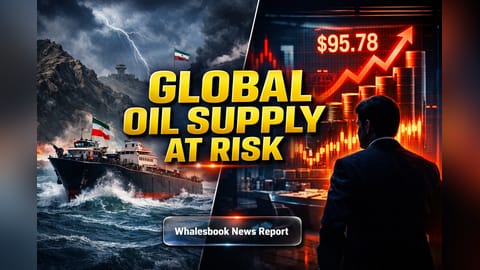
The closure of the Strait of Hormuz has triggered significant economic shocks. Global crude prices have surged, with Brent crude surpassing $100 per barrel, a level not seen in years, and US gasoline prices nearing $4 per gallon. Shipping carriers are implementing emergency extra charges, directly impacting global freight rates. The disruption's scale is unprecedented, described as the 'biggest oil supply disruption in history,' potentially exceeding the impact of the 1970s oil crises, though more developed global reserves and diversified supply chains offer some buffers. However, the combined impact on oil, LNG (liquefied natural gas), and other supply chains signals a broader inflation and growth shock, with models predicting a slowdown in global economic growth. Historically, the Strait has seen disruptions, including the 1980s 'Tanker War' and repeated threats, but the current situation, driven by direct military conflict, represents a more severe and sustained challenge.
Risks of Escalation and Miscalculation
Despite diplomatic overtures, significant risks persist. The US's apparent disengagement from regional security leadership, coupled with its opposition to allies, amplifies uncertainty and could embolden regional adversaries. Iran's demonstrated capability in unconventional tactics, utilizing missiles and drones from key locations, suggests that any military attempt to force the Strait open would be very risky and may not offer a decisive solution. The current attacks, often random and impacting various shipping profiles, highlight the unpredictable nature of the attacks, posing a persistent threat to seafarers and global trade. Furthermore, President Trump’s suggestion that the US might withdraw from NATO or reduce support for allies further destabilizes the overall security situation, leaving nations like India to shoulder greater responsibility for their own energy security through various international agreements. Relying on diplomacy alone might prove insufficient if Iran views the confrontation through the lens of survival, aiming to outlast the pressure rather than win outright.
Future Outlook and Diplomatic Paths
The UK-led initiative aims to explore 'all viable diplomatic and political measures' to restore safe shipping, with a focus on mine clearance and tanker protection post-ceasefire. European nations, initially hesitant due to worries about getting involved, are reassessing their positions under pressure from severe economic impacts and Trump's diplomatic maneuvers. While various countries, including France, the Netherlands, and Gulf states, are discussing potential naval contributions to a coalition, the ultimate strategy remains dependent on wider political agreements, including a ceasefire. Analysts suggest that the priority for the Gulf region remains de-escalation and diplomacy, with leaders like Indian Prime Minister Narendra Modi potentially playing a key role given New Delhi's strong regional ties. The effectiveness of these collective efforts will be critical in preventing the current crisis from evolving into a long-term global economic downturn, extending beyond mere oil price volatility to broader inflation and growth shocks.