

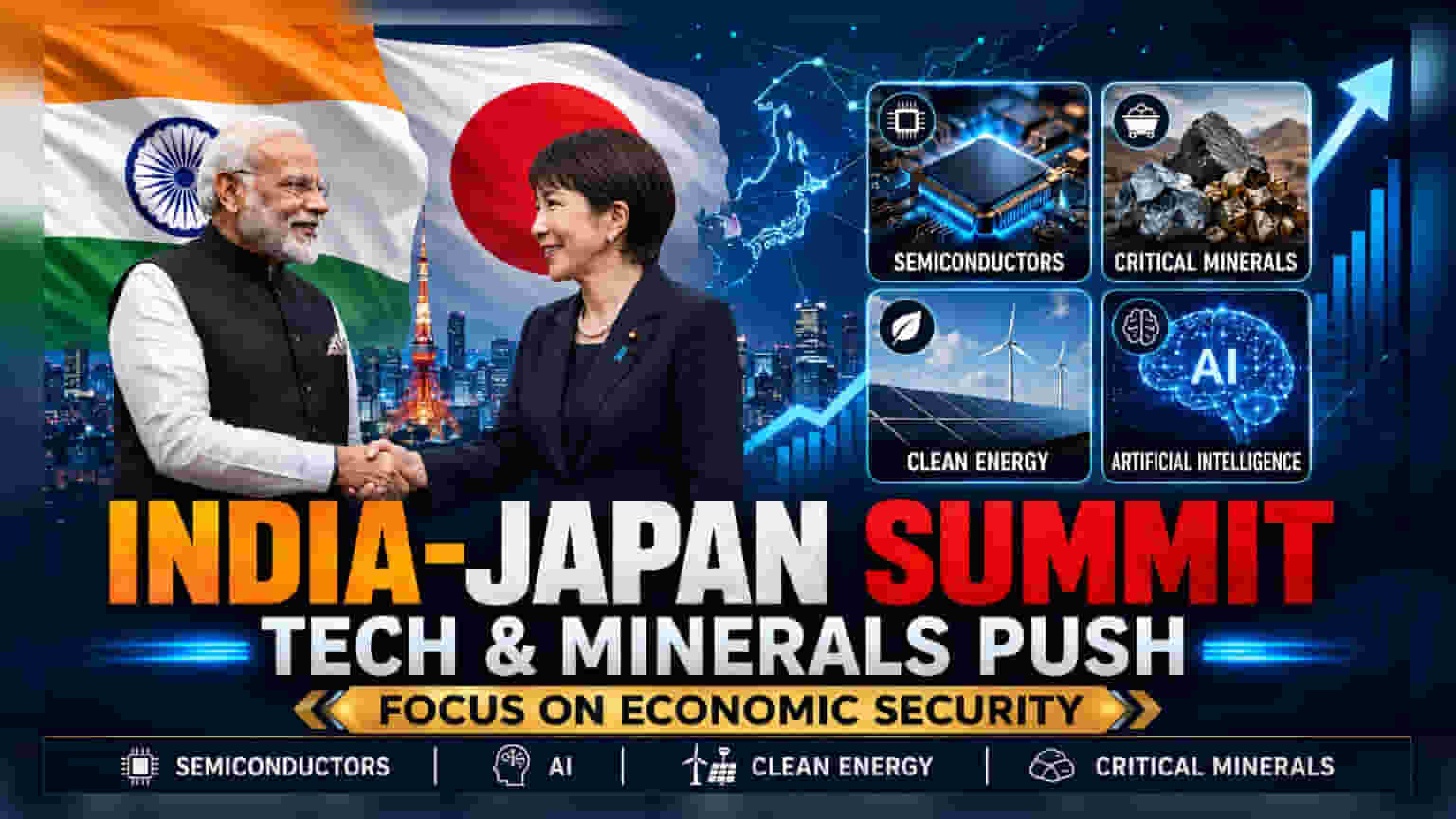
Japanese PM Sanae Takaichi's visit to India for the 16th Annual Summit highlights deeper cooperation in semiconductors, critical minerals, and AI. For Indian investors, this strengthens the case for the country's growing electronics and battery supply chain. Key monitorables include potential joint ventures in high-tech manufacturing and technology transfer agreements.
What Happened
Japanese Prime Minister Sanae Takaichi has arrived in India for the 16th India-Japan Annual Summit, scheduled for July 1-3, 2026. This is her first visit to India as Prime Minister and marks a key moment in the Special Strategic and Global Partnership between the two nations. The summit aims to move beyond diplomatic formalities, with a clear focus on economic security. The discussions are centered on four strategic pillars: semiconductor manufacturing, critical minerals, clean energy, and artificial intelligence. The visit comes at a time when both nations are looking to diversify their supply chains and reduce dependence on a single market for sensitive technologies.
The Semiconductor And Tech Push
For investors, the most critical part of this visit is the roadmap for semiconductor and digital collaboration. India is actively trying to become a global hub for semiconductor assembly, testing, and manufacturing under its national mission. Japan brings deep expertise in semiconductor equipment and materials, which are essential for India's growth in this sector. The India-Japan Digital Partnership 2.0 is expected to focus on AI co-creation. If the two nations can finalize frameworks for technology transfer, it could act as a catalyst for Indian companies operating in the electronics manufacturing and semiconductor ecosystem to access better technical support and equipment.
Access To Critical Minerals
Another significant focus area is critical minerals, including rare earths. These materials are the backbone of modern electronics, electric vehicles (EVs), and defense equipment. India’s goal to boost its EV and battery manufacturing capacity requires a stable supply of these resources. Japan has long-standing experience in processing these minerals and securing supply chains. A deeper partnership could help Indian firms secure better terms for sourcing or processing these materials, which currently remain a supply chain vulnerability for the domestic EV and tech industry.
The Business Reality Check
While the strategic alignment is positive, investors should be aware of the practical challenges. Past efforts to scale up high-tech manufacturing in India have faced execution hurdles, including infrastructure bottlenecks and the need for a highly skilled workforce. Furthermore, the semiconductor industry is highly capital-intensive, requiring massive money spent on expansion and research. While government incentives (PLI schemes) exist, the success of any joint venture will depend on how quickly and efficiently these projects move from planning to actual production. Additionally, the global semiconductor market is highly competitive, and Indian players will need to maintain cost efficiency to compete with established global manufacturers.
What Investors Should Track Next
Investors should look beyond the general headlines of the summit. The most useful information will come from specific announcements regarding:
- Tangible joint venture agreements in semiconductor manufacturing.
- New frameworks for critical mineral supply chain security.
- Timelines for the India-Japan Digital Partnership 2.0 projects.
- Any new funding commitments from Japanese institutions toward Indian infrastructure or tech projects.
These updates will provide a clearer picture of whether the strategic promises are translating into on-the-ground business opportunities for Indian listed companies in the technology, electronics, and automotive sectors.