

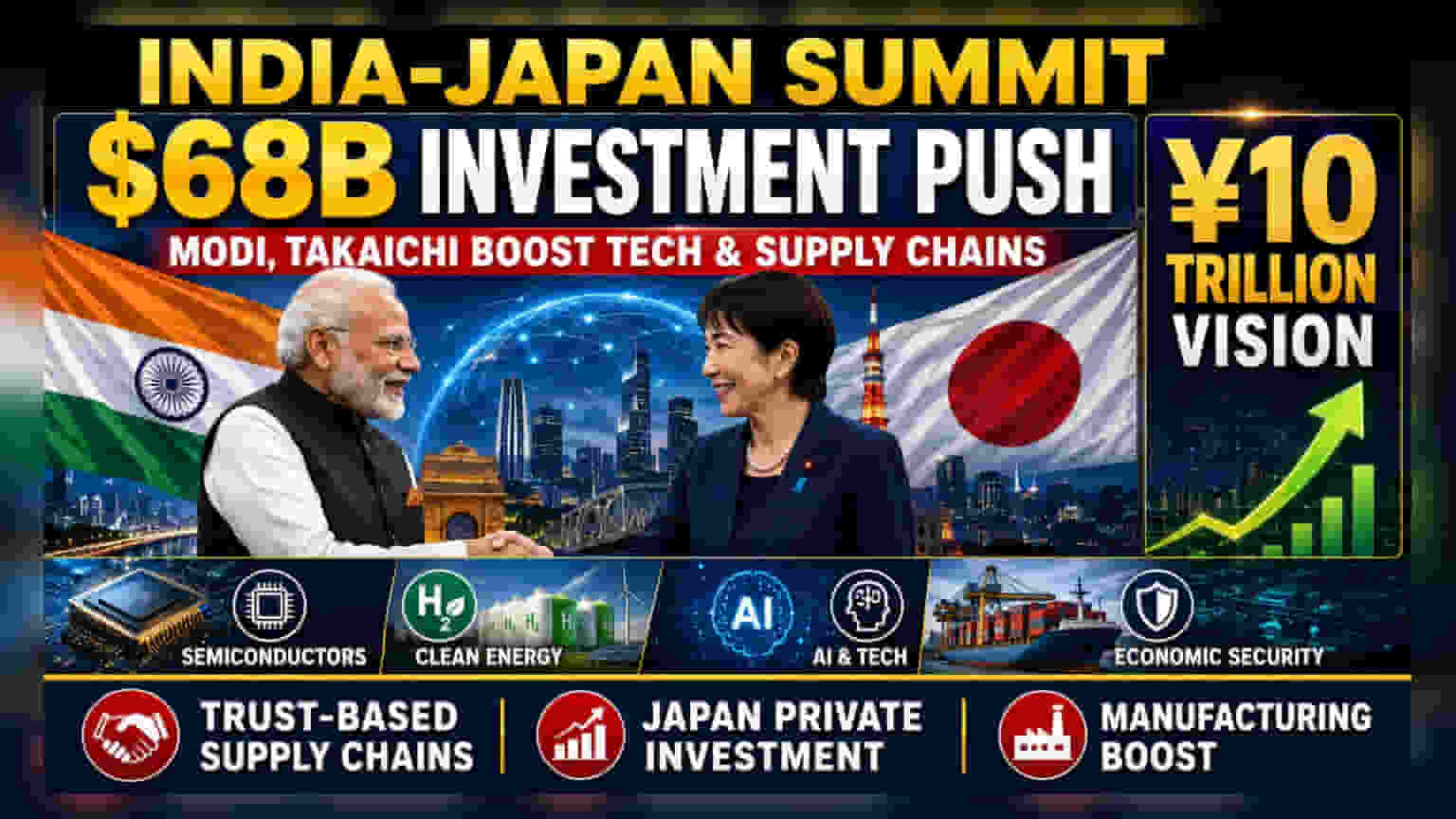
Japanese PM Sanae Takaichi visits India for the 16th Annual Summit, focusing on semiconductors, clean energy, and AI cooperation. The visit highlights a 10 trillion yen private investment target over the next decade to boost supply chain resilience and deepen strategic ties.
What Happened
Japanese Prime Minister Sanae Takaichi is in New Delhi from July 1 to July 3, 2026, to co-chair the 16th India-Japan Annual Summit with Prime Minister Narendra Modi. This meeting is the highest-level dialogue between the two nations and serves as a major push to strengthen their 'Special Strategic and Global Partnership.' The summit is set to review progress on trade, technology, defense, and economic security, with both nations aiming to deepen cooperation in sectors vital to national and economic resilience.
The Economic Security and Investment Agenda
A primary goal of this summit is to advance the 'Japan-India Joint Vision for the Next Decade.' A central pillar of this vision is a commitment to 10 trillion Japanese Yen (approximately USD 68 billion) in private investment from Japan into India over the coming decade. This investment target is designed to accelerate industrial collaboration and strengthen India's manufacturing base.
Beyond capital, the summit is expected to result in a declaration on economic security. This is significant for investors because it marks a shift toward building supply chains that are less dependent on single countries. Both nations are focusing on creating 'trust-based' supply chains, particularly in response to geopolitical uncertainties in the Indo-Pacific region.
Key Sectors in Focus
The agenda highlights several specific sectors where India and Japan aim to forge deeper ties:
- Semiconductors and Critical Minerals: Cooperation is expected to intensify in semiconductor research, technical assistance, and human resource development. Japan’s move to support India’s semiconductor ecosystem, including OSAT (Outsourced Semiconductor Assembly and Test) projects, is a key monitorable. Additionally, frameworks for technical cooperation in critical mineral exploration, such as rare earths, are being established to secure supply chains for essential materials.
- Clean Energy and Mobility: There is a strong focus on green hydrogen, ammonia, and biogas-powered mobility. Collaborative projects, such as potential green ammonia initiatives in Odisha, align with India’s energy security and decarbonization goals.
- Artificial Intelligence and Technology: India and Japan are set to discuss cooperation in AI, large language models, and data infrastructure, aiming to leverage India’s software capabilities with Japan’s industrial strength.
Why This Matters For Investors
For investors, the summit represents more than just a diplomatic event; it signals institutional support for Japanese companies to increase their footprint in India. Historically, Japanese firms have been major investors in Indian automobiles, electronics, and telecommunications.
The current shift toward technology co-development and green energy means that sectors like semiconductor manufacturing, specialized chemicals, and renewable infrastructure may see increased business activity. As Japanese firms like Renesas Electronics and Toyota Tsusho continue to align with Indian government initiatives, the impact on domestic manufacturing and the ancillary ecosystem could be significant.
What Investors Should Track
While the summit establishes the framework, the actual benefit for listed Indian companies will depend on execution. Investors may track:
- Project Timelines: Progress on the announced semiconductor and green energy projects will be critical.
- Specific MoUs: Details on the memorandums of understanding (MoUs) regarding pharmaceuticals, battery technology, and critical minerals, which may benefit companies within these value chains.
- Regulatory Updates: How trade frameworks, such as the Comprehensive Economic Partnership Agreement (CEPA), are further streamlined to assist Indian exports and facilitate easier Japanese investment.
- Capital Allocation: Any specific announcements regarding joint ventures or technology transfer agreements that directly impact Indian listed entities in the automotive, energy, or tech sectors.