

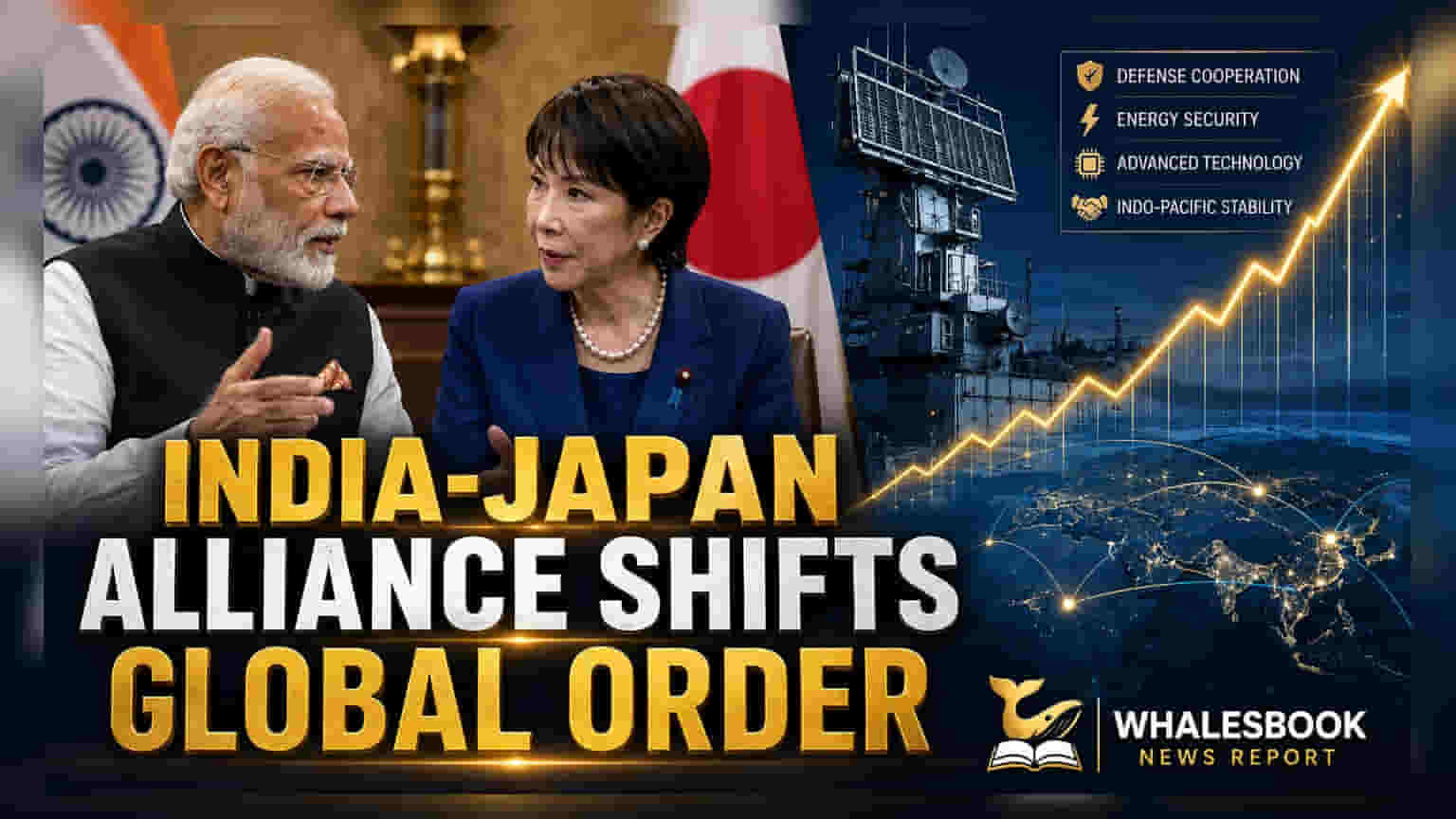
India and Japan have agreed to co-develop advanced naval antenna technology to strengthen regional maritime security. This collaboration aims to stabilize energy and defense supply chains amid evolving global geopolitical shifts. Investors should monitor how this deeper strategic alignment impacts long-term defense manufacturing and energy import costs for both nations.
In a strategic move to reinforce maritime capabilities, India and Japan have formalized a partnership to co-develop naval antenna systems. This agreement, reached during a summit between Indian Prime Minister Narendra Modi and Japanese Prime Minister Sanae Takaichi, marks a tangible expansion in the defense technology cooperation between the two nations. For Indian industry, particularly the domestic defense manufacturing sector, this partnership signifies a move toward joint technology development rather than simple procurement, potentially opening avenues for localized manufacturing and technological integration.
Strategic Defense and Energy Cooperation
The focus on naval technology is not isolated. Both nations have identified shared risks in global supply chains, specifically regarding energy security. Historically, disruptions in major maritime corridors, such as the Strait of Hormuz, have impacted energy costs for both India and Japan. By deepening cooperation on energy security, the two governments are aiming to create more predictable access to resources. For investors, this translates into a heightened focus on infrastructure and energy security projects that may receive support or joint investment in the coming years.
Context of the India-Japan Partnership
This partnership is supported by a long history of economic and strategic ties. Japan has been a significant contributor to India's infrastructure development through official development assistance, while India remains a key market for Japanese engineering and technology firms. The current emphasis on joint development of military hardware represents a shift in this relationship, moving from a lender-borrower model to one of co-production.
Analysts note that while the immediate financial impact of a single naval antenna project is limited in terms of overall national GDP, the precedent set for deeper military-industrial collaboration is material. The ability of Indian defense contractors to work alongside Japanese technical partners could improve long-term design and manufacturing capabilities. However, the ultimate success of this initiative will depend on the execution timeline and the ability to navigate complex defense technology transfer regulations. Investors may track future exchange filings from major Indian defense public sector units and private sector aerospace firms for any formal sub-contracts or technical licensing agreements that emerge from this bilateral framework.