 Whalesbook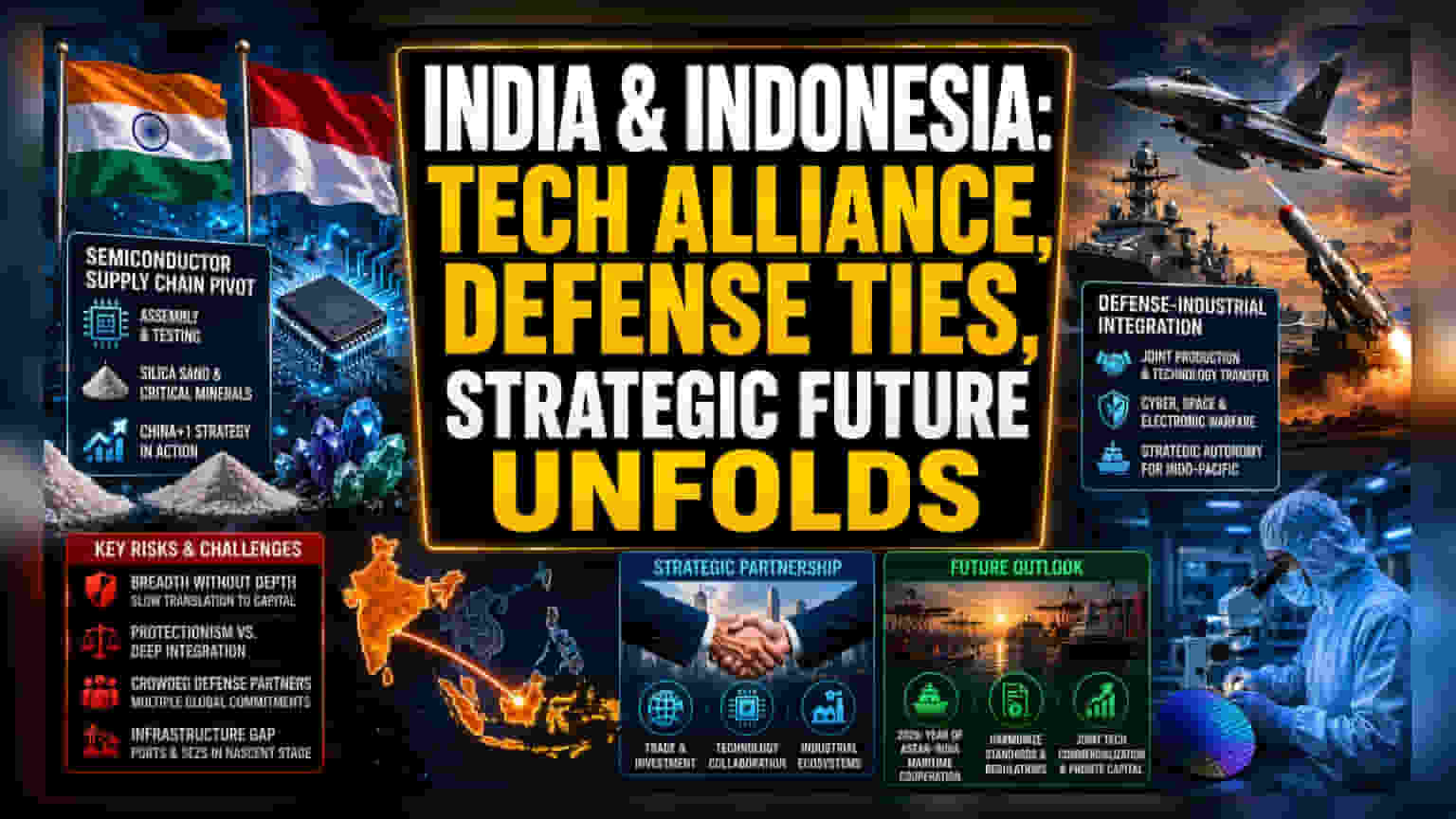


The Semiconductor Supply Chain Pivot
The deepening of ties between New Delhi and Jakarta represents a calculated effort to build resilient technology ecosystems beyond traditional manufacturing hubs. While Indonesia has historically focused on raw commodity exports, recent strategic shifts—supported by collaborations with Indian tech leaders—aim to integrate the nation into the global semiconductor value chain, particularly in assembly and testing. Indonesia’s abundant reserves of silica sand and critical minerals are now being viewed through the lens of industrial upgrading. By aligning with India’s semiconductor mission, Jakarta intends to transition from a pure resource provider to a player in downstream high-tech processing, effectively utilizing the regional "China-plus-one" diversification strategy.
Defense-Industrial Integration
Beyond technology, the defense relationship has moved past the initial phase of non-binding commitments. The recent dialogue highlights a shift toward concrete industrial partnerships, including technology transfers and potential joint military-industrial initiatives. Following previous successes in naval coordination and the supply of specialized missile systems, the focus has expanded to encompass cyber resilience, space, and electronic warfare. This institutionalization of defense ties serves as a critical pillar for Indo-Pacific stability, providing both nations with the necessary industrial scale to maintain strategic autonomy amid shifting regional security dynamics.
The Forensic Risk Perspective
Despite the optimistic tone, structural constraints remain. The "breadth without depth" critique persists, as India’s protectionist trade posture often clashes with the necessity for deep integration. Historical data suggests that while high-level diplomatic visits and summits generate substantial media interest, the actual translation into large-scale capital deployment has been slow. Furthermore, Indonesia’s defense-partnership portfolio is notoriously crowded; the country maintains commitments with dozens of international players, raising questions about the efficacy and long-term sustainability of exclusive military cooperation with India. There is also the logistical hurdle: creating an efficient semiconductor corridor between the two nations requires massive infrastructure investment—specifically in port facilities and specialized SEZs—that currently remains in the nascent planning stage.
Future Outlook
The 2026 "Year of ASEAN-India Maritime Cooperation" provides a formal timeline for these initiatives to mature. Consensus among observers suggests that the long-term success of this partnership hinges on whether the two nations can move beyond bilateral rhetoric to harmonize regulatory standards and expedite the commercialization of jointly developed technologies. As both countries navigate the volatility of global energy and mineral markets, the success of their tech and defense integration will likely be measured by the operational readiness of joint industrial clusters and the ability to attract neutral private-sector capital.