

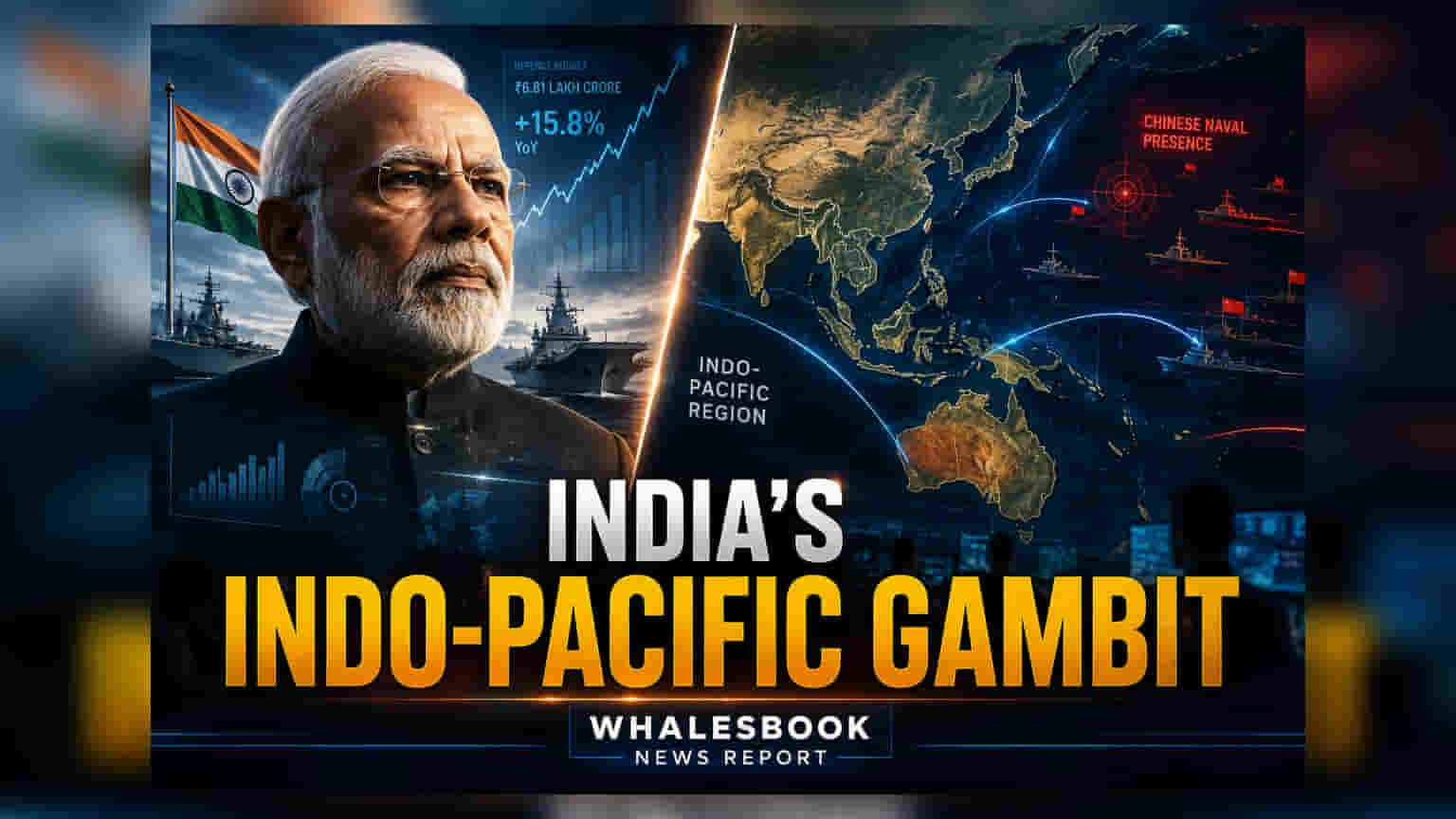
Prime Minister Narendra Modi’s latest tour of Indonesia, Australia, and New Zealand marks a strategic expansion of India’s MAHASAGAR maritime initiative. This move seeks to strengthen regional security and economic ties amidst intensifying geopolitical competition in the Indo-Pacific. Investors should track how this diplomatic focus influences future defense contracts, infrastructure partnerships, and trade relations in the region.
Prime Minister Narendra Modi’s recent visits to Indonesia, Australia, and New Zealand signal a formal shift in India’s maritime strategy. The government is now focusing on the MAHASAGAR (Mutual and Holistic Advancement for Security and Growth Across Regions) vision. This initiative expands upon the earlier 2015 SAGAR doctrine, aiming to establish India as a key security and economic partner throughout the wider Indo-Pacific region rather than focusing solely on the Indian Ocean.
Strategic Importance and Regional Competition
The move comes as India faces increased maritime activity from China across vital sea routes. China has secured access to various ports and critical infrastructure projects, including undersea cables, throughout the region. By engaging with Indonesia, which serves as a gateway between the Indian and Pacific Oceans, and deepening ties with Quad partner Australia, New Delhi is attempting to counter this influence. The inclusion of New Zealand suggests a broader effort to expand India's presence into the South Pacific, a region that is becoming increasingly important for global supply chains and strategic security.
Challenges in Implementation and Capital Spending
While the MAHASAGAR vision is a significant diplomatic step, the real challenge for the Indian government and related domestic companies lies in execution. India’s ability to compete with China’s Belt and Road Initiative depends on its capacity to deliver infrastructure and commercial projects effectively. Historically, India’s regional infrastructure projects have faced slower progress compared to those funded by major global powers.
For investors, the success of this strategy is tied to the government’s ability to allocate funds toward naval modernization and support local companies that can secure and execute large-scale projects abroad. This includes potential opportunities for defense manufacturers, engineering firms, and logistics companies that can operate in international markets.
Future Monitorables for Investors
The effectiveness of the MAHASAGAR vision will depend on three major factors: the pace of defense procurement, the speed of project implementation, and the ability to foster economic integration with partner nations. Investors should watch for future government announcements regarding defense export deals, joint infrastructure ventures, and maritime connectivity agreements. Any delays in executing these multi-country initiatives or a failure to match the scale of competing infrastructure investments could limit the economic benefits of this strategic shift.