

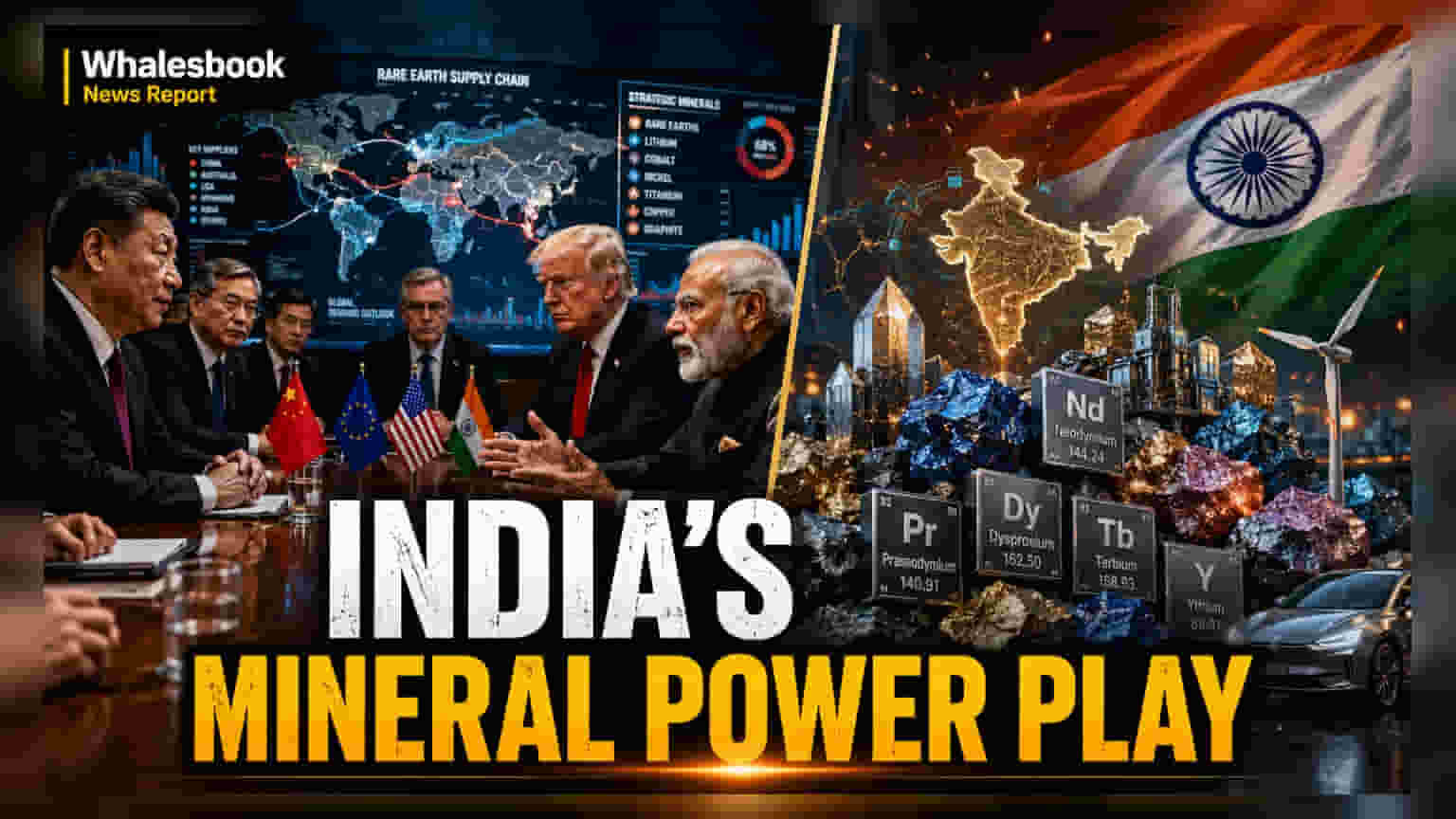
India has secured international partnerships with 35 countries to stabilize its supply of critical minerals like lithium, nickel, and rare earth elements. This move supports the National Critical Mineral Mission, aimed at reducing import dependence for clean energy and defense sectors.
India is accelerating its efforts to secure a stable supply of critical minerals and rare earth elements by forming strategic alliances with 35 nations. These resources are fundamental to modern industrial growth, serving as the backbone for electric vehicle batteries, telecommunications infrastructure, advanced defense systems, and clean energy technologies.
The latest development involves a new investment focus on nickel, steel, and rare earth magnet manufacturing in Indonesia. This initiative follows the launch of the National Critical Mineral Mission, a long-term strategy running from fiscal year 2024-25 through 2030-31. The mission is designed not only to secure raw materials but also to encourage domestic processing and manufacturing capabilities, aiming to move India toward greater technological self-reliance.
Building a Global Mineral Network
The government’s approach involves diversifying its procurement sources to mitigate geopolitical risks and supply chain disruptions. India’s expansive network of agreements includes collaboration on semiconductor technology with Germany, rare earth partnerships with Italy and the United States, and mineral exploration joint ventures with Japan and Saudi Arabia. Additionally, the country has established pacts for critical mineral technology with nations such as Israel and the United Kingdom, while exploring rare earth magnet technology with Russia.
Strategic Implications for Investors
For investors and market participants, the significance of these agreements lies in the potential reduction of input costs and supply risks for domestic companies operating in the energy and technology sectors. As India attempts to localize the value chain for batteries and electronics, industries dependent on imported minerals may face less volatility in raw material pricing over the coming years.
However, the success of this mission depends on the effective implementation of these international agreements and the ability of domestic firms to scale up processing infrastructure. The transition from exploration and pact signing to actual production capacity will be a long-term process. Investors may monitor how quickly these global partnerships translate into functional supply lines and whether domestic manufacturing projects receive the necessary capital to compete effectively with established global players. The primary monitorable remains the execution speed of domestic processing projects and the stability of global trade relations in the mineral sector.