 Whalesbook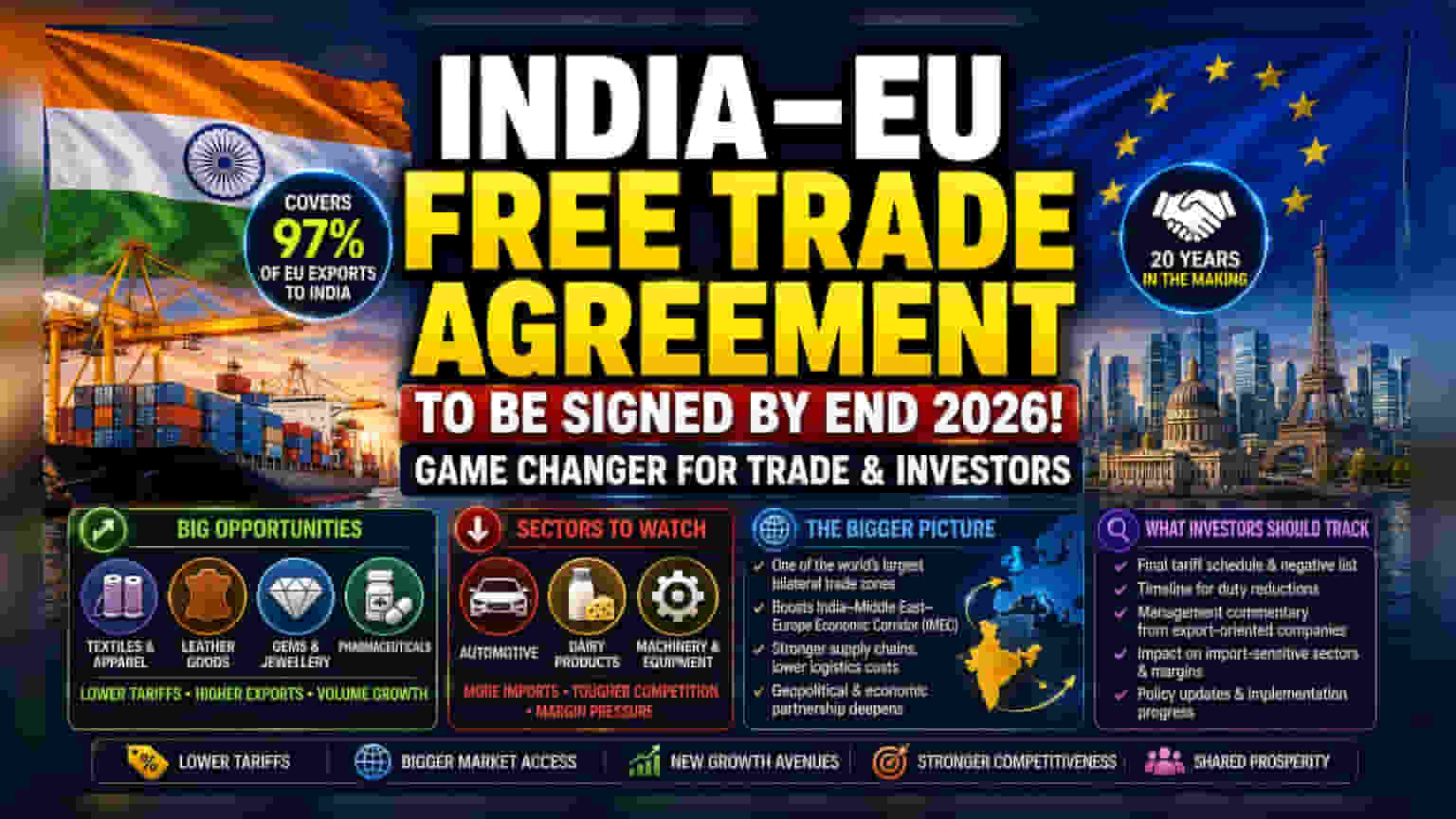


India and the European Union plan to sign a landmark Free Trade Agreement by the end of 2026. This pact seeks to lower tariffs on most goods, potentially boosting Indian exports like textiles and pharmaceuticals while increasing competition for domestic industries from European imports. Investors should watch how this shifts margins for companies sensitive to trade barriers.
What Happened
India and the European Union (EU) have committed to signing a comprehensive Free Trade Agreement (FTA) by the end of 2026. The announcement came from the European Commission following discussions at the G7 Summit in France. This agreement aims to create one of the world's largest bilateral trade zones, with both parties targeting the removal or significant reduction of tariffs on roughly 97% of European exports to India, while opening up European markets for Indian goods.
Why This Matters For Investors
For investors, this trade deal represents a fundamental shift in the operating environment for several Indian industries. By removing or lowering trade barriers, Indian businesses that export goods to Europe may find it easier to compete on price and volume. Conversely, domestic companies that rely on high tariff protection to fend off competition might face pressure as European products become cheaper and more accessible in the Indian market.
Sector Opportunities and Challenges
Historically, sectors such as textiles, leather goods, gems and jewellery, and pharmaceuticals have been major export drivers for India into European markets. A reduction in tariffs could provide a volume boost for these companies, allowing them to expand market share if they can maintain quality standards and meet European regulatory requirements. These industries may see a positive impact on revenue growth over the medium to long term.
On the other hand, sectors like automotive, dairy, and specialized machinery often face stiff competition from European manufacturers. If the agreement leads to a significant reduction in import duties on these products, domestic companies in these spaces may face margin pressure. Investors will need to monitor if these companies can differentiate their products through service, local customization, or cost-efficiency to defend their market share.
The Bigger Business Context
This agreement has been a long time coming. Negotiations between the two regions have been ongoing for nearly two decades, having started in 2007, and were paused multiple times due to disagreements over tariff structures and market access. The fact that a timeline for signing has now been set suggests a change in the geopolitical and economic priorities for both sides. The deal also ties into broader infrastructure projects like the India-Middle East-Europe Economic Corridor (IMEC), which aims to streamline logistics and trade flow, potentially reducing the cost of doing business across these regions.
How Investors May Read This
The market will likely assess the deal based on the fine print—specifically the negative list, which covers goods that will be excluded from tariff cuts to protect local industries. If the government excludes sensitive sectors from duty reductions, the impact on domestic competition may be muted. If the agreement is wide-reaching, it may trigger a need to re-evaluate the competitive landscape for import-sensitive industries.
What Investors Should Track
Investors should look for the official release of the tariff schedule once the agreement is signed. This will clarify which specific products will see duty cuts and the timeline for these reductions. Keeping an eye on management commentary from companies in export-heavy sectors regarding their plans to utilize this new access will be crucial. Additionally, watching for any adjustments in import policies for sectors that currently enjoy high protection will help in understanding potential margin risks for domestic manufacturers.