 Whalesbook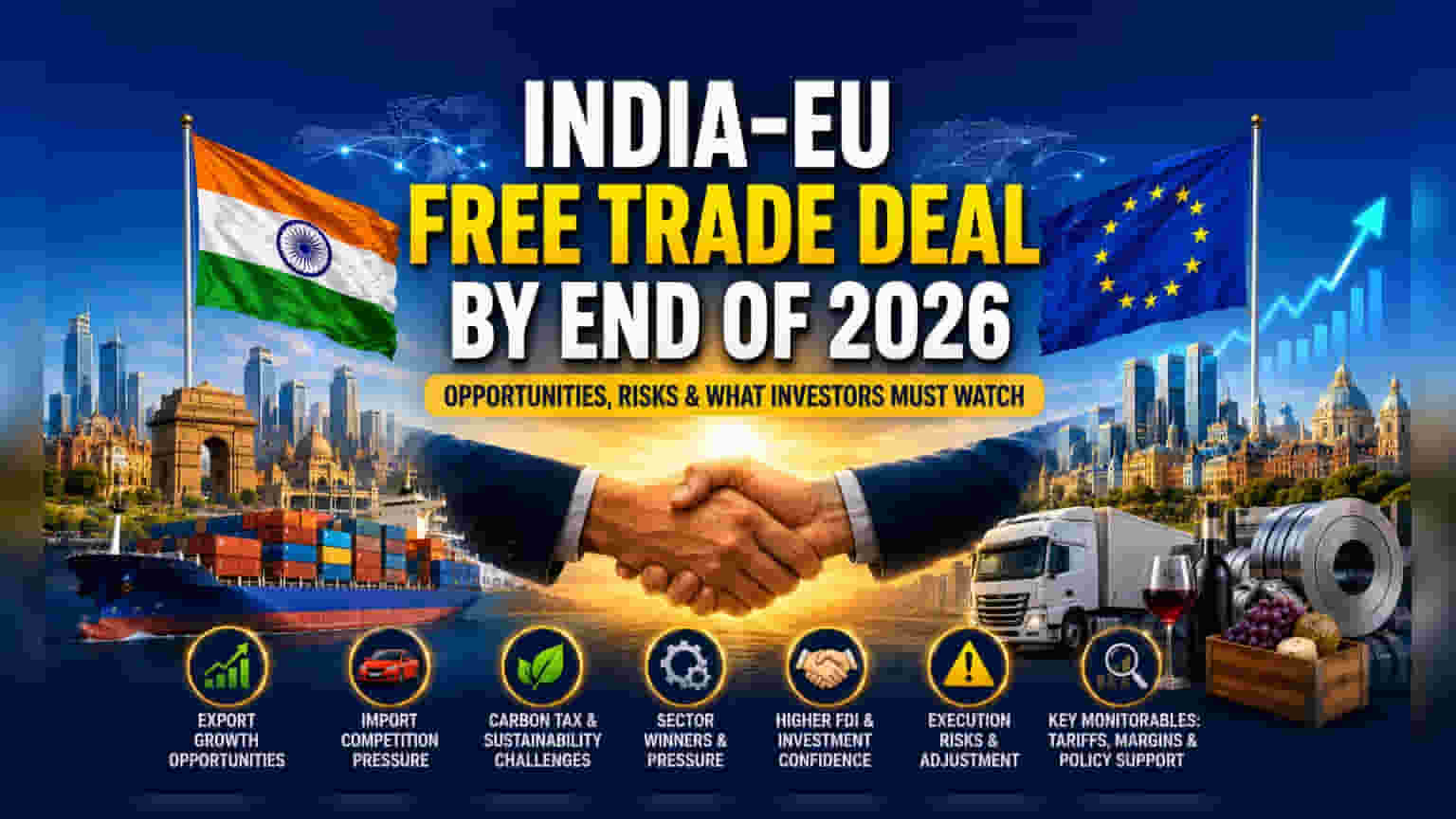


India and the European Union are set to finalize a free trade agreement by the end of 2026. The deal involves significant tariff reductions on goods, impacting sectors ranging from automobiles to agriculture. For investors, this shift creates potential for export-oriented growth while increasing competitive pressure on specific domestic industries due to easier access for European imports.
What Happened
India and the European Union have announced plans to conclude a comprehensive Free Trade Agreement (FTA) by the end of 2026. This pact is designed to significantly increase economic cooperation and trade volume between the two regions. Under the proposed framework, tariffs will be reduced or removed on approximately 96% of the value of European goods entering India. Conversely, the agreement aims to open up the European market for Indian service providers and goods, including potential gains in agriculture and textiles.
Why This Matters For Investors
For the Indian stock market, an FTA of this scale acts as a double-edged sword. On the one hand, export-oriented sectors could see a boost. Indian businesses in IT services, textiles, and pharma may benefit from easier access to the European consumer base. On the other hand, domestic manufacturers in sectors where European imports are currently expensive due to high tariffs—such as automobiles, premium spirits, and luxury food products—may face increased competition. Investors should observe which Indian companies are prepared to compete with European brands and which are likely to face margin pressure.
The Carbon Tax Factor
A central point of discussion during negotiations has been the EU’s Carbon Border Adjustment Mechanism (CBAM). This is essentially a carbon tax on imported goods. While Indian companies do not get an automatic exemption, the agreement establishes a technical working group to help Indian exporters align with these sustainability standards. For investors in heavy industries like steel and aluminum, this is a critical monitorable. Companies that are already investing in green technology and emissions reduction are likely better positioned to handle these new trade requirements compared to those that are not.
Sector Winners And Pressure
Investors may evaluate companies based on how the tariff structure changes. Sectors that traditionally rely on high import duties to stay competitive against European brands—such as high-end automobiles and the liquor industry—might experience a shift in pricing power. If tariffs on imported European wines and spirits drop significantly, domestic players may need to defend their market share through pricing adjustments or better marketing. Meanwhile, Indian exporters in the services and technology sectors may find a more streamlined process for entering European markets, potentially supporting long-term revenue growth.
The Bigger Business Context
The European Union has been a major source of foreign direct investment (FDI) for India for over two decades. The ongoing negotiations for a separate Bilateral Investment Treaty (BIT) are running in parallel to the trade deal. A successful investment treaty could improve confidence among European firms looking to set up or expand manufacturing units in India, which would be a positive signal for industrial infrastructure and related service providers.
What Could Go Wrong
While the agreement aims to boost trade, execution risks remain. There are concerns regarding whether domestic industries can rapidly adjust to the new competition levels. If the transition is not managed well, it could lead to short-term pressure on profit margins for companies facing import competition. Furthermore, the sustainability norms imposed by the EU require companies to maintain strict records of their carbon footprint. Small and medium enterprises that lack the capital to invest in green compliance might struggle to meet these requirements, which could limit their export potential.
What Investors Should Track
Investors may closely watch official updates regarding the final tariff schedules, as specific product categories will face different impacts. Management commentary from companies in the automobile, liquor, steel, and aluminum sectors will be important, as leaders will likely discuss how they plan to manage new competitive threats or leverage export opportunities. Additionally, keep an eye on how the government provides support for local industries to comply with EU sustainability standards, as this will determine the long-term viability of many export-focused businesses.