

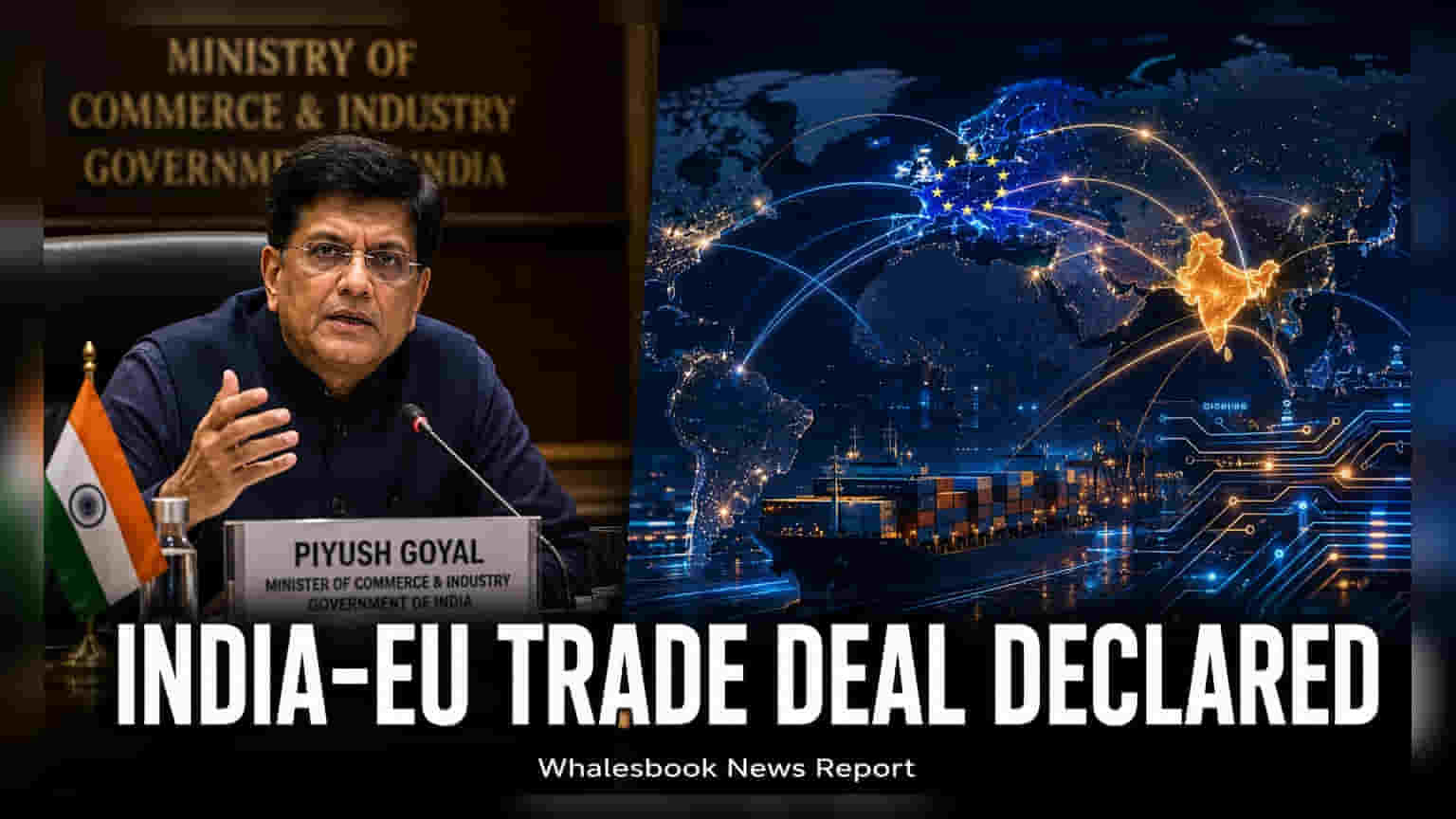
Commerce Minister Piyush Goyal is leading negotiations for a Free Trade Agreement (FTA) between India and the European Union. The proposed pact aims to increase trade and investment while boosting collaboration in sectors like artificial intelligence, 6G, and semiconductors. For investors, the agreement could create new growth pathways for Indian MSMEs and technology-focused businesses engaged in global trade.
Union Commerce and Industry Minister Piyush Goyal has advanced negotiations for the proposed India-European Union Free Trade Agreement (FTA) during recent diplomatic visits to Finland and Belgium. The discussions center on reducing trade barriers and aligning economic interests between two of the world's largest markets. This initiative represents a strategic shift toward integrating Indian businesses more deeply into the European value chain.
Strategic Focus on Emerging Tech and MSMEs
The proposed trade agreement aims to move beyond traditional commodity exchange by fostering partnerships in specialized technology sectors. Ministerial talks have identified digitalization, artificial intelligence, 6G telecommunications, quantum computing, and semiconductors as key areas for bilateral cooperation. By easing regulatory frameworks through the FTA, India hopes to attract European capital into these capital-intensive sectors. For Micro, Small, and Medium Enterprises (MSMEs), the agreement is expected to provide improved access to the European market, potentially helping smaller firms integrate into global supply chains.
Industry Integration and Market Impact
Ahead of these government-level meetings, Commerce Minister Goyal met with delegations from major industry bodies, including FICCI, CII, and ASSOCHAM. These discussions highlight the private sector's role in identifying practical challenges that the FTA seeks to resolve, such as technical standards, patent regulations, and data governance. Historically, trade agreements of this scale often influence sectors like textiles, chemicals, and IT services by altering export competitiveness. The outcome of these negotiations will be closely monitored for its impact on Indian firms that rely on European demand or depend on European technology imports.
Economic Context and Next Steps
While the potential for increased trade is significant, the actual benefit for Indian companies will depend on the final terms of the agreement, including market access conditions, tariff reductions, and rules of origin. Investors typically monitor such large-scale diplomatic efforts for their long-term impact on sectoral growth and capital flow. The next major updates to track include the progress of the India-EU Business Roundtable discussions, the resolution of specific tariff-related disagreements, and the finalization of the text for the proposed FTA. These milestones will indicate whether the strategic partnership is moving toward a formal signing phase.