

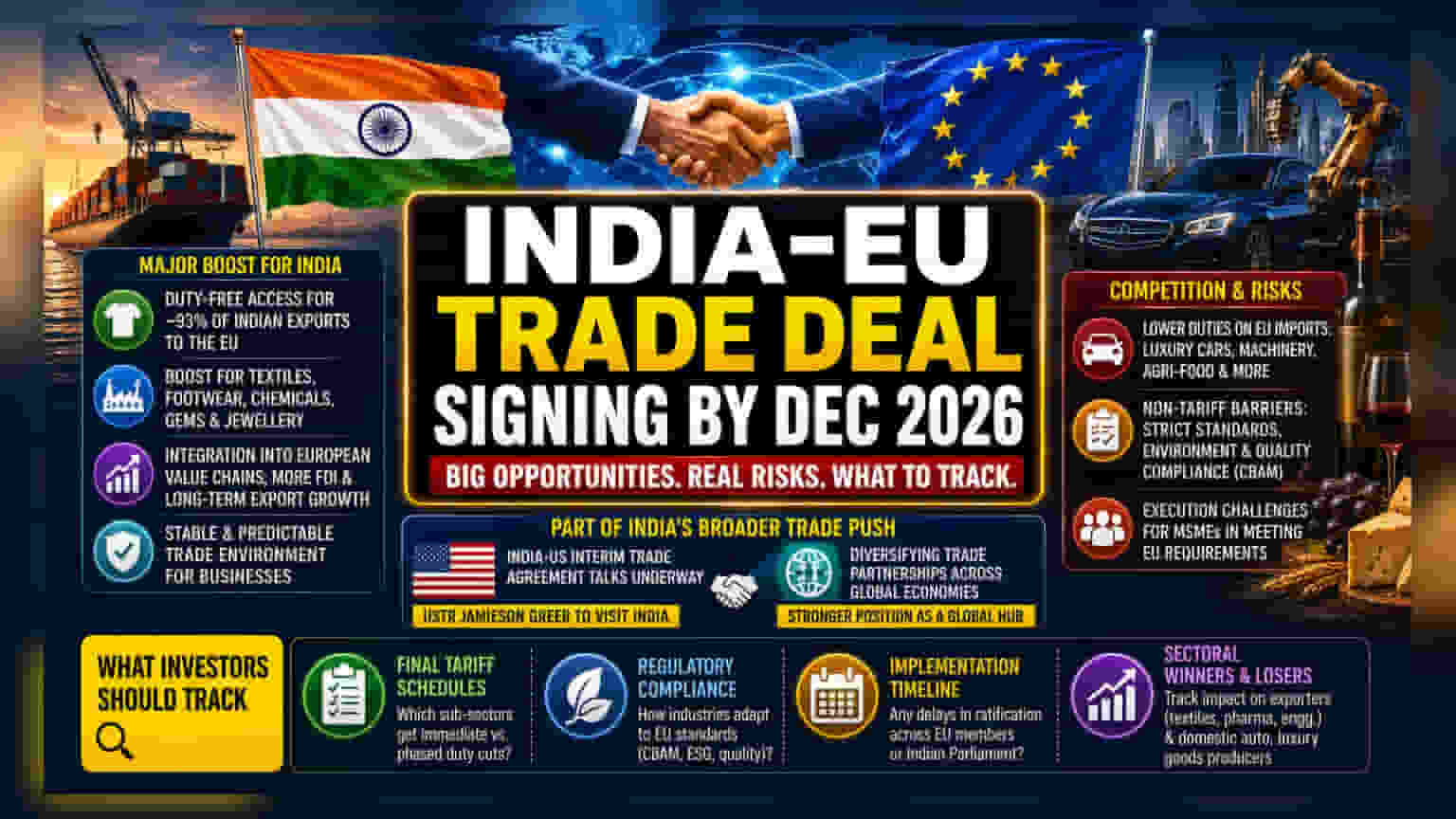
India and the European Union are set to finalize a landmark free trade agreement by December 2026, targeting full implementation between February and March next year. The pact aims to grant duty-free access for nearly all Indian exports to the EU, potentially boosting trade in textiles, engineering goods, and pharma.
What Happened
India and the European Union (EU) have reached a critical stage in negotiations for a long-awaited free trade agreement, with plans to officially sign the deal by December 2026. According to Commerce Minister Piyush Goyal, the agreement is scheduled for implementation between February and March of the following year. This pact, often referred to as a strategic milestone, aims to eliminate duties on a vast majority of traded goods, effectively opening the European market to Indian exporters while facilitating a two-way trade framework.
Why This Matters for Investors
For Indian businesses, the agreement is designed to create a more predictable and stable export environment. The primary investor interest lies in the potential for significant duty cuts on Indian exports—specifically in labor-intensive sectors like textiles, footwear, chemicals, and gems and jewelry. By removing tariff barriers, Indian companies may become more competitive against regional peers who already enjoy similar access to European markets. For the broader economy, this deal aims to integrate India more deeply into European value chains, which could encourage increased foreign investment and support long-term export growth.
The Competition and Risk Factor
While the agreement creates opportunities, it also introduces competitive pressure. The deal includes reciprocal concessions, meaning India will likely lower import duties on various European goods, such as luxury automobiles, machinery, and specific agri-food products. Domestic manufacturers in these sectors may face increased competition from high-quality European imports. Additionally, investors should track non-tariff barriers, such as compliance with stringent European standards, including environmental regulations and quality control measures, which could pose execution challenges for smaller Indian firms aiming to scale exports.
The Broader Trade Landscape
This India-EU development is part of a larger push by India to finalize multiple trade pacts. Simultaneously, India is actively engaged in trade discussions with the United States. U.S. Trade Representative Jamieson Greer is scheduled to visit India for high-level meetings to finalize a framework for an interim bilateral trade agreement. These parallel negotiations signal a strategic effort to diversify India’s trade relations and secure favorable market access across major global economies, reducing reliance on single markets and strengthening the country's position as a global manufacturing hub.
What Investors Should Track
As the December signing date approaches, the key monitorables for investors include:
- Final Tariff Schedules: Details on which specific sub-sectors receive immediate duty relief versus those with phased-in reductions.
- Regulatory Compliance: Updates on how Indian industries adapt to European environmental and quality standards (e.g., CBAM), which can impact operational costs.
- Implementation Timeline: Any delays in the ratification process across EU member states or the Indian Parliament.
- Sectoral Winners and Losers: Monitoring earnings reports of export-oriented companies in sectors like textiles, pharma, and engineering, and gauging the impact of increased import competition on domestic auto and luxury goods manufacturers.