

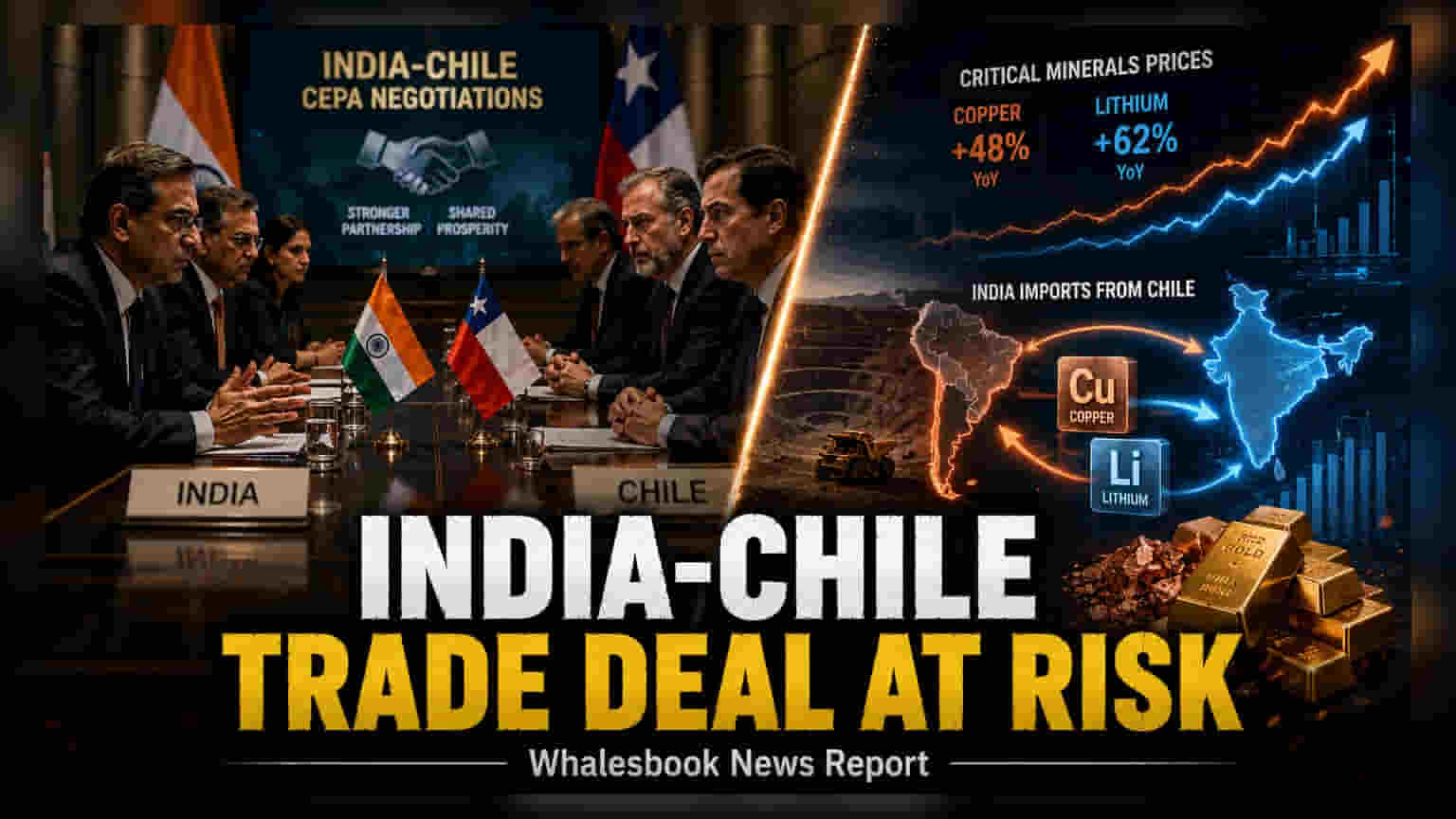
India’s Commerce Secretary Rajesh Agrawal is visiting Chile from August 24–28, 2026, to restart negotiations for a Comprehensive Economic Partnership Agreement. The key objective is to secure priority access to critical minerals like lithium and copper for India's electric vehicle sector, while resolving ongoing disputes regarding market access for Chilean goods.
India is entering a critical phase in its trade diplomacy as Commerce Secretary Rajesh Agrawal prepares to visit Chile from August 24 to August 28, 2026. The primary goal of this visit is to break the deadlock in negotiations for a Comprehensive Economic Partnership Agreement (CEPA). If successful, this deal would upgrade the existing Preferential Trade Agreement (PTA), which has governed trade between the two nations since 2007.
Securing the Supply Chain
For Indian investors and the broader manufacturing sector, the significance of this agreement goes beyond simple tariff reductions. India is focused on securing a reliable, long-term supply of critical minerals—specifically lithium and copper. These materials are essential components for electric vehicle (EV) batteries and high-tech manufacturing.
Currently, India relies heavily on a few global suppliers for these minerals. By securing a partnership with Chile, which is one of the world's largest producers of copper and has vast lithium reserves, India aims to diversify its supply chain. This move is designed to reduce the risk of price volatility and supply shortages that can occur when a country depends on a limited set of dominant global suppliers. For investors, this shift indicates a strategic effort to build a more secure industrial backbone for India’s growing green energy sector.
Navigating Policy Changes and Trade Demands
While the goal is clear, the path to finalizing the deal faces challenges. Formal negotiations were paused for several months following the transition to a new government in Chile, led by President Jose Antonio Kast, who assumed office in March 2026. This political shift naturally caused a temporary slowdown as the new administration evaluated existing policy priorities.
Beyond political changes, the two nations are also navigating complex demands regarding market access. Chile is pushing for better entry terms for its goods into the Indian market, while India is seeking specific assurances on mineral availability. The trade relationship has seen substantial growth, with bilateral trade reaching $5.38 billion in 2025. During that year, Indian exports to Chile grew by 14%, while imports from Chile rose significantly, largely due to increased gold purchases.
The upcoming discussions will be a major indicator of whether both countries can align their economic needs. Investors should monitor future updates regarding the signing of the CEPA, specifically focusing on whether the final agreement includes clear commitments on mineral exploration rights and supply quotas, as these factors will directly impact the cost structure and security of India’s industrial and EV manufacturing value chains.