

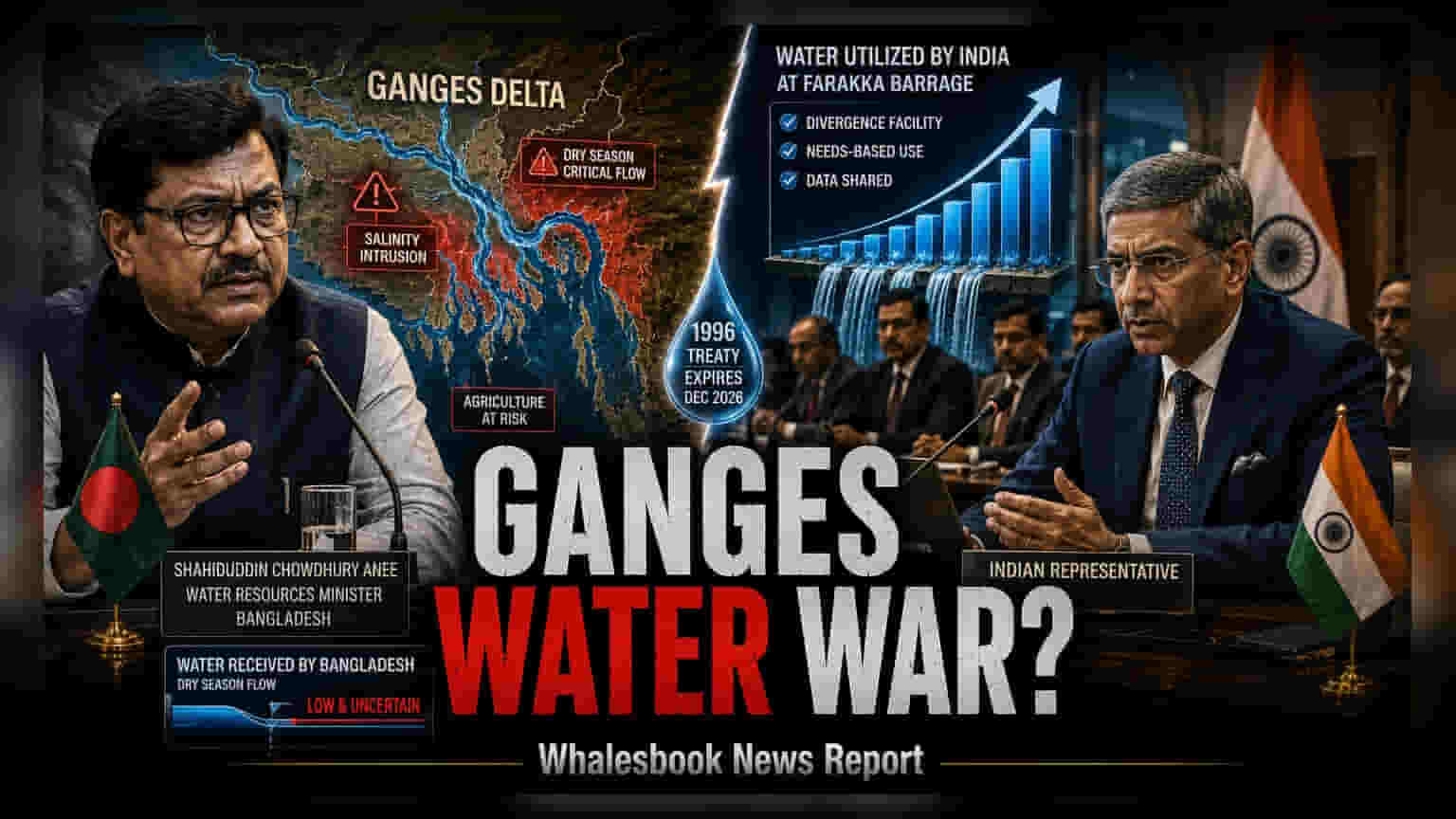
The 1996 Ganges Water Treaty between India and Bangladesh is set to expire in December 2026. Bangladesh has officially requested a new 'guarantee clause' to ensure predictable dry-season water flow, creating a sensitive diplomatic situation. This remains a key geopolitical factor for regional stability and long-term cross-border cooperation.
The upcoming expiration of the Ganges Water Treaty in December 2026 has brought water-sharing discussions between India and Bangladesh to the forefront of regional diplomacy. Bangladesh’s Water Resources Minister, Shahiduddin Chowdhury Anee, has formally requested the inclusion of a new "guarantee clause" in any renewed agreement. This provision, which was featured in a 1977 agreement but was not included in the 1996 treaty, aims to ensure a fixed minimum water flow to Bangladesh, particularly during the critical dry season.
Treaty Renegotiation and Water Security
The current 1996 treaty has served as the framework for water sharing for nearly three decades, but Dhaka has expressed significant concerns regarding its limitations in current hydrological conditions. The Bangladesh government argues that the existing allocation formulas may rely on outdated data, which fails to adequately address the country's evolving agricultural, environmental, and water-security needs. By seeking a guarantee clause, Bangladesh aims to secure long-term certainty for its downstream regions, which rely heavily on the Ganges for irrigation and ecological health.
The Farakka Barrage Dispute
A long-standing point of friction in these negotiations is the Farakka Barrage, located in India. Bangladesh has historically pointed to the barrage as a primary cause for reduced water levels in the lower Ganges during summer months, linking it to issues such as increased salinity and riverbank erosion in its delta regions. India continues to maintain that the structure is a necessary diversion facility and that water flow information is shared transparently through established bilateral mechanisms, such as the Joint Rivers Commission. This historical disagreement remains a central challenge to the upcoming treaty renewal process.
Diplomatic Context and Market Impact
Minister Anee has stated that Bangladesh is prepared to explore international arbitration if bilateral discussions fail to secure a satisfactory water-sharing arrangement. For observers of regional stability, the geopolitical climate between New Delhi and Dhaka is a critical factor. Any prolonged friction between the two nations can influence the broader environment for cross-border trade, infrastructure connectivity projects, and logistical cooperation in South Asia. While this is primarily a government-to-government matter, the resolution of such high-level diplomatic issues is often monitored for its impact on overall bilateral relations.
As the December 2026 expiration date approaches, the key monitorable for investors and stakeholders will be the progress of formal bilateral talks. Whether the two nations can find common ground on the proposed guarantee clause and address the environmental concerns of the downstream nation will determine the future stability of this essential transboundary water agreement.