

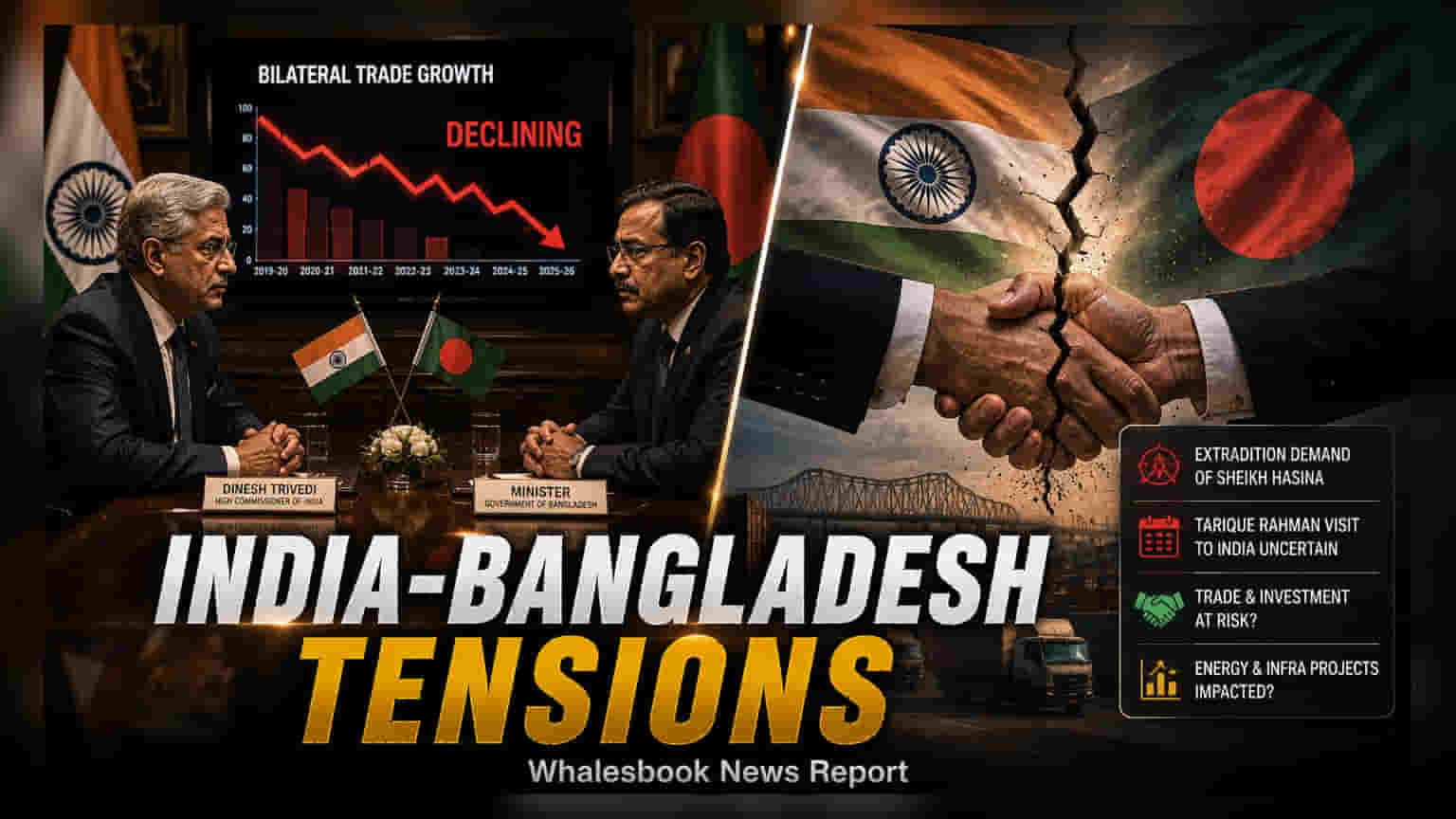
High-level diplomatic discussions between India and Bangladesh continue amid friction over the extradition of Sheikh Hasina. For investors, this political uncertainty remains a key factor to watch, as it could impact bilateral trade, energy partnerships, and cross-border infrastructure projects in the coming months.
Indian High Commissioner Dinesh Trivedi has engaged in recent meetings with Bangladeshi ministers to address bilateral cooperation. These discussions are taking place against a backdrop of significant diplomatic tension, primarily driven by Dhaka's demand for the extradition of former Prime Minister Sheikh Hasina, who is currently residing in India. The friction has created uncertainty regarding the participation of Bangladesh Prime Minister Tarique Rahman in the upcoming BRICS Summit, which is expected to be held in India next month.
Impact on Bilateral Business and Trade
While the political situation is complex, the broader economic relationship between the two nations remains a focus for both governments. Business delegations, including representatives from the Confederation of Indian Industry, have continued to engage with their counterparts in Dhaka. These discussions typically center on trade, investment, and specific sector partnerships, including energy and technology. However, the current diplomatic strain introduces an element of unpredictability for companies with significant exposure to the Bangladeshi market.
Risks to Consider
Investors and businesses with cross-border interests should monitor the stability of bilateral agreements. The Bangladeshi government has indicated that a visit by Prime Minister Rahman is unlikely without a move toward a more trusting atmosphere between the two nations. Should these diplomatic hurdles persist, it could lead to delays in policy negotiations or impact the speed at which cross-border infrastructure and energy projects are executed. Political instability and shifts in public sentiment can also create operational challenges for Indian firms that rely on steady supply chains or local regulatory approvals in Bangladesh.
What Investors Should Monitor
The primary monitorable for the coming months is the status of high-level diplomatic summits and any official statements regarding bilateral trade agreements. Any clear signal from either administration about maintaining or strengthening economic ties—despite political disagreements—would be a key indicator for stakeholders. Additionally, tracking the progress of major energy and connectivity projects in the region will provide insight into whether the political friction is beginning to affect real-world project timelines or if business operations remain insulated from the diplomatic tensions.