

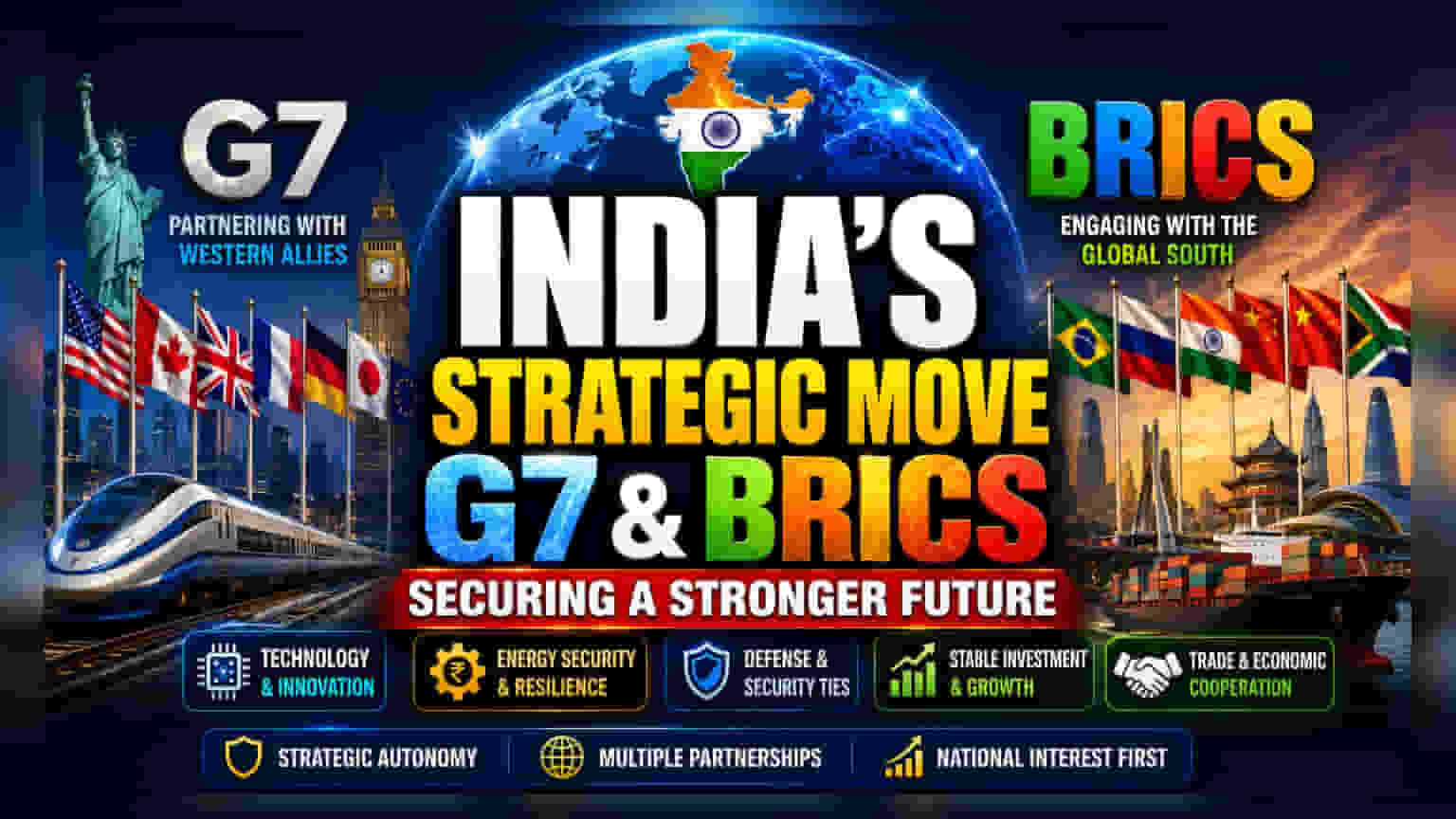
India is hosting the BRICS National Security Advisors meeting following PM Modi's attendance at the G7 summit. For investors, this diplomatic balancing act is vital, as it aims to secure stable trade, technology access, and supply chain continuity. Maintaining these global relationships is key to keeping market uncertainty low and supporting India's economic growth targets.
What Happened
India is actively navigating a complex international landscape by engaging with both Western-aligned nations through the G7 and the BRICS bloc. On June 22-23, 2026, New Delhi is hosting the BRICS National Security Advisors (NSA) meeting. This event follows Prime Minister Narendra Modi’s participation in the G7 summit. By participating in both forums, India is signaling its commitment to 'strategic autonomy'—a policy of engaging with multiple power centers to protect national interests rather than aligning with any single group.
Why This Matters for Investors
Global diplomacy is not just about politics; it has a direct link to the business environment. Investors generally prefer stability, and India’s ability to keep trade and communication channels open with both Western nations and BRICS countries helps reduce geopolitical risk. When a country successfully navigates these relationships, it often leads to more predictable supply chains, better access to essential technologies, and stable investment flows. For the Indian market, this means a lower risk of trade disruptions, which is essential for industries reliant on imports, such as energy, electronics, and defense.
The Strategic Autonomy Advantage
India's approach is based on the idea that to become a developed nation, the economy needs access to all major markets. By not choosing a single side, India maintains the flexibility to collaborate with the US and Europe on high-end technology and finance, while simultaneously working with BRICS nations on energy, security, and regional infrastructure. This dual engagement helps the country advocate for the 'Global South' while keeping its developmental goals on track. For business leaders and shareholders, this strategy aims to maximize benefits across defense, trade, and technology without getting trapped in global rivalries.
Economic Risks to Watch
While this diplomatic approach provides flexibility, it does not remove all risks. Global tensions can still lead to volatility in commodity prices, particularly oil, which impacts India's import bill and inflation levels. Currency fluctuations are another area that investors monitor closely during periods of heightened international tension. Additionally, any shift in global trade rules or restrictions on technology transfers—even if India aims to remain neutral—can impact specific sectors. The success of this strategy depends on India's ability to turn these diplomatic dialogues into tangible trade and economic agreements.
What Investors Should Track
Investors may monitor the following outcomes from these high-level meetings:
- Trade and Tech Agreements: Announcements regarding cooperation in technology, semiconductors, or supply chain diversification.
- Energy and Commodity Ties: Any updates on energy trade or payment mechanisms, especially with resource-rich nations, which can influence energy costs for Indian companies.
- FDI Sentiment: How global stakeholders perceive India’s stability, as this impacts the inflow of foreign capital into domestic markets.
- Border and Security Stability: Progress in bilateral discussions regarding regional security, which directly impacts the investment climate in border-sensitive industries.