

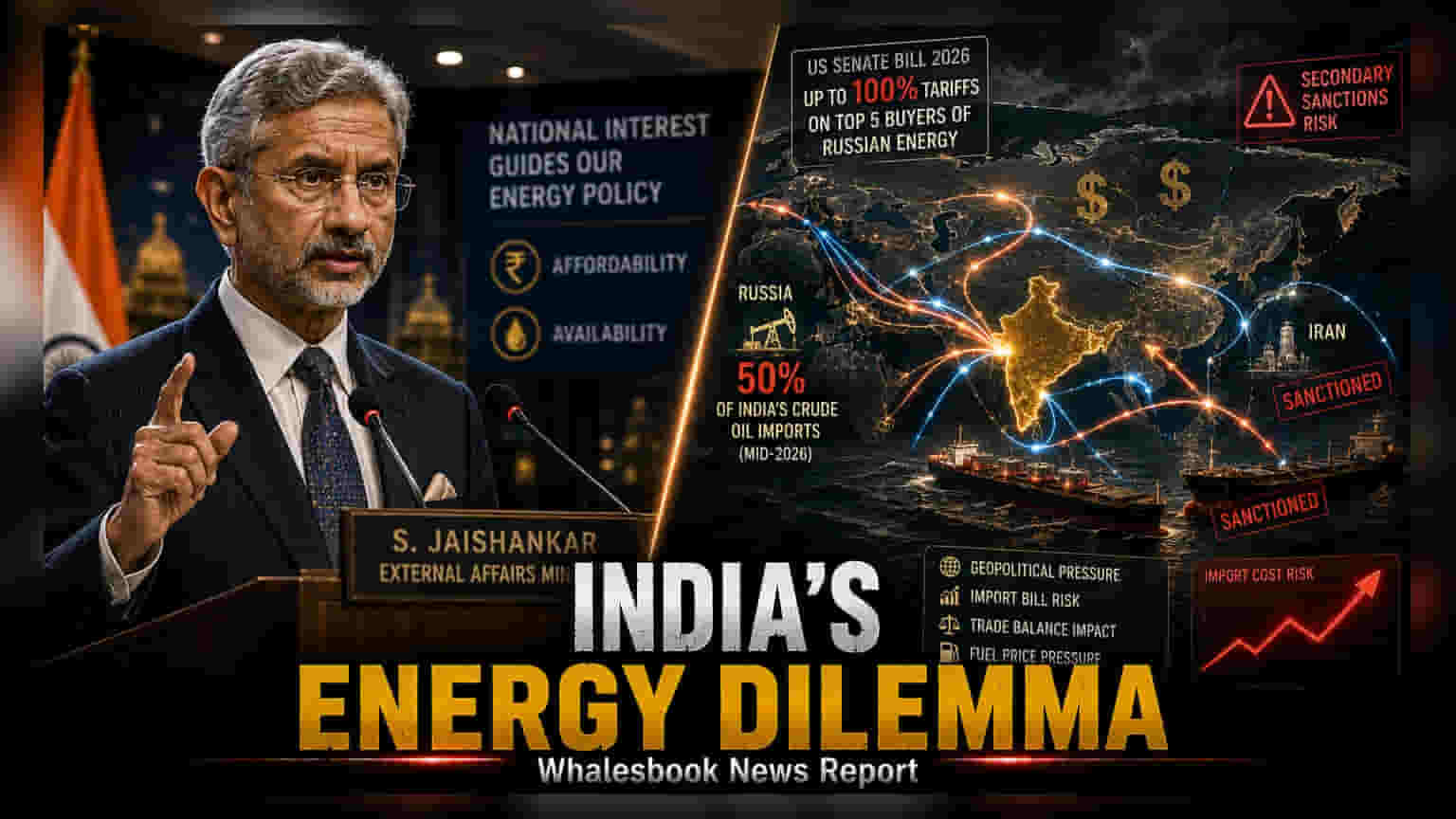
External Affairs Minister S. Jaishankar has stated that Indian consumer interests drive the nation’s energy import policy, even as US lawmakers advance the 'Lindsey O. Graham Sanctioning Russia and Iran Act of 2026'. With Russia now supplying roughly 50% of India's crude oil, the proposed legislation—which could impose up to 100% tariffs on major Russian energy buyers—creates a significant challenge for India's energy security and trade costs.
External Affairs Minister S. Jaishankar recently emphasized that the Indian government’s energy procurement policy is dictated by national interest, specifically the availability and affordability of fuel for Indian citizens, rather than external geopolitical pressures. His comments follow growing tension between New Delhi and Washington regarding India's reliance on energy imports from nations currently under US sanctions.
The timing of these remarks is significant. The U.S. Senate recently passed a cloture motion with an 86-11 vote to advance the 'Lindsey O. Graham Sanctioning Russia and Iran Act of 2026'. This proposed legislation includes provisions to impose tariffs of up to 100% on the top five buyers of Russian energy. This development poses a direct challenge to India, as Russia has emerged as a major supplier, currently providing approximately 50% of India’s crude oil requirements as of the middle of 2026.
For investors and the broader economy, this situation highlights a complex risk. India has consistently argued that its oil purchases are driven by cost and supply chain realities. However, the potential for such high tariffs creates a difficult scenario for India's state-run oil marketing companies and the government's fiscal planning. If these tariffs were to be enacted and applied to Indian imports, it could significantly increase the import bill, putting pressure on the country's trade balance and potentially impacting domestic fuel prices.
The energy landscape is further complicated by broader US actions. On August 24, 2026, the U.S. Department of the Treasury announced new sanctions targeting 60 entities, individuals, and vessels linked to Iran. These ongoing geopolitical shifts mean that India faces the risk of secondary sanctions or restricted access to the U.S. dollar-based financial system if it continues to trade with sanctioned nations under these new legislative threats.
The government's strategy of 'strategic autonomy'—buying from the most cost-effective sources—has been a key factor in keeping domestic energy inflation manageable despite global volatility. However, the tightening US legislative environment suggests that the cost of this policy may increase. Future market movements and oil supply costs will likely depend on whether India can continue to secure exemptions or waivers, similar to those that have allowed for temporary trade with Iran and Venezuela in the past.
For those tracking the Indian energy sector, the key developments to monitor will include the final legislative status of the U.S. Senate bill and any subsequent diplomatic negotiations. Additionally, any shift in the government's fuel pricing policy or import source diversification plans will be critical to understanding how the nation plans to handle potential disruptions to its 50% reliance on Russian crude oil.