

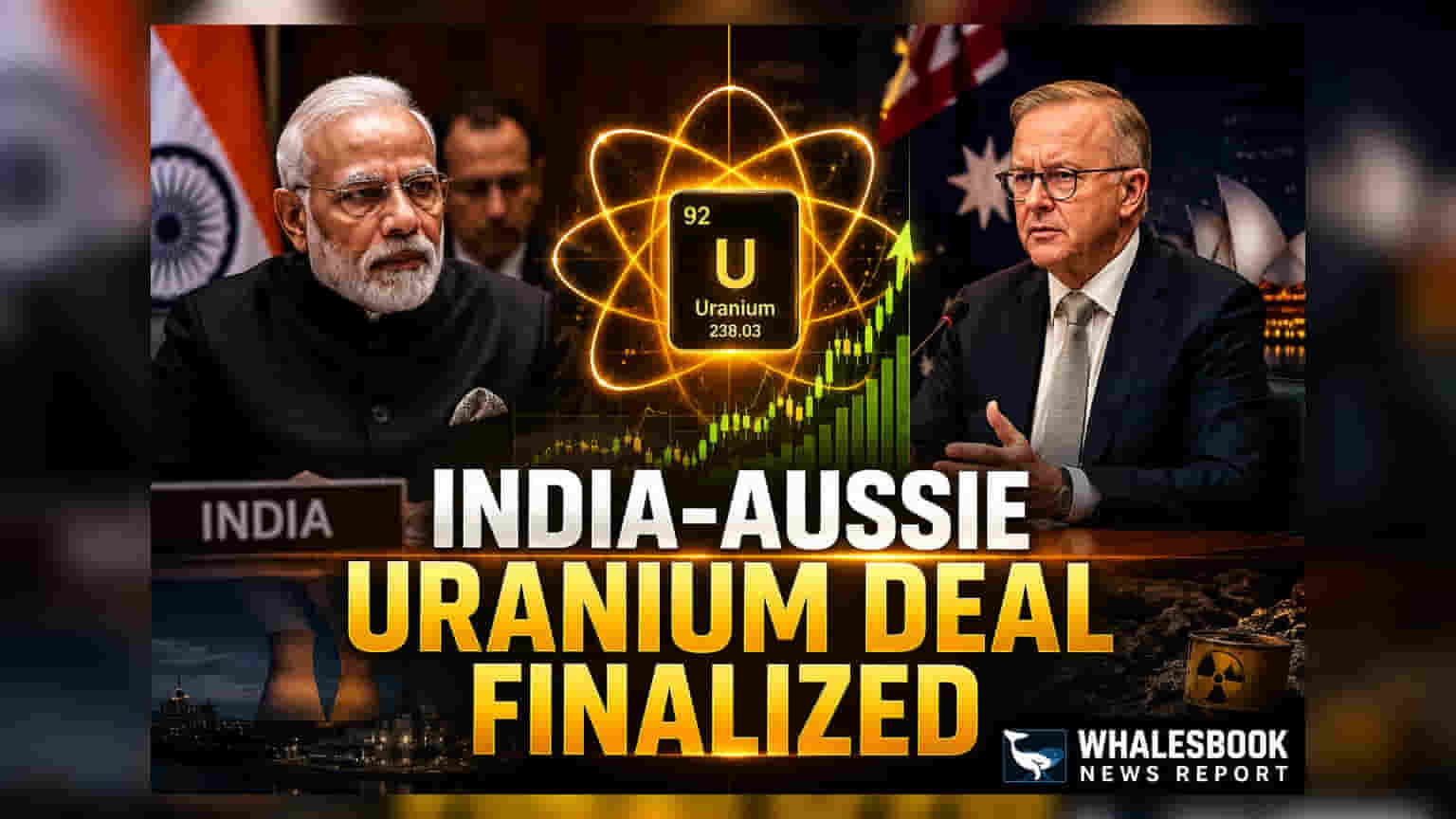
India and Australia are finalizing a landmark uranium supply agreement during Prime Minister Narendra Modi's visit to Melbourne. This deal is designed to secure fuel supplies for India's growing nuclear power sector. The partnership also includes collaborations in critical minerals and clean energy, building on the success of the 2022 trade agreement that boosted bilateral trade to $54.4 billion in FY25.
Prime Minister Narendra Modi’s visit to Melbourne is expected to result in a formal uranium supply agreement with Australia. This development is a strategic move to support India’s long-term nuclear power generation goals, which require a consistent and reliable supply of nuclear fuel. Australia holds a significant share of global uranium reserves, making it a critical partner for India as the country looks to expand its clean energy mix and reduce dependence on fossil fuels.
Expanding Nuclear and Clean Energy Capacity
For Indian energy companies and investors, this deal provides a clearer outlook on fuel security. While the framework for civil nuclear cooperation has been in place for over a decade, finalizing specific supply arrangements is essential for scaling up the nuclear energy program. Beyond nuclear fuel, the talks between the two nations are set to cover critical minerals such as lithium and cobalt. These minerals are vital for the manufacturing of batteries and electric vehicles, areas where India is pushing for greater industrial self-reliance.
Trade Growth Under the ECTA Framework
The economic relationship between the two nations has matured significantly under the India-Australia Economic Cooperation and Trade Agreement, which has been in force since late 2022. This agreement has helped simplify trade, with bilateral trade in goods and services reaching $54.4 billion in the 2025 financial year. The removal of duties has benefited various sectors, particularly textiles, pharmaceuticals, and agricultural exports from India. For Australian partners, the Indian market offers a massive consumer base for base metals and raw industrial materials.
Strategic and Operational Monitorables
Investors may monitor how this agreement translates into faster commissioning of planned nuclear power projects. The availability of fuel is a primary requirement for the operational stability of nuclear reactors. Additionally, the broader cooperation on clean energy and supply chain resilience may create investment opportunities for Indian manufacturers looking to integrate into global supply chains for technology and renewable energy components. Future updates to track include the specific timelines for uranium shipments and the progress of joint ventures in the critical minerals sector, which will indicate how quickly these high-level government agreements move toward commercial implementation.