

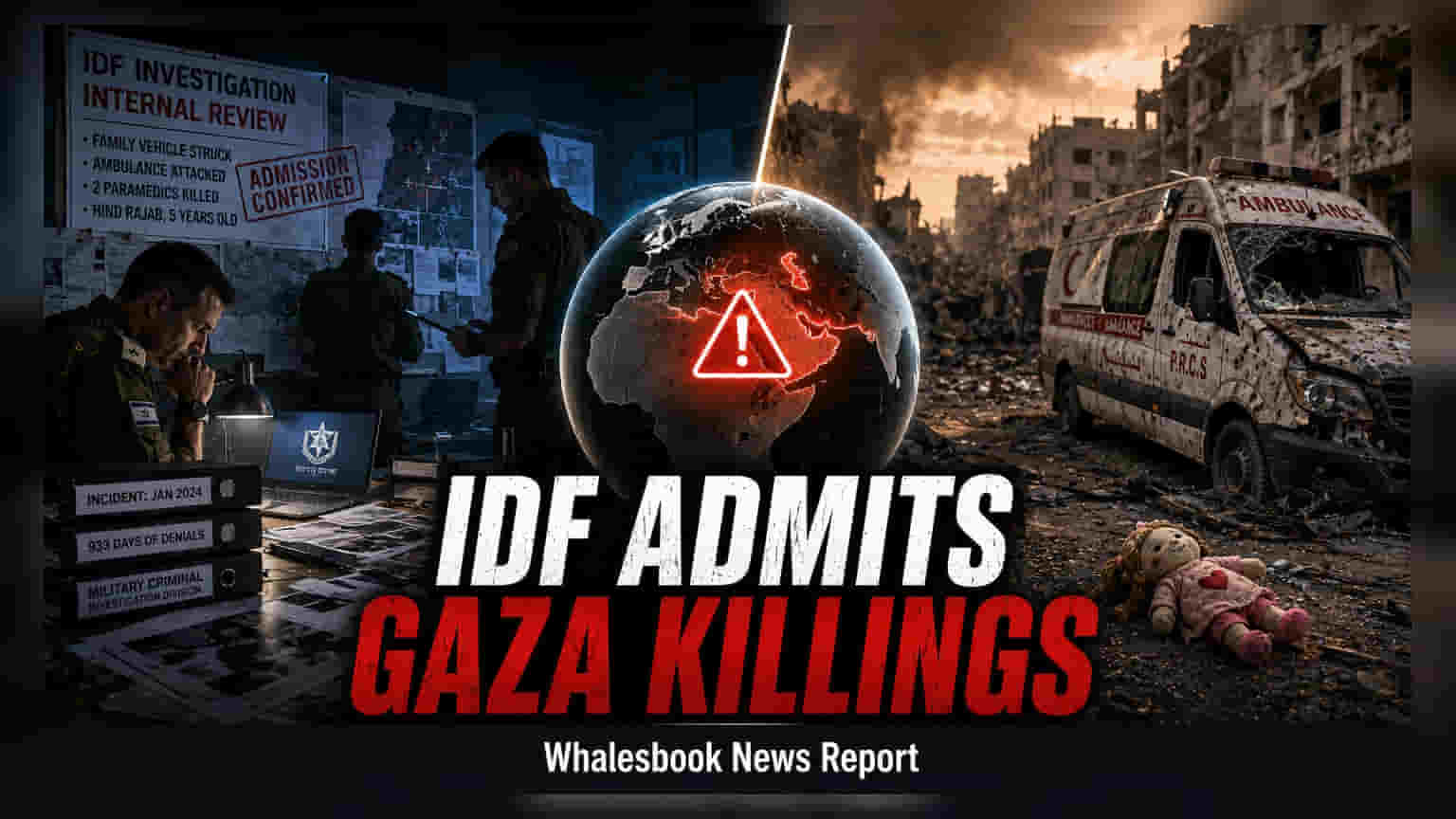
The Israeli Defense Forces have admitted that their soldiers fired on the vehicle of 5-year-old Hind Rajab in January 2024, after over two years of denials. A formal criminal investigation has been launched into the incident, which also claimed the lives of two paramedics. The admission has sparked significant international scrutiny regarding accountability and institutional transparency.
The Israeli Defense Forces (IDF) have officially acknowledged responsibility for the January 2024 incident that resulted in the death of 5-year-old Hind Rajab. In an announcement made on August 19, 2026, the military confirmed that its forces fired on the family vehicle, as well as on an ambulance dispatched by the Palestine Red Crescent Society to rescue her. The two paramedics in the ambulance were also killed during the operation.
This admission follows 933 days of denials from the military establishment. Following the confirmation, the IDF has directed the case to the Military Criminal Investigation Division, which has now opened a formal inquiry. The incident is part of a broader review of five high-profile cases involving alleged war crimes, although the majority of these cases have been closed without criminal action, a practice that has drawn sharp criticism from global human rights organizations.
From the perspective of international observers and institutional accountability, the development highlights deep skepticism regarding internal military justice systems. Human rights research has previously flagged a low rate of prosecution for similar incidents involving Palestinian fatalities. Specifically, reports from groups like Yesh Din have indicated that very few complaints against the military result in criminal charges, which critics argue undermines the effectiveness of self-investigation mechanisms.
The case has prompted significant activity from international legal bodies, including the Hind Rajab Foundation, which is currently pursuing avenues of accountability through the International Criminal Court. For global observers and international institutions, these developments serve as a critical monitorable for geopolitical stability and governance standards. The potential for further legal action against institutions perceived to be linked to these operations remains a point of concern for entities tracking human rights and governance compliance.
The next steps in this situation will focus on the transparency and pace of the newly opened criminal investigation. International bodies and the victim's family are expected to monitor whether this inquiry will lead to actual prosecutions or mirror the patterns observed in past investigations, where high-profile cases involving international aid workers and medical personnel often concluded without criminal accountability.