

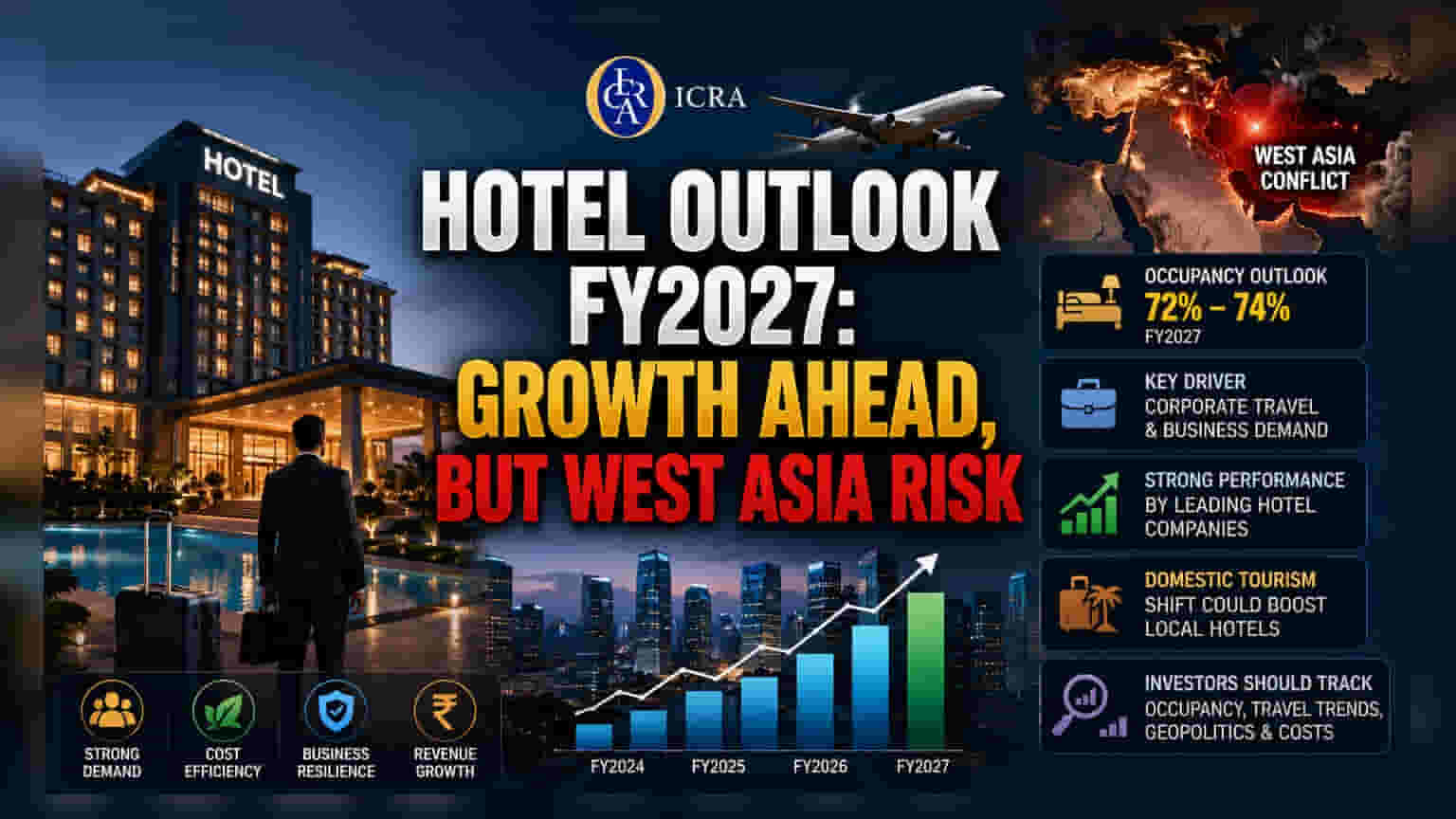
Credit rating agency ICRA projects Indian hotel occupancy at 72-74% for FY27. However, the agency warned that geopolitical tensions in West Asia could dampen demand for business and leisure travel. While large hotel chains have shown resilience so far, potential shifts in corporate travel budgets remain a key area for investors to monitor.
What Happened
Credit rating agency ICRA has released its outlook for the Indian hospitality sector for the financial year 2027, projecting occupancy levels between 72% and 74%. While this forecast suggests a healthy period for hotels, the agency has introduced a note of caution regarding the ongoing conflict in West Asia. ICRA indicated that if these geopolitical tensions continue, they could negatively influence domestic demand and business travel, which are crucial drivers for hotel revenue.
The Impact On Travel Demand
The Indian hospitality sector relies heavily on both corporate travel and leisure tourism. ICRA pointed out that while the impact on the industry has been limited thus far, any escalation could force companies to rethink travel budgets. Corporate travel is a significant contributor to hotel profits, often supporting higher room rates during weekdays. If businesses cut back on travel due to economic uncertainty or safety concerns linked to regional instability, it could directly impact the occupancy numbers that hotels rely on to keep profit margins stable.
Business Resilience Amidst Uncertainty
Despite the external geopolitical risks, major hospitality companies have maintained a strong performance trajectory. Companies like Indian Hotels Company Limited (IHCL) continue to show robust revenue growth, aligning with their internal guidance. International chains operating in India, such as Marriott and Radisson, have also reported positive trends in revenue per available room. These established players have managed to navigate high fuel costs and other operational challenges through efficient management and the use of alternative energy solutions, such as piped gas, which has reduced dependency on fluctuating fuel sources.
The Domestic Tourism Shift
One potential positive factor for the Indian hotel industry is a shift in travel patterns. If international travel from India becomes more expensive or complicated due to the situation in West Asia, Indian travelers might choose to spend their money on domestic tourism instead. In previous years, a significant number of Indian leisure tourists traveled to West Asia. A reduction in this outflow could benefit local hotel properties, potentially acting as a cushion against broader demand slowdowns.
What Investors Should Track
The primary monitorable for investors is the actual occupancy data reported by hotels in the coming quarters. Investors should look for management commentary regarding corporate travel demand in quarterly earnings calls. Additionally, the broader geopolitical situation remains a variable that could influence input costs and consumer sentiment. While the domestic tourism shift is a potential supporting factor, tracking whether this translates into sustained occupancy growth remains essential for evaluating the sector's performance throughout the year.