 Whalesbook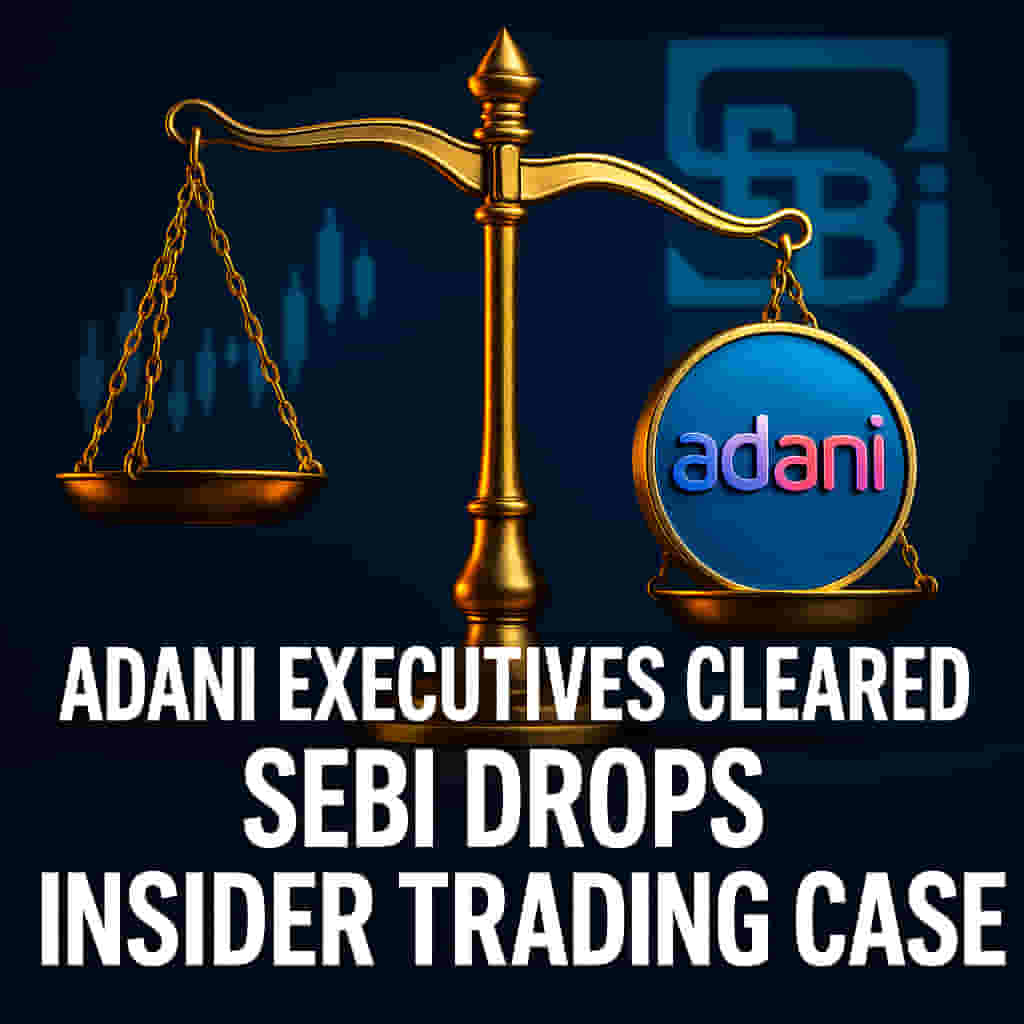
SEBI Drops Insider Trading Charges Against Adani Executives
The Securities and Exchange Board of India (SEBI), India's capital markets regulator, has conclusively dismissed insider trading charges against senior executives of the Adani Group and their associates. This decision pertains to the acquisition of SB Energy by Adani Green Energy Limited (AGEL) back in 2021. The prolonged investigation, which has now concluded, found no sustainable basis for the allegations.
The Core Issue
At the heart of the investigation was the alleged leakage of unpublished price-sensitive information (UPSI) regarding Adani Green Energy Limited's acquisition of SB Energy from SoftBank Group Capital Limited and Bharti Global Limited. SEBI had alleged that this sensitive information was shared with outsiders, who then purportedly traded in AGEL shares based on this privileged knowledge. The regulator viewed this potential misuse of non-public information as a serious breach of securities laws.
Allegations Against Key Figures
The probe specifically examined the trading activities of individuals connected to the Adani Group. In one instance, SEBI alleged that Pranav Adani, a director within the Adani conglomerate, communicated UPSI to his brothers-in-law, Kunal and Nrupal Shah. These individuals allegedly managed trading accounts and collectively purchased over 100,000 shares of AGEL in May 2021, near ₹1,100 per share, before selling them for a notional gain exceeding ₹90 lakh.
A separate case involved Vinod Bahety, who headed mergers and acquisitions at the Adani Group and was involved in the SB Energy deal. SEBI accused Bahety of disclosing acquisition details to financier Tarun Jain and his companies. Jain allegedly used this UPSI to buy 200,000 AGEL shares around ₹1,077–₹1,078 per share on May 14, 2021. These shares were reportedly sold shortly after the deal's official announcement on May 19, yielding notional profits of approximately ₹3.51 crore.
SEBI's Findings and Rationale
However, SEBI's quasi-judicial authority, Santosh Shukla, concluded that the allegations could not be substantiated. The authority noted the timing of media reports that surfaced on May 16, 2021, detailing AGEL's advanced talks to acquire SB Energy, including the proposed structure and value. These reports appeared in multiple newspapers.
The regulator reasoned that once information becomes publicly available through credible media, it ceases to be "unpublished." SEBI observed that the market reaction to these news reports was significant, with AGEL's share price hitting an upper circuit on May 17 and showing substantial gains on May 17 and 18, even before the formal disclosure on May 19. The stock rose by 3.75 percent on May 19, which was less than the gains seen in the preceding days.
Conclusion and No Directions Issued
Based on this assessment, SEBI determined that the trades in question were executed based on "generally available information" rather than insider knowledge. In Bahety's case, the authority found no material evidence to infer that UPSI was communicated, and any pre-UPSI period communication related to a different project. Consequently, SEBI disposed of all proceedings against the accused individuals without imposing any penalties or issuing disgorgement orders. Prominent legal firms represented the parties involved in the adjudication process.
Impact
This ruling is a significant positive development for the Adani Group, clearing senior management of serious allegations and potentially bolstering investor confidence in the conglomerate's governance practices. The dismissal suggests a high bar for proving insider trading, particularly when information quickly enters the public domain through media.
Impact Rating: 7/10
Difficult Terms Explained
- Insider Trading: The illegal practice of trading stocks based on material, non-public information about the company.
- Unpublished Price Sensitive Information (UPSI): Any information that is not yet publicly disclosed and could influence the price of a company's stock.
- Disgorgement: A court-ordered sanction requiring an individual to forfeit ill-gotten gains received through illegal or unethical business practices.
- Quasi-judicial authority: An entity that has the power to make judgments in legal disputes but is not a formal court of law.
- Adjudication: The legal process of resolving a dispute or deciding a case, typically by a judge or tribunal.
- Acquisition: The act of one company taking over another company by purchasing the majority of its shares or assets.
- Notional gain: A potential profit that has not yet been realized because the asset has not been sold.