

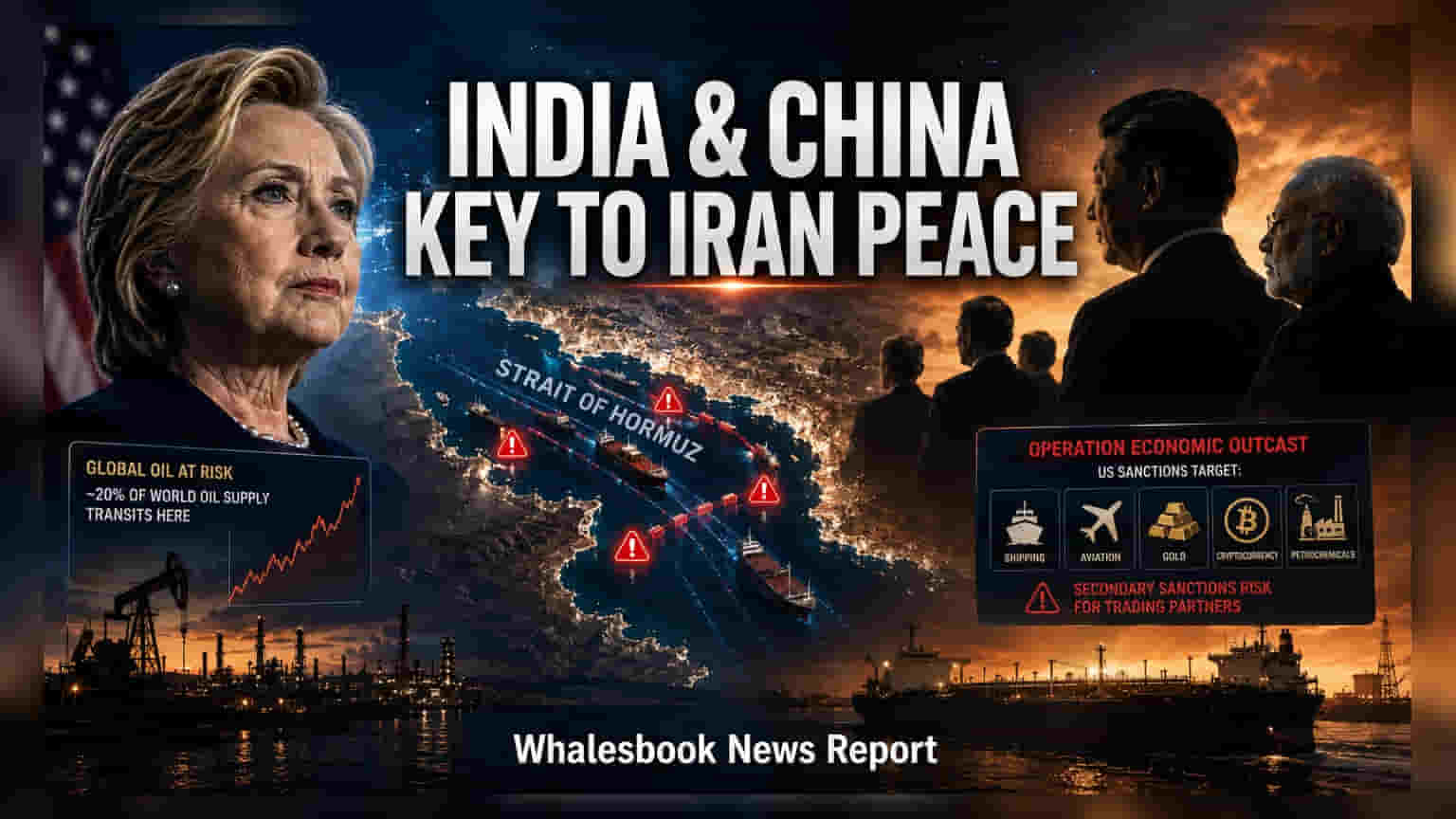
Former US Secretary of State Hillary Clinton has identified India and China as essential actors to help resolve the US-Iran conflict by leveraging their energy trade. This call coincides with the US Treasury’s launch of 'Operation Economic Outcast,' a strict new sanctions campaign. For investors, these developments raise concerns over global energy supply, crude oil price volatility, and potential trade risks for nations maintaining economic ties with Tehran.
Former US Secretary of State Hillary Clinton has proposed that India and China could serve as vital diplomatic channels to help de-escalate the ongoing US-Iran conflict. During recent public discussions, Clinton argued that as major importers of Iranian energy, these nations hold the necessary economic influence to pressure Tehran into reopening the critical Strait of Hormuz and returning to diplomatic negotiations.
This call for diplomatic intervention follows the breakdown of previous peace efforts and the launch of a new, aggressive sanctions campaign by the US government. US Treasury Secretary Scott Bessent recently announced 'Operation Economic Outcast,' an initiative aimed at severing Iran's remaining financial lifelines. The program targets five specific sectors, including shipping, aviation, gold, and cryptocurrency, and warns that countries or businesses continuing to trade with the Iranian regime could face secondary sanctions.
Impact on Global Energy Markets
The Strait of Hormuz remains a primary area of concern for the global economy. As a major waterway responsible for transporting roughly 20 percent of the world’s oil supplies, its ongoing obstruction has significantly increased the risk of energy price spikes. Investors have been monitoring these developments closely, as any further disruption to the flow of oil from the region directly impacts global supply chains and inflation trends.
For India, the situation creates a complex balancing act. As a large importer of energy, India has traditionally maintained a policy of strategic autonomy. However, the threat of US secondary sanctions—penalties imposed on third-party nations that deal with sanctioned entities—creates a risk for companies with significant international operations. If India were to face pressure under the new Treasury guidelines, it could complicate trade relationships and increase the cost of energy imports, affecting the balance of payments and fiscal stability.
Monitoring Diplomatic and Economic Risks
The immediate concern for global markets is whether the diplomatic pressure suggested by Clinton will gain traction or if the economic conflict will deepen. If the US proceeds with stricter enforcement of 'Operation Economic Outcast,' it may force major economies, including India and China, to reduce or halt energy imports from Iran to avoid being cut off from the US dollar-based financial system.
Investors may monitor several factors in the coming weeks: the government's official response to these diplomatic overtures, the stability of global crude oil prices, and any further statements from the US Treasury regarding enforcement of the new sanctions. The situation remains fluid, and the primary monitorable for markets will be the impact on energy import costs and the potential for increased geopolitical friction affecting international trade flows.